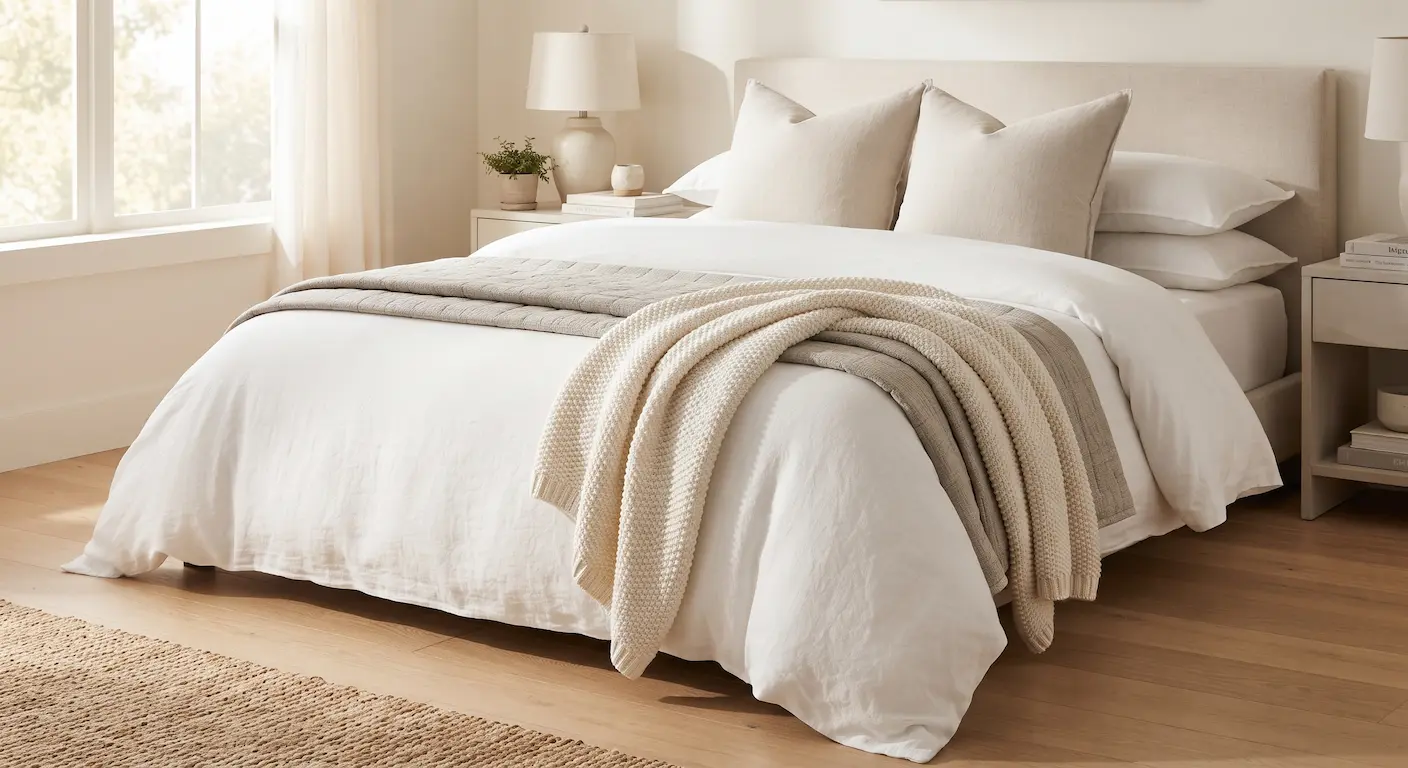
How to Make a Bed Look Expensive (The Layers That Actually Matter)
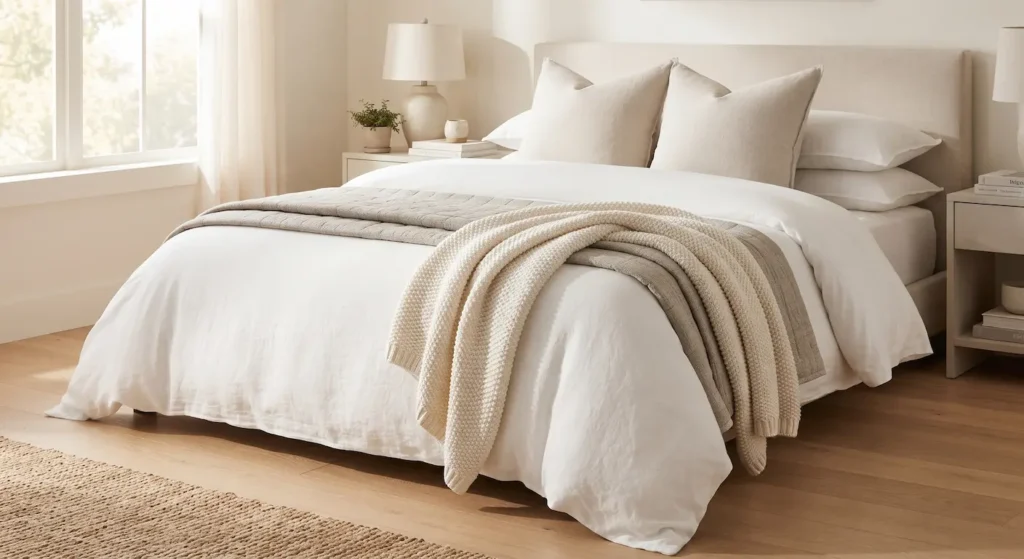
Your bed is the largest object in the room and usually the worst-looking thing in it. A hotel bed and your bed can contain almost identical items and look completely different, which tells you the problem isn’t what you own.
It’s layers, sizing and one specific mistake nearly everyone makes with duvets. All three are fixable without buying an entirely new bedroom.
Here’s how a bed actually gets built.
Why Hotel Beds Look Better Than Yours
Three reasons, and none of them are money.
Everything is oversized. Hotel bedding is deliberately too big for the bed. It drapes over the sides instead of ending at the edge, and drape is most of what reads as luxurious.
There are more layers than you think. A hotel bed typically has five to seven distinct layers. Yours probably has two. Layers create depth and shadow, which is what makes a bed look considered rather than flat.
Nothing is stretched tight over the corners. A duvet pulled taut to fit shows every lump. A duvet with slack falls into folds, and folds catch light.
The principle: a good-looking bed is generous, layered and slightly loose. Almost every bad-looking bed is the opposite of all three.
The Layers, In Order
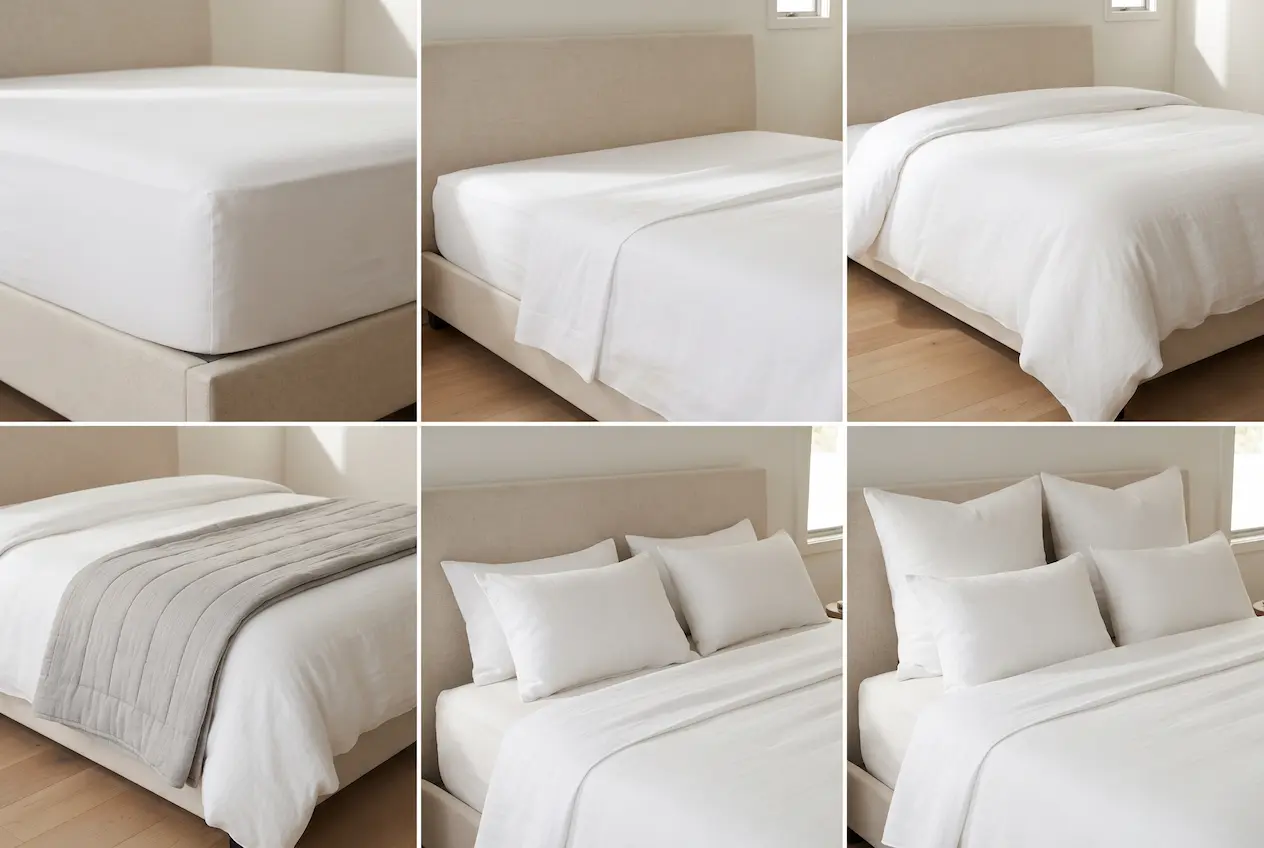
- A fitted sheet that actually fits. Check the pocket depth against your mattress. Most beds look wrong at the base because a shallow-pocket sheet on a thick mattress pops off the corners and pulls everything askew.
- A flat sheet, if you use one. Optional, and genuinely regional — plenty of people skip it. If you use one, fold the top back over the duvet by about eight inches so a band of it shows.
- The duvet, in a cover, sized up. The single most important layer, and the one people get wrong. More on sizing below.
- A quilt or coverlet folded across the foot. Cheap, hugely effective, and it’s the layer most home beds are missing. It adds a horizontal band of contrast that breaks up the expanse of duvet. Like a lightweight coverlet.
- Sleeping pillows, standing up. Two, propped against the headboard rather than lying flat. Flat pillows make a bed look unmade even when it is.
- Two larger pillows behind them, if you have space. Euro squares stood upright behind the sleeping pillows create height and depth. This is the hotel trick that most obviously separates a styled bed from a plain one.
- A throw, folded or draped at an angle. Not centred and symmetrical Like a chunky knit throw. — slightly off, slightly casual. Perfect symmetry reads as a showroom.
You don’t need all seven. Layers one, three, four and five get you most of the way, and that’s a fitted sheet, a duvet, a quilt and two pillows stood up.
Duvet Sizing: The Mistake Nearly Everyone Makes
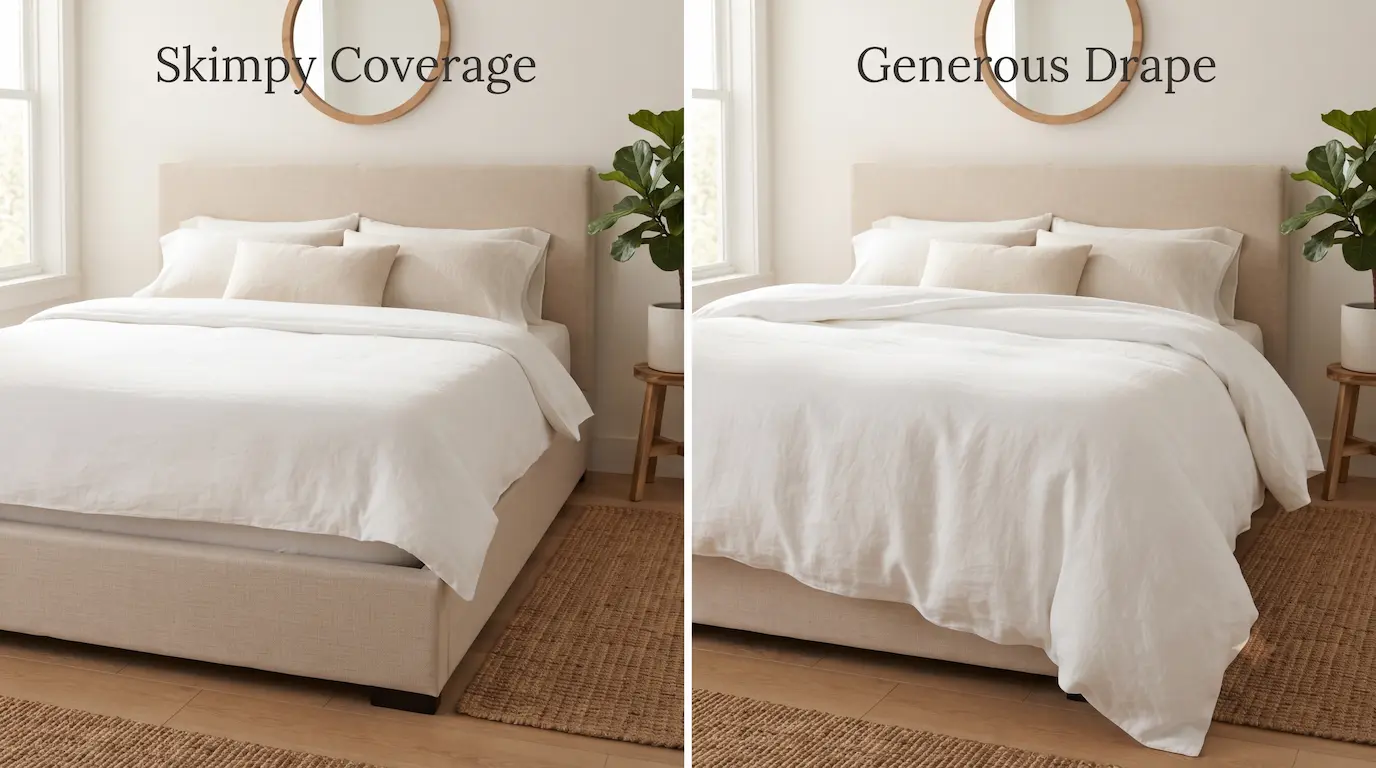
Here’s the one that changes the most. Buy the duvet one size up from your mattress.
A queen duvet on a queen bed ends almost exactly at the mattress edge, which means it looks skimpy, exposes the sides of the mattress, and slides off whoever is losing the nightly battle for it.
A king duvet on a queen bed drapes generously over both sides. It instantly looks like a more expensive bed, it stops the tug-of-war, and it costs roughly the same. IMO this is the highest-impact bedding decision available and almost nobody knows to make it.
The same logic applies downward: a full duvet on a twin, a queen on a full. Size up, always.
One exception — if your bed sits in a very narrow room with tight walkways, an oversized duvet can brush the walls or furniture. In a genuinely tight room, stay true to size. Small bedroom layouts covers when that applies.
Colour and Texture
The easiest formula that works nearly every time:
- Keep the largest layer neutral. White, oatmeal, soft grey or muted clay for the duvet. Big areas of strong colour dominate a small bedroom.
- Put the colour in the smaller layers. The quilt, the throw, one pillow. Easy to change seasonally, cheap to replace when you get bored.
- Vary texture more than colour. Linen, cotton percale, waffle weave, chunky knit. Three textures in the same neutral colour look richer than three colours in the same texture.
- Linen is worth it. It’s expensive up front, but it wrinkles by design Like a washed French flax cover. — which means it looks correct without ironing and better as it ages. FYI it is the single fabric most responsible for beds that look effortless in photographs.
Making It in Sixty Seconds
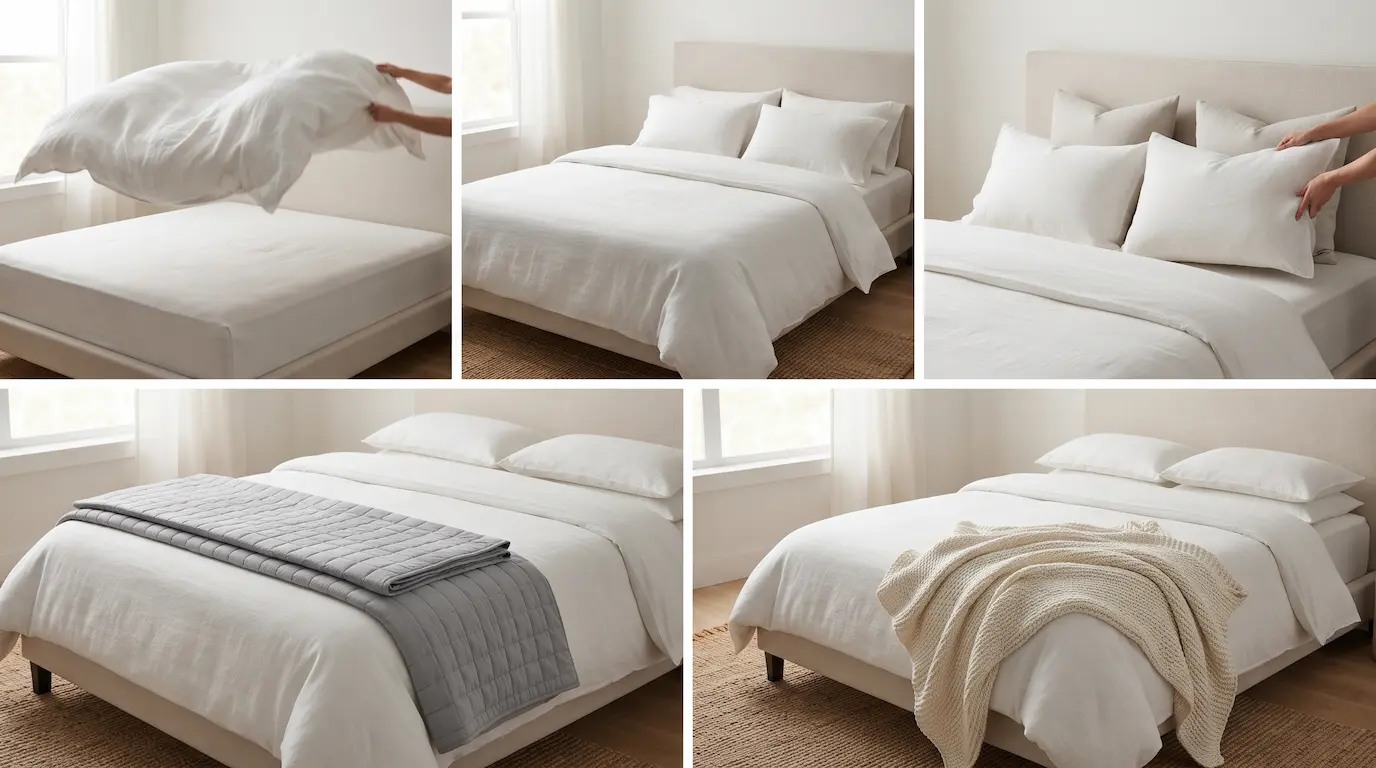
A styled bed you can’t reproduce on a Tuesday morning is useless. The fast version:
- Shake the duvet out holding two corners, and let it fall. Don’t smooth it flat — the folds are the point.
- Pull it up to just under the pillows, not over them.
- Stand the pillows up against the headboard.
- Fold the quilt across the foot in thirds.
- Throw the throw. Genuinely — toss it and adjust once. It should look landed, not placed.
That’s under a minute once you’ve done it a few times, and it’s the difference between a bedroom that looks finished and one that doesn’t.
Where to Spend and Where to Save
Bedding is one of the easier categories to shop well, because the expensive things and the important things overlap less than you’d expect.
Worth spending on:
- The duvet cover. It’s the largest visible surface in the room and the thing you touch all night. Linen or good cotton percale here changes both how the bed looks and how it feels.
- Sleeping pillows. Not decorative ones — the two you actually sleep on. Cheap pillows flatten within months and then the bed always looks deflated.
- The fitted sheet. Deep pockets and decent elastic. A sheet that pops off a corner ruins the look of everything above it.
Save on:
- The duvet insert itself. Nobody sees it. A mid-range one under a good cover performs and looks identical to an expensive one.
- The quilt or coverlet. It’s a folded band across the foot. Texture matters, brand doesn’t.
- Decorative pillows. Buy covers rather than whole cushions — they cost a fraction, store flat, and let you change the look seasonally.
The pattern is the same as everywhere else in a home: spend on what you touch and what covers the most area, save on what’s hidden or decorative.
If You Share the Bed
Two people and one duvet is a nightly negotiation, and it also makes the bed harder to keep looking good.
The oversize rule matters more here. A king duvet on a queen bed largely solves the tug-of-war, because there’s enough fabric for both people plus drape.
Or use two separate duvets. Standard across much of northern Europe and quietly excellent — two single duvets side by side under one cover, or simply two duvets. Each person gets their own weight and warmth, nobody gets stolen from, and it looks fine as long as you smooth them together when making the bed.
Match the layers, not the people. If one of you runs hot, vary the duvet weight rather than adding a blanket to one side. Uneven layers show, and a bed that’s clearly divided in half never looks styled.
Five Things That Make a Bed Look Cheap
- An undersized duvet. Said above, repeating here, because it’s the main one.
- Flat pillows lying down. Stand them up. Free, takes three seconds.
- Too many small cushions. Six decorative cushions you remove every night is a chore nobody sustains. Two or three, maximum.
- Shiny fabric. High-sheen polyester reads as cheap under any light. Matte, natural-fibre fabrics read as expensive even at low prices.
- A visible mattress. If you can see the mattress sides, the bedding is too small or the fitted sheet has ridden up 🙂
Last thing worth knowing: wash new bedding before the first use, and wash it more than you think. Linen and cotton both soften considerably over the first few washes, and a stiff new duvet cover will not drape properly no matter how you make the bed. A lot of bedding that people conclude is bad quality is simply new.
Size Up, Stand the Pillows, Add a Quilt
Three changes, in order of impact. A duvet one size larger, pillows propped upright, and a quilt folded across the foot. None of them require new furniture and together they do more than a new bed frame would.
After that, add texture rather than colour and let the duvet stay slightly loose. That’s the whole method.
If the room around the bed is the problem rather than the bed itself, 15 small bedroom ideas covers layout, and making an apartment feel cozy covers the lighting that makes all of this look better after dark.
What size duvet are you currently using on what size bed? Tell me in the comments — the answer is often the whole problem.