18 Budget Decor Ideas That Make a Room Look Expensive
Expensive rooms and cheap rooms rarely differ by as much money as you’d think. They differ by about six decisions, and most of those decisions are free.
I’ve been in $400 rooms that looked considered and $4,000 rooms that looked like a catalogue exploded. The gap is never the budget. It’s cohesion, scale and lighting — and you can fix all three without buying much.
Here are 18 changes, sorted by what they cost, that make a room read as more expensive than it was.
What Actually Makes a Room Look Expensive
Before the list, understand the pattern, because it explains every item below.
Cohesion. Expensive rooms repeat things — three items in the same metal, two in the same wood tone, one color echoed in three places. Cheap rooms contain many unrelated objects. Repetition reads as intentional; variety reads as accumulated.
Scale. Cheap rooms are full of things that are slightly too small. One large mirror, one large plant and one large artwork will always beat six medium ones, and usually cost less.
Light temperature. This is the sleeper. Cool blue-white light makes every material look synthetic. Warm light at 2700K makes the same wood, fabric and paint look richer. It is also the first step in making a small apartment feel cozy. It’s the cheapest upgrade in this entire article.
Negative space. Expensive rooms have empty surfaces. If every shelf and table is covered, the eye reads clutter regardless of what the objects cost.
Free: Do These First
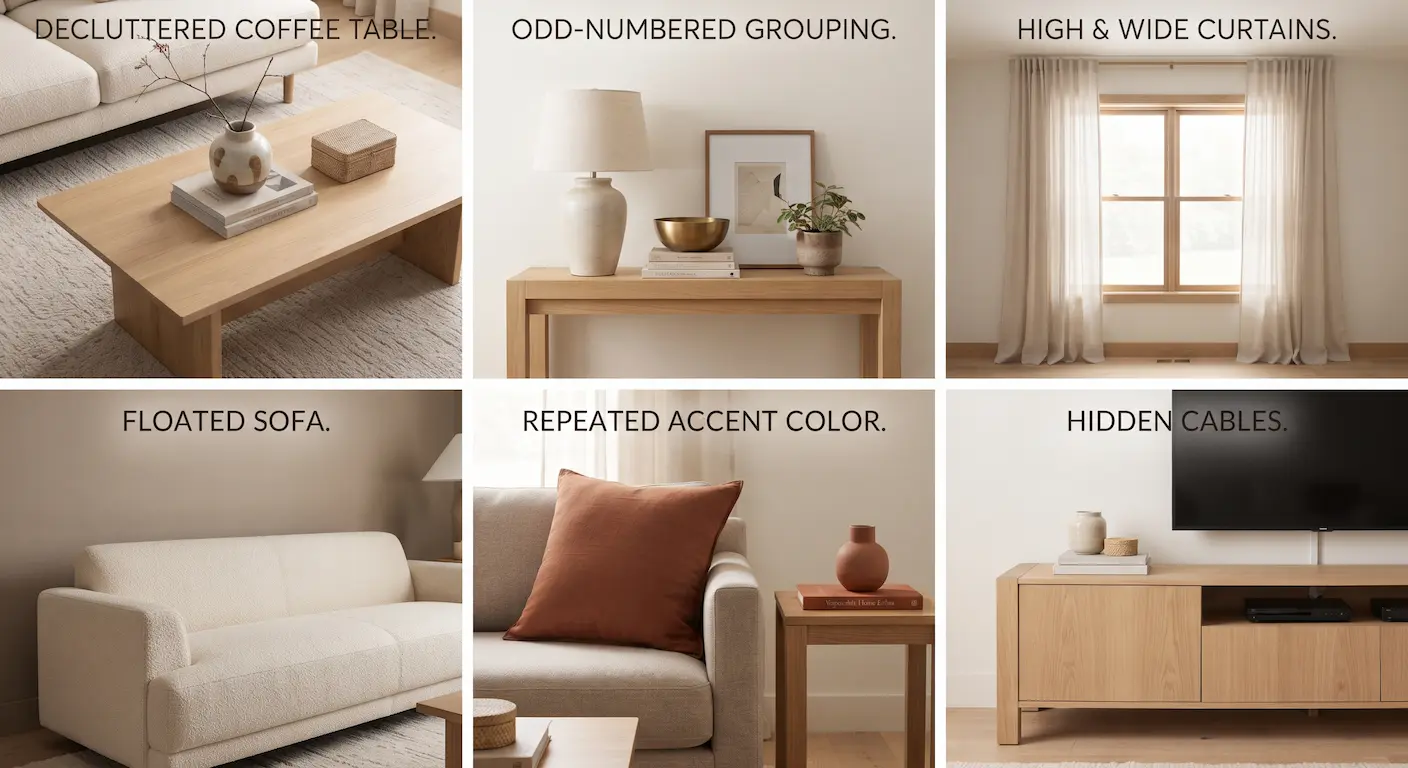
- Clear two-thirds of every surface. Take everything off the coffee table, the console and the shelves, then put back only a third of it. This costs nothing and does more than any purchase on this list.
- Group objects in odd numbers. Threes and fives look composed; pairs and fours look like inventory. Vary the heights within each group.
- Raise the curtains. Move the rod to just below the ceiling and extend it past the window frame. Free if you already own the rod, and it changes the proportions of the entire room.
- Move furniture off the walls. Even two inches. Furniture floating slightly reads as designed; furniture flat against plaster reads as delivered.
- Repeat one color three times. Pick a color already in the room and echo it in two more places — a cushion, a book spine, a vase. Instant cohesion, zero cost.
- Hide the cables. Nothing undermines a room faster than a nest of black wires under the TV. Ten minutes with cable ties.
Under $30: The Highest Return Per Dollar
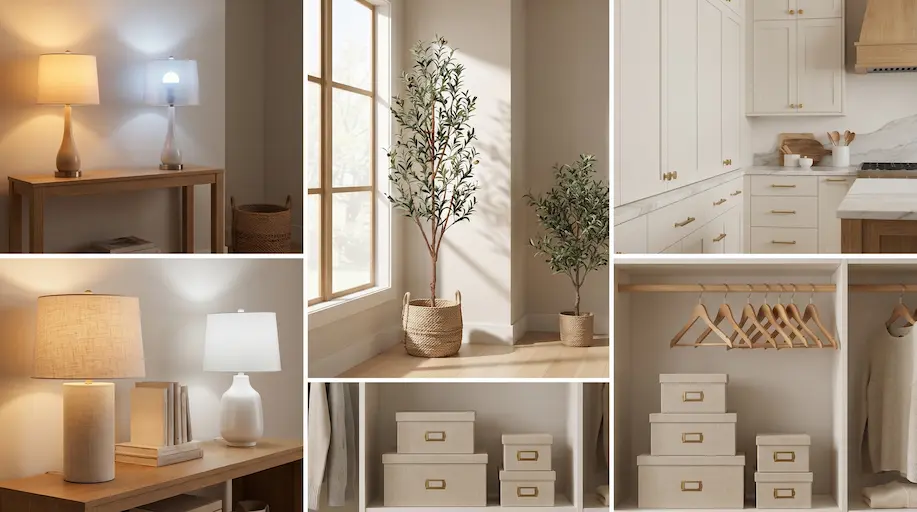
- Change every bulb to 2700K. Do the whole apartment in one go. If your bulbs are currently 4000K or higher, this single change will make your furniture look more expensive than reupholstering it would. Like a dimmable 2700K 6-pack.
- Swap cabinet and door hardware. Kitchen knobs, drawer pulls, even interior door handles. It’s the detail people touch, and cheap builder hardware is instantly recognisable. Like solid brass knobs, 10-pack.
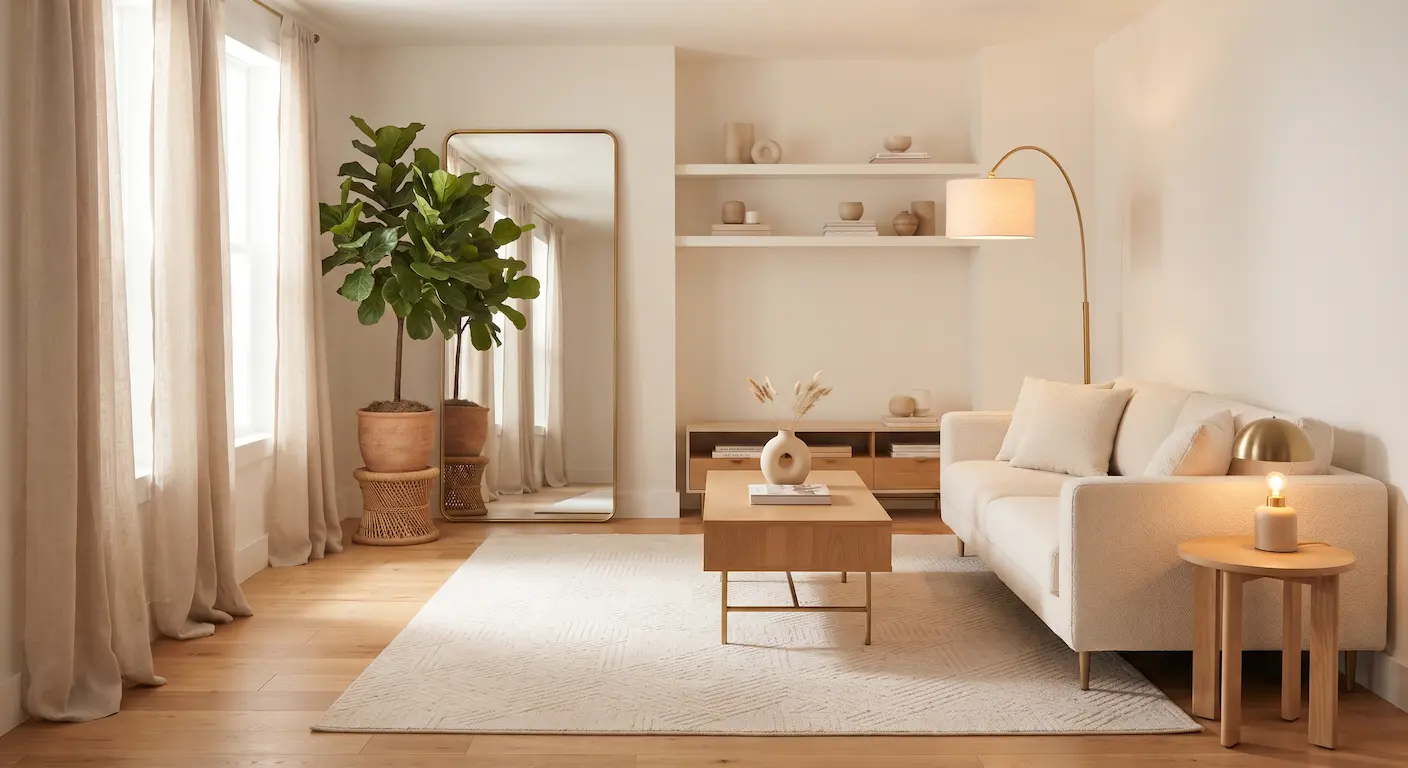
- Buy one large plant instead of three small ones. Real if you’ll water it, high-quality faux if you won’t. Small plants scattered around read as clutter; one big one reads as a design decision. Like a 6ft faux olive with a real wood trunk.
- Replace lampshades, not lamps. A cheap lamp with a good linen shade looks expensive. A good lamp with a shiny plastic shade doesn’t. The shade is the part people see.
- Get proper hangers and matching storage boxes. Inside closets and on shelves, uniformity does enormous work for very little money.
Under $100: Worth the Spend
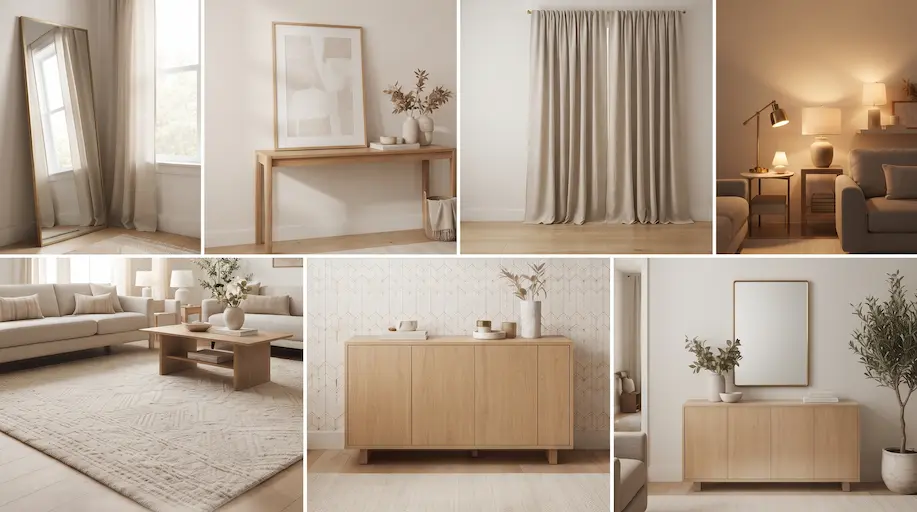
- One oversized mirror. Leaning, ideally, and near a window. It adds light, depth and a large expensive-looking object in one purchase. IMO this is the single best-value decor item that exists. Like a 65″ leaning mirror.
- One large piece of art. Big and cheap beats small and expensive every time in a room’s first impression. Printed posters in a decent frame work fine at scale.
- Better curtains, floor length. Heavier fabric hangs better and reads as costlier. They must reach the floor — short curtains undo the effect entirely.
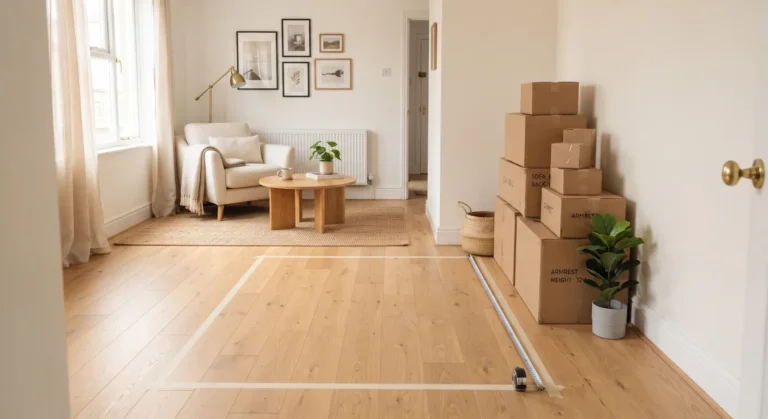
- A rug large enough for the room. Buying a rug that’s too small is the most expensive cheap mistake people make, because you end up buying a second one.
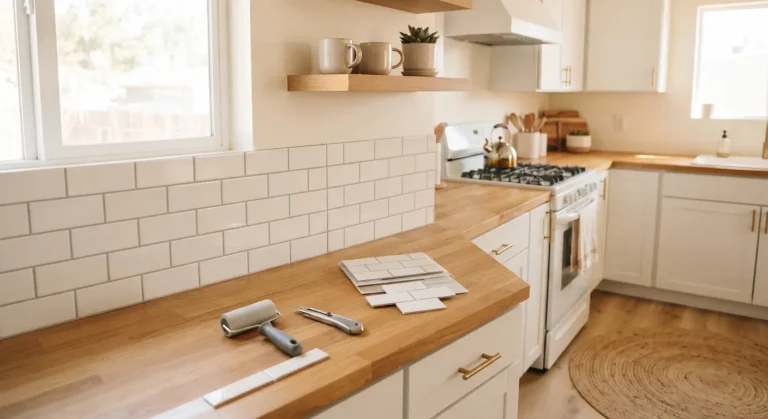
- Peel-and-stick on one surface. A single accent wall, a backsplash, or the fronts of tired cabinets. Like waterproof peel-and-stick tile. Renters especially — see what comes off cleanly.
- Layered lighting. Two or three lamps at different heights instead of the ceiling fixture. Like a dimmable arc lamp. Warm bulbs, obviously.
- Storage that hides things. Closed storage looks more expensive than open shelving, because open shelving requires your possessions to be beautiful. Most possessions aren’t.
Three Budgets, Three Plans
If you want this as a shopping order rather than a list, here’s how I’d spend it on one room.
$100
Bulbs for the whole room, one large mirror, and a set of cabinet or door hardware if the room has any. Spend the rest on nothing — clear your surfaces and raise your curtains instead. This budget buys the biggest visible change per dollar of the three, which surprises people every time.
$300
Everything above, plus a properly sized rug and floor-length curtains. These two items frame the room, and getting them right makes existing furniture look better than replacing that furniture would.
$500
Everything above, plus one large statement piece — oversized art, a big plant, or a single good lamp — and closed storage to get the clutter out of sight. At this point the room reads as designed rather than furnished.
Notice that a sofa appears in none of these. That’s deliberate. A sofa eats an entire budget and changes less than the four cheap moves above it.
Cheap Materials That Read as Expensive
Not all budget materials are equal. Some pass, some announce themselves from the doorway.
These read well:
- Linen and cotton, even inexpensive versions. Natural fibers wrinkle and drape in a way that reads as real.
- Unfinished or lightly finished wood. Honest and cheap. A plain wood surface beats a printed woodgrain every time.
- Matte ceramic and stoneware. Cheap pots look expensive if they’re matte and simple.
- Rattan, cane and seagrass. Inexpensive, textural, and they photograph beautifully.
- Blackened or brushed metal. Reads as considered; costs very little.
These give the game away:
- High-gloss anything. Shine exposes surface flaws and reads as plastic even when it isn’t.
- Printed woodgrain laminate. The repeat pattern is visible from across a room.
- Shiny faux leather. Matte versions pass; glossy ones never do.
- Cheap chrome. Brushed finishes age well, chrome pits and spots within a year.
The pattern: matte and textured hide cost, glossy and smooth reveal it. When you’re choosing between two versions of the same cheap object, take the matte one.
Where to Spend and Where to Save
If you have limited money, put it in specific places.
Spend on: the sofa, the mattress, lighting, and anything your skin touches daily. These are the items where cheap is obvious immediately and gets worse. A bad sofa looks bad on day one and structurally fails by year three.
Save on: side tables, shelving, art, planters, decorative objects, and anything trend-led. Nobody can tell how much a side table cost, and trends change faster than the furniture wears out.
The rule: spend on structure, save on decoration. FYI this is roughly the inverse of how most people shop, which is why so many rooms contain expensive candles and a collapsing sofa.
One more distinction worth making: spend on the things that wear, save on the things that only sit there. A sofa cushion compresses, a mattress sags, a cheap lamp switch fails — those costs come back. A side table holding a book experiences no stress at all, so the cheap one performs identically to the expensive one for a decade.
The same logic applies to what you touch. Door handles, drawer pulls, taps and light switches get used thousands of times a year, and cheap versions feel cheap every single time. Upgrading those is a small spend that pays out daily, which is why hardware punches so far above its price.
Five Things That Make a Room Look Cheap
- Cool-white lighting. Already said it, saying it again. It is the number one offender and the easiest to fix.
- Short curtains. Curtains ending above the floor look like they were bought for a different window.
- Too-small rugs. A rug stranded in the middle of the floor shrinks the whole room.
- Matching furniture sets. Buying the sofa, loveseat, and two tables as a set reads as showroom, not home. Mix at least the materials.
- Visible plastic. Plastic storage bins, plastic lampshades, plastic plant pots. Swap the pot, not the plant — it costs a few dollars and changes the whole object 🙂
Start With the Bulbs
If you do one thing from this entire article, change your bulbs to 2700K. It takes twenty minutes, costs almost nothing, and every material in your home will look better under it.
Then clear your surfaces, raise your curtains, and buy one large mirror. That’s a weekend and not much money, and it does more than a full furniture replacement would.
Working in a small space too? Start with the storage spots you’re not using and furniture that does two jobs — because in a small room, less stuff is itself a budget decor strategy.
What’s the cheapest-looking thing in your room right now? Tell me in the comments and I’ll tell you whether it’s worth replacing or just relighting.
As an Amazon Associate I earn from qualifying purchases. If you buy through a link here, I may earn a small commission at no extra cost to you — it never changes what I recommend.