18 Renter-Friendly Decor Ideas That Won’t Cost You Your Deposit
Renting means decorating with one hand tied behind your back. No painting, no drilling, no touching the cabinets, and everything you do has to come back off in a weekend when the lease ends.
So most renters just… don’t. They live in beige boxes for years, waiting to own something before they bother. That’s a lot of your life spent in a place you don’t like.
Here are 18 changes that survive a move-out inspection. Every one comes off cleanly, and most cost less than a single piece of furniture.
What Landlords Actually Check
Before the ideas, understand what you’re being graded on. Move-out inspections are more predictable than people think, and they look at roughly five things: holes in walls, paint condition, floor damage, missing fixtures, and cleanliness.
Notice what isn’t on that list. Nobody checks whether you added a rug, changed a lampshade, or hung a curtain from a tension rod. The entire game is leave no permanent trace, not change nothing.
Two practical rules that follow from that. First, photograph every wall and floor on move-in day, timestamped — it’s the cheapest insurance that exists, and it settles arguments about damage that was already there. Second, keep every original fixture you remove in a labeled box in the closet. Swapping a hideous light fixture is fine. Losing the original is what costs you.
Walls: The Biggest Change, the Biggest Risk
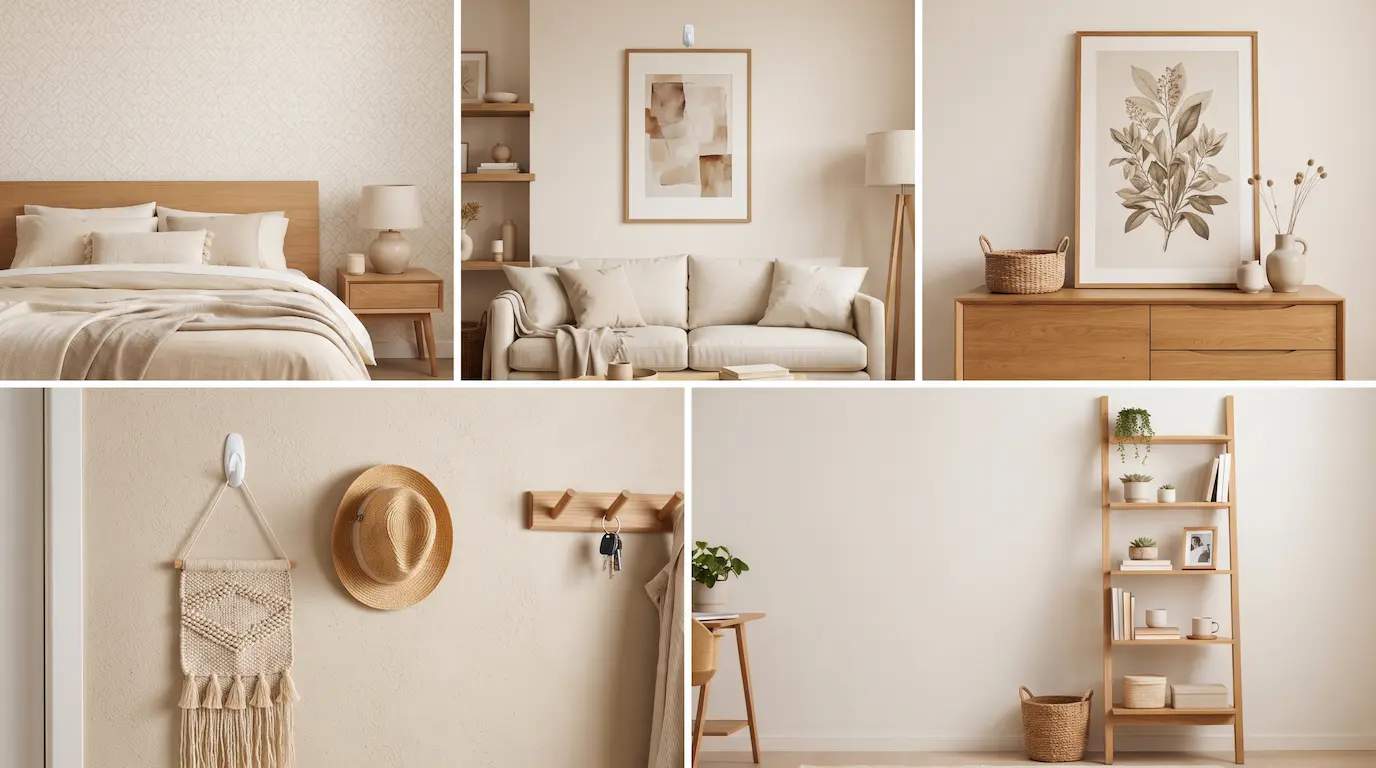
- Peel-and-stick wallpaper. The single highest-impact renter upgrade. One accent wall changes a room more than any furniture purchase. Test a small piece first — on cheap or freshly painted walls, removal can lift paint.
- Large art instead of many small pieces. One big piece needs one hook. Six small ones need six holes and never quite line up anyway. Much more in renter-friendly wall decor.
- Lean, don’t hang. Oversized art leaning on a dresser, mantel or floor looks deliberate and puts zero holes in anything.
- Removable adhesive hooks. Fine for anything light. Halve the stated weight rating, apply to clean walls only, and pull the tab straight down and slowly — yanking is what tears paint.
- Picture rail or leaning ladder. A tall leaning shelf gives you display space with no fixings at all, and it draws the eye upward, which makes ceilings feel higher.
IMO peel-and-stick wallpaper is the one worth the small risk. Nothing else changes a rental this much for this little.
Floors: Cover, Don’t Change
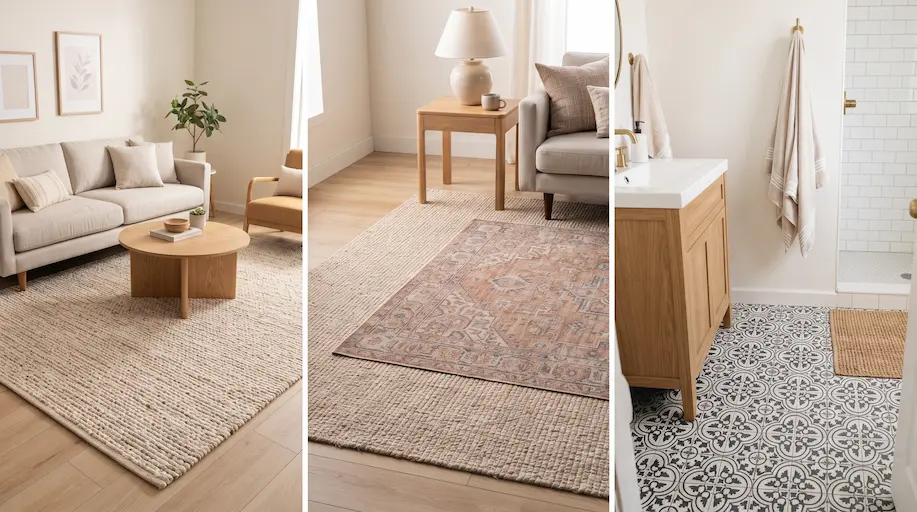
- A large rug over bad flooring. Renters consistently buy rugs that are too small. If it doesn’t reach under the front legs of your furniture, it makes the room look smaller, not better.
- Layered rugs. A smaller patterned rug over a large neutral one covers more ground for less money and hides the truly grim patches.
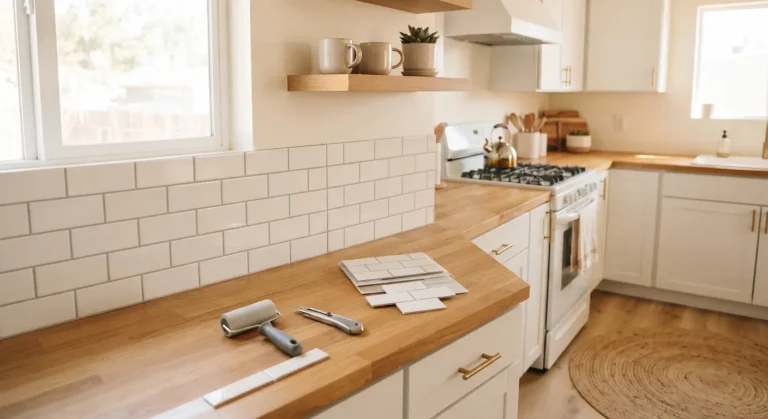
- Peel-and-stick floor tile in the bathroom or kitchen. Works over existing vinyl or tile and pulls up later. Do not use it on unsealed wood, where the adhesive can stain. Like Livelynine waterproof peel-and-stick tile.
Kitchen and Bathroom: Where Rentals Are Ugliest
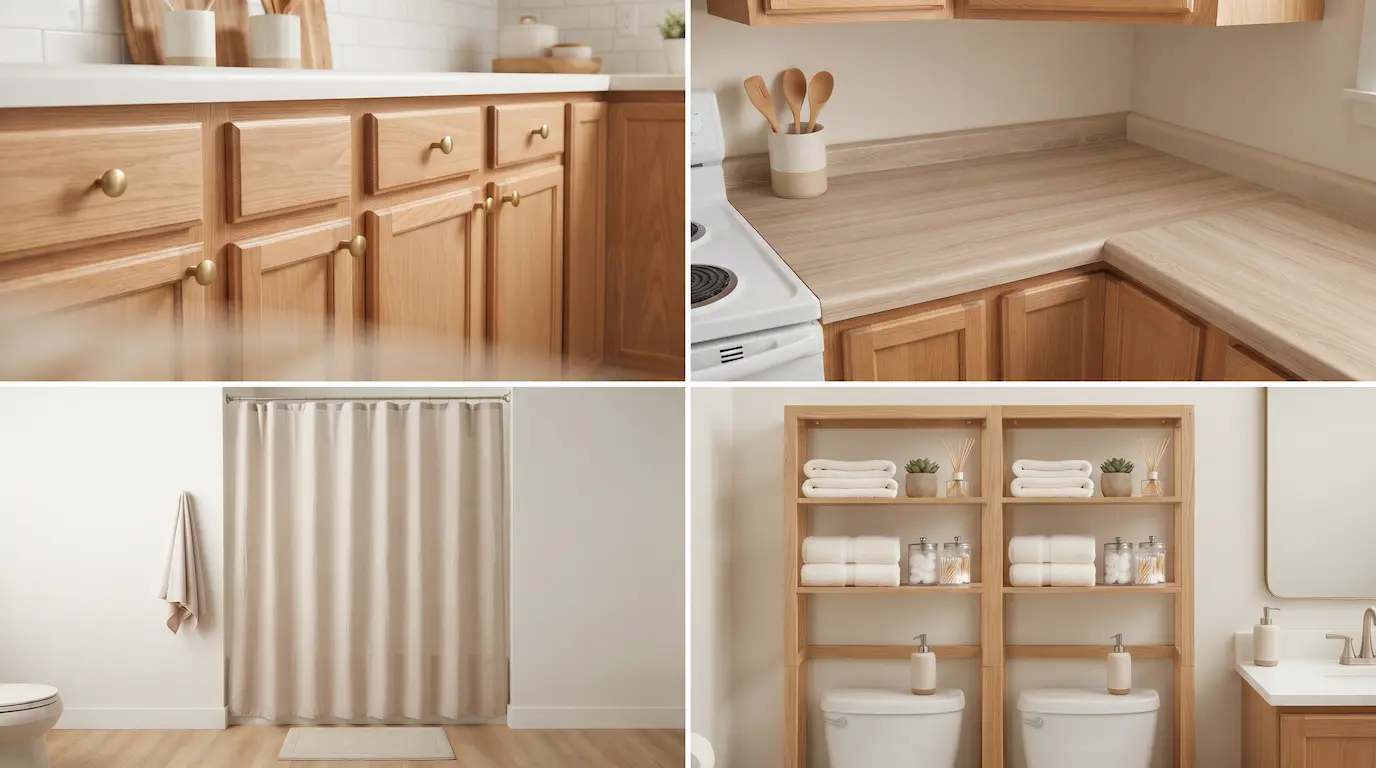
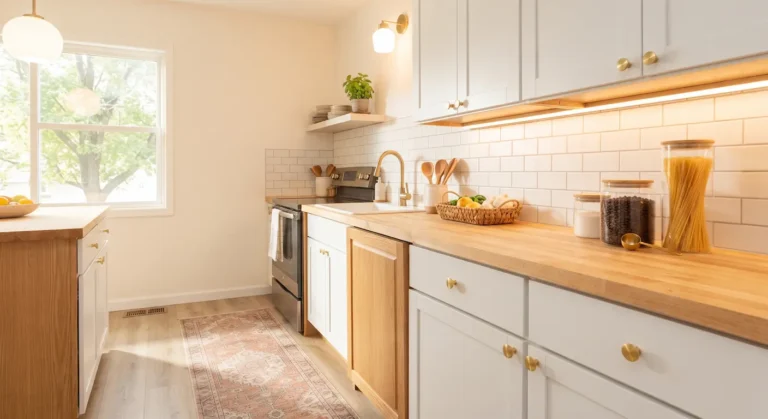
- Swap the cabinet hardware. Twenty minutes, no damage, and it’s the highest-impact-per-dollar change in any rental kitchen. Keep the originals in a bag taped inside a cabinet door.
- Contact paper on counters or cabinet fronts. Genuinely convincing now. Test one small area behind an appliance first.
- A better shower curtain and rod. Rental bathrooms are almost always rescued by fabric. Kitchens get the same treatment in 17 small kitchen ideas. Floor-to-ceiling curtains here make the room read taller.
- An over-sink or over-toilet shelf. Much more in 15 small bathroom storage ideas. Freestanding versions need no wall fixings and absorb the storage a rental bathroom refuses to provide.
FYI cabinet hardware is the change most renters skip and most regret skipping. It costs less than dinner and it’s the thing your hand touches forty times a day.
Lighting: Stop Using the Ceiling Fixture
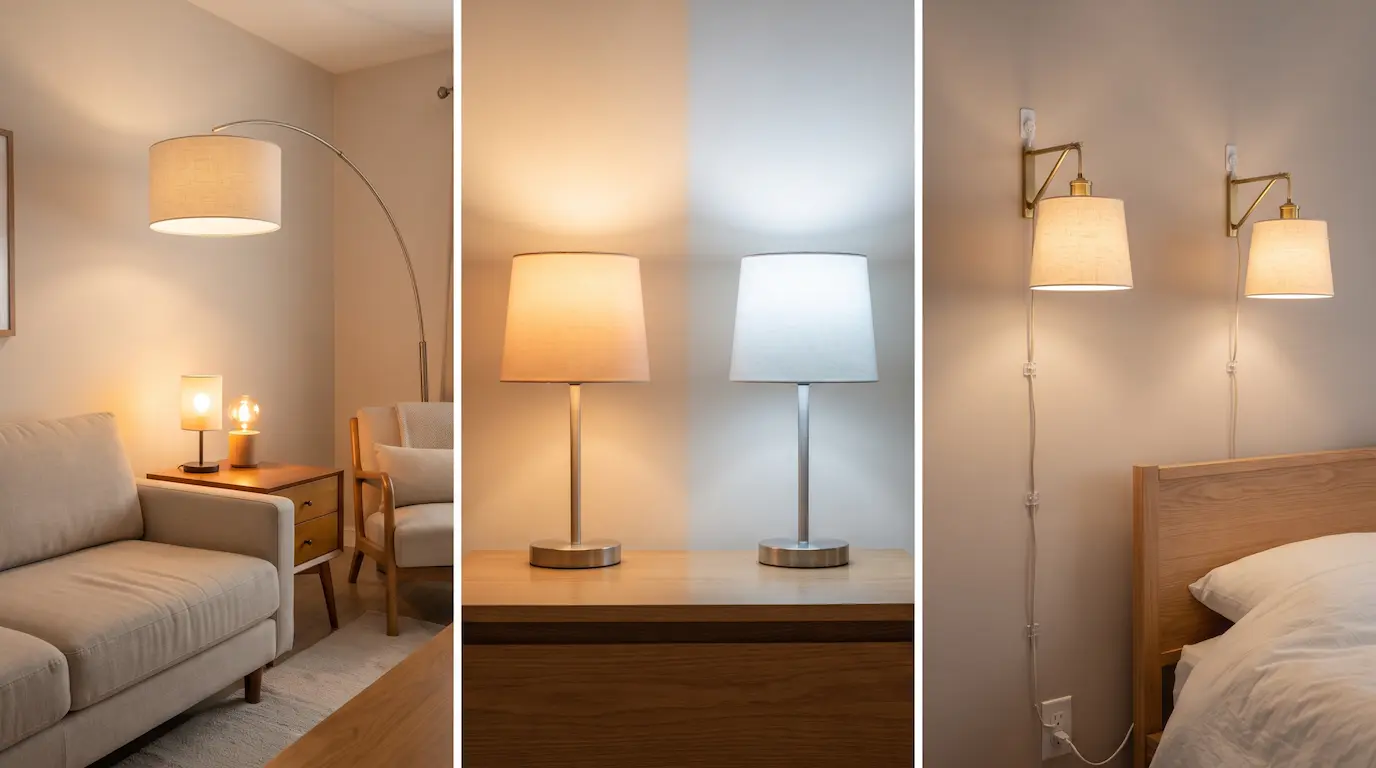
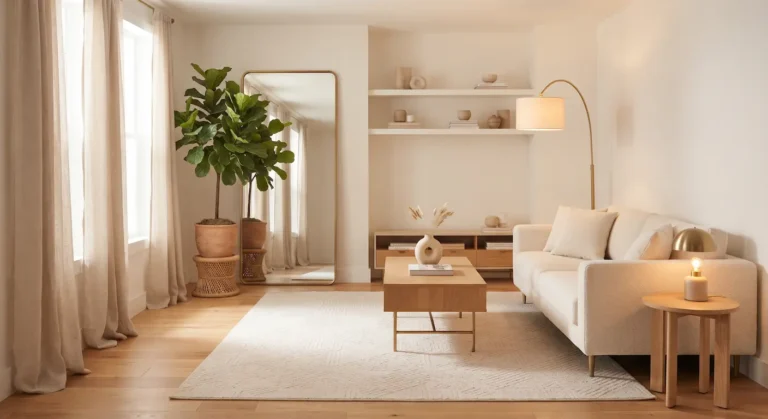
- Add lamps, plural. Three warm lamps beat one overhead light in every rental ever built. Bedrooms get their own treatment in 15 small bedroom ideas. This is the fastest way to make a generic space feel like yours. Like a dimmable arc lamp.
- Swap bulbs to a warmer temperature. Landlord bulbs run cold and blue. It is the first item in 18 budget decor ideas that make a room look expensive for a reason. Moving to 2700K costs a few dollars and changes how every surface in the room reads.
- Plug-in wall sconces or pendant lights. Cord-and-plug versions hang from a hook and plug into an outlet, giving you the look of hardwired lighting with none of the wiring. Like this plug-in sconce pair.
Windows: The Cheapest Big Win
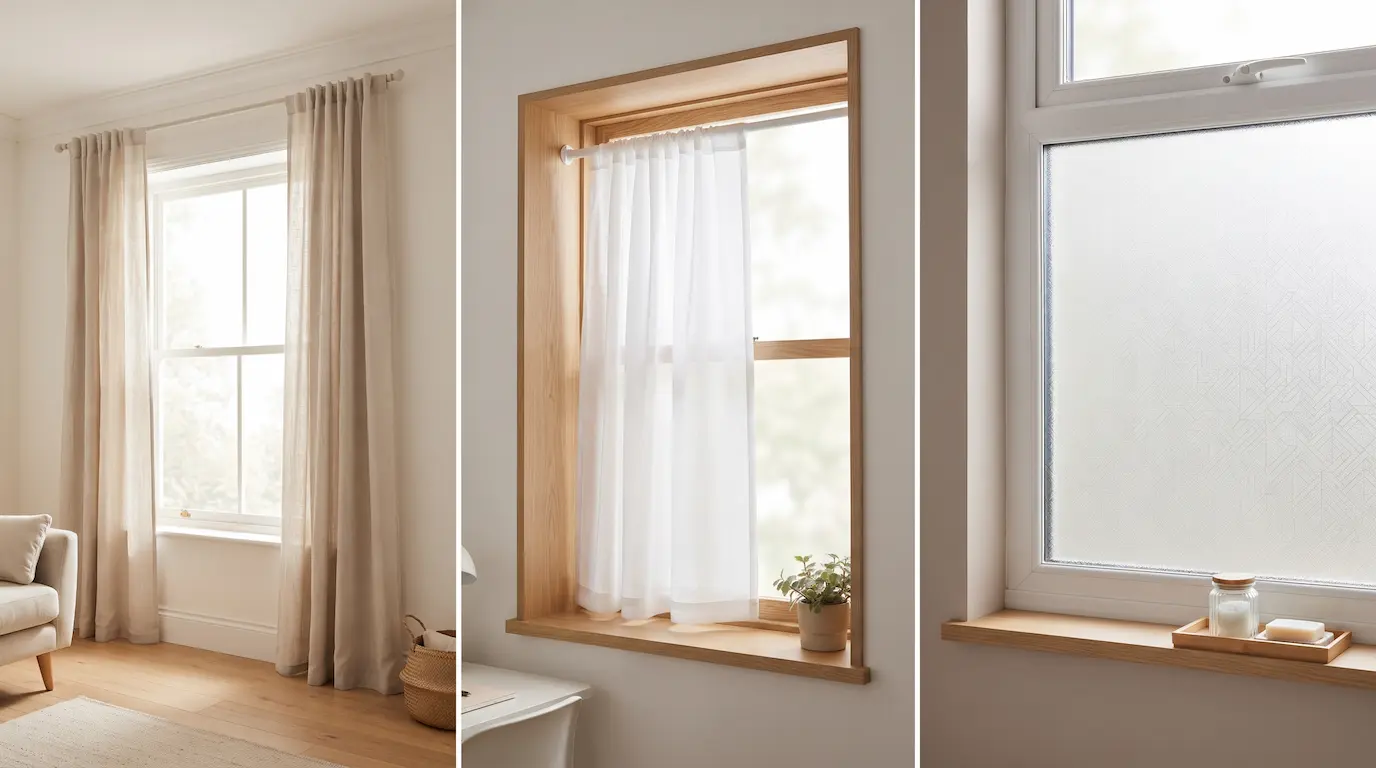
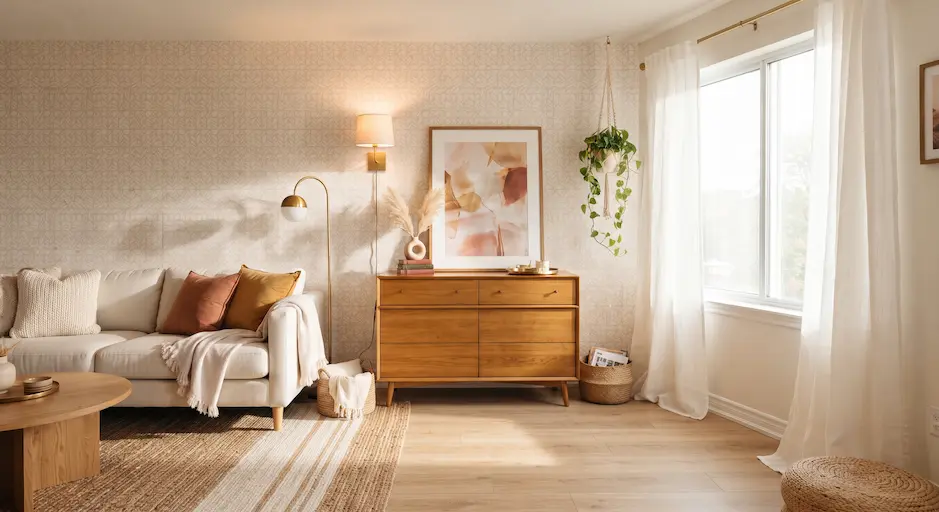
- Hang curtains high and wide. Mount the rod near the ceiling and extend it past the frame on both sides. Same window, dramatically taller room. This is the single most effective trick on this list.
- Tension rods where you can’t drill. They work inside a window recess without a single hole.
- Window film for privacy. Static-cling film needs no adhesive, peels off completely, and beats blinds you’re not allowed to replace. Like DUOFIRE no-glue film.
Since I called the curtain trick the most effective thing on this list, here are the actual numbers — because “hang them high and wide” is useless without them:
- Height: mount the rod 4-6 inches below the ceiling, not just above the window frame. If you have tall ceilings, split the difference and go about two-thirds of the way up the gap.
- Width: extend the rod 8-12 inches past the frame on each side, so the open curtains sit on wall rather than covering glass. You keep all your light and the window reads much wider.
- Length: the panels should reach the floor with a slight break, like trousers. Curtains that stop short of the floor make a ceiling look lower, which is the exact opposite of the goal.
- Fullness: total panel width should be roughly double the rod length, or they hang flat and look like a hotel.
That’s one rod, two panels, and about twenty minutes for the biggest visual change available to a renter.
How to Take It All Down Without Damage
Everything above assumes a clean removal, and removal is where renters actually lose money. Most damage happens in the last two hours of a tenancy, done in a hurry by someone who is already exhausted. Do these slowly instead.
Adhesive hooks and strips
Never pull outward. Grip the tab and stretch it straight down, parallel to the wall, slowly, for as long as it takes — some strips stretch 15 inches before releasing. If the tab snaps off, warm the strip with a hairdryer and work dental floss behind it.
Peel-and-stick wallpaper and contact paper
Warm each section with a hairdryer as you go and peel at a shallow angle, close to the wall, not straight out toward you. Pulling at 90 degrees is what lifts paint. Work top to bottom in one continuous piece where you can.
Peel-and-stick floor tile
Same principle, more heat. Any adhesive left behind comes up with a plastic scraper and a citrus-based remover — test it in a corner first, because some removers dull vinyl.
Small holes
Lightweight spackle, a putty knife, and a damp cloth to wipe the excess flush while it’s still wet. Skipping that wipe is why amateur patches show — the ridge around the hole is more visible than the hole was. Let it dry, sand lightly, and don’t bother repainting unless your landlord left you the paint.
One Year or Three? Spend Accordingly
How long you’re staying should change what you buy, and most renters get this backwards — they buy cheap disposable things for a long tenancy and expensive fitted things right before moving.
Staying under a year: spend on things that leave with you and work anywhere. Lamps, rugs, art, curtains, storage furniture. Skip anything cut, fitted or adhered to this specific apartment. A rug moves; wallpaper cut around this kitchen’s outlets does not.
Staying two years or more: now the fitted stuff earns its cost. Peel-and-stick wallpaper, contact paper, floor tile and custom-cut window film all amortize nicely over a longer stay, and you’ll get enough enjoyment out of them to justify the removal work.
Either way, buy furniture as if you’ll move. Check that it breaks down, fits through a standard doorway, and isn’t so heavy you’ll resent it on stairs. The nicest sofa in the world is a bad buy if it can’t leave the building.
Four Things That Actually Cost People Their Deposit
Since this list is about staying safe, it’s worth naming what genuinely goes wrong:
- Painting without permission. Even a good job. Even a neutral color. Especially if you paint over wallpaper.
- Heavy adhesive hooks on cheap paint. Landlord-grade paint is thin. Removal takes chunks with it.
- Anchors without patching. The drilling is usually fine; leaving open holes is what gets charged.
- Losing original fixtures. Swapping is fine. Not being able to swap back is a replacement fee.
Notice that three of those four are about the undo, not the change itself. That’s the whole principle: make sure everything you do has a reverse gear.
Where to Start
If you do only three things: hang your curtains high, add two lamps, and swap the kitchen hardware. Those three cost very little, take one afternoon, involve almost no risk, and change more than anything else here.
After that, work on the room you spend the most waking hours in. Renters tend to decorate the bedroom first because it’s private, then discover they spend all their time in a living room they ignored 🙂
Once the surfaces look better, the next constraint is usually space rather than style — that’s where the 20 storage spots most apartments waste and multifunctional furniture for small studios pick up. And if your rental is a single open room, start with dividing it into zones before you decorate anything.
What’s the one thing about your rental you’d change tomorrow if the lease allowed it? Tell me in the comments — there’s usually a removable version.
As an Amazon Associate I earn from qualifying purchases. If you buy through a link here, I may earn a small commission at no extra cost to you — it never changes what I recommend.