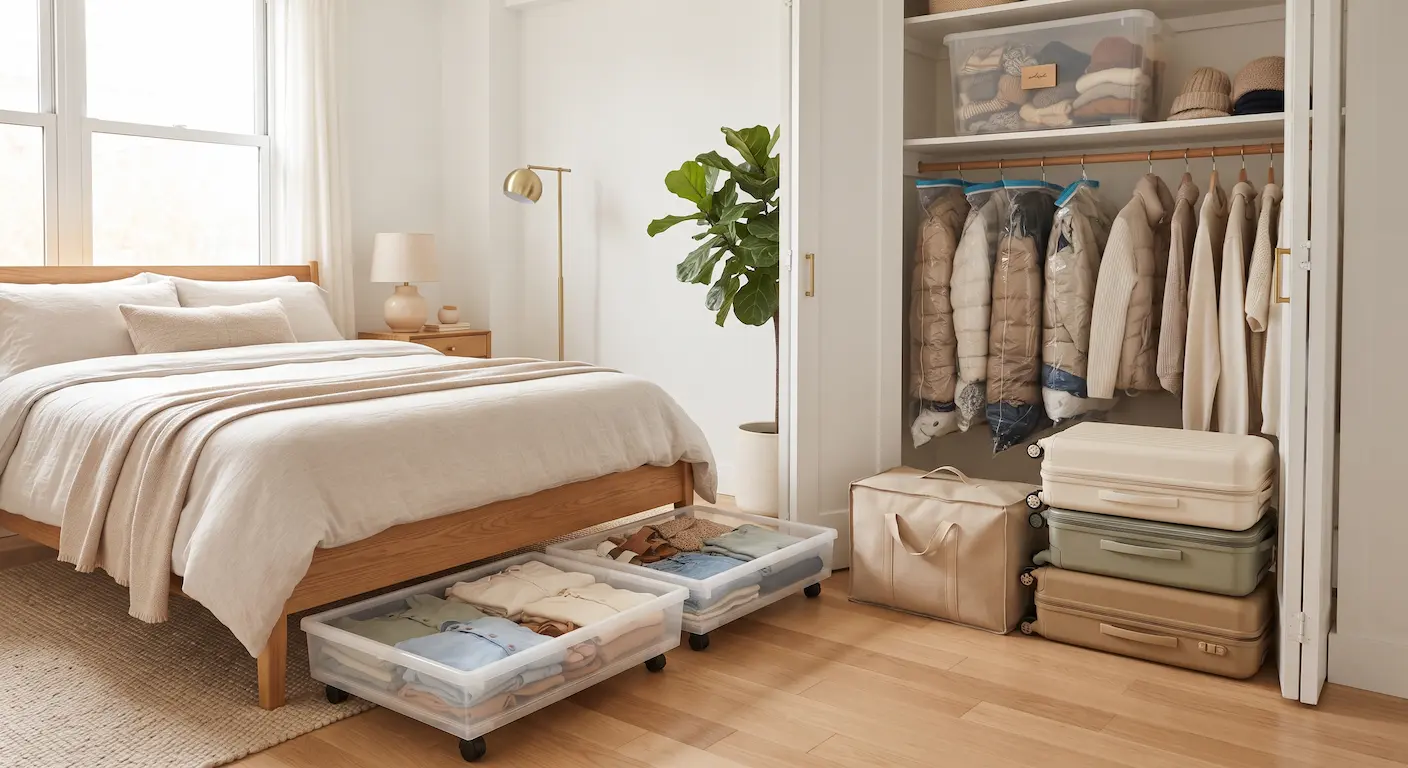
How to Store Seasonal Items and Luggage in a Small Apartment
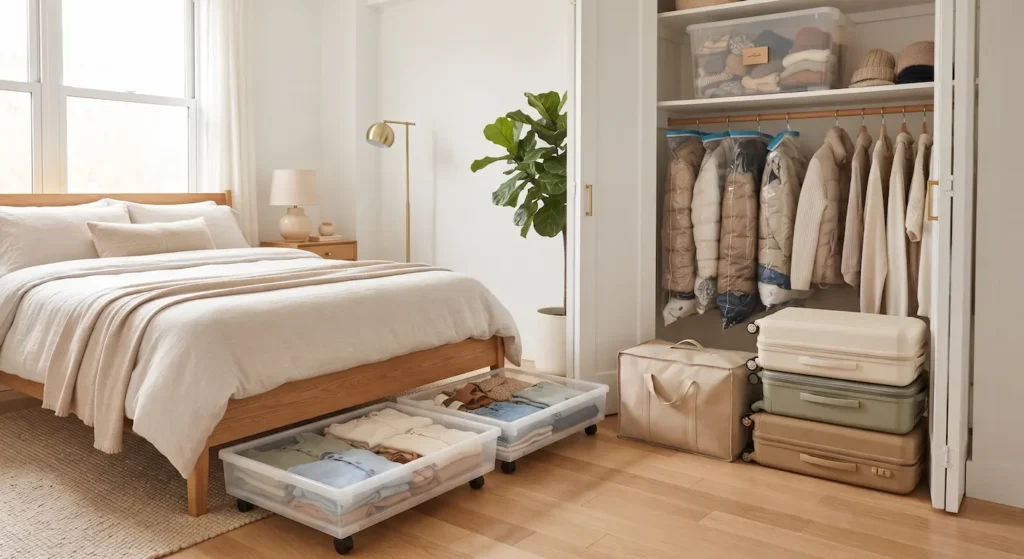
Seasonal storage is the quiet crisis of small-apartment living. Winter coats in July, a fan in January, Christmas decorations in a bag behind the sofa, and two suitcases taking up the only empty corner in the place.
None of it is used often. All of it is bulky. And unlike a house, you have no loft, no garage and no basement to put it in.
Here’s how to store seasonal things and luggage in a small apartment, using the four spaces you already have and compressing the rest.
First, Cut What You Are Storing
Storage problems are usually volume problems. Before you buy a single bin, take everything seasonal out and look at it in one pile.
Two questions per item. Did I use this last season? Would I replace it if it vanished?
Two noes means it goes. Storing something for a year costs you space every single day of that year, which in a small apartment is an actual cost.
Be particularly hard on decorations, spare bedding and clothes you kept for size reasons. Those three categories are where almost all excess seasonal storage lives.
The broader method is in how to declutter a small apartment.
The Four Zones You Already Have
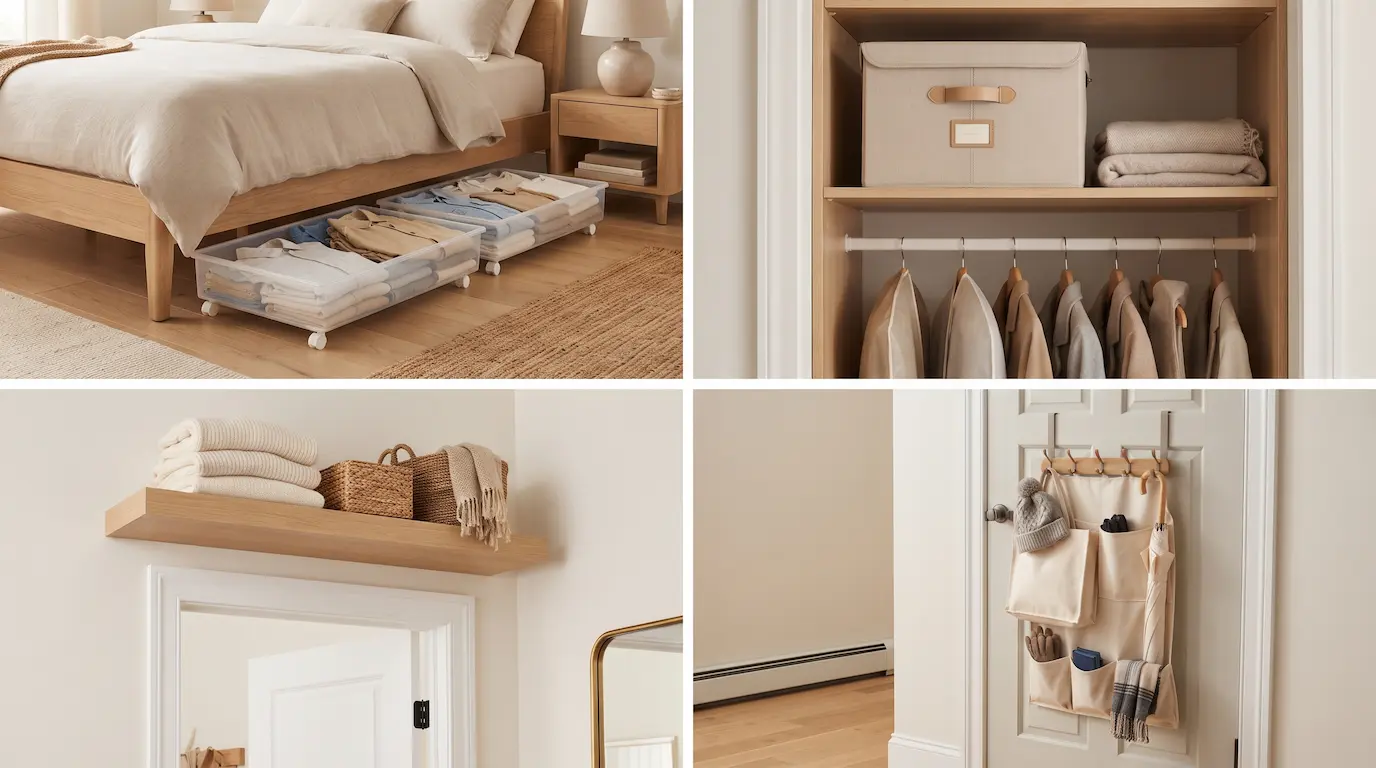
Zone 1: under the bed. The best storage in any small apartment. Flat, wheeled bins slide out without moving furniture, and a standard double bed has room for four to six of them. Like these flat wheeled under-bed bins.
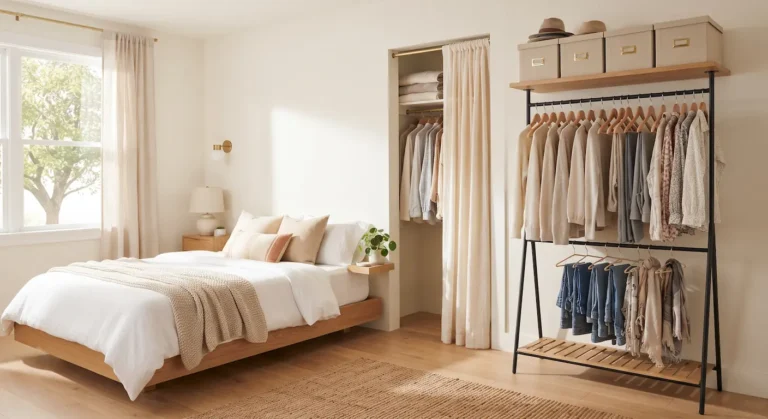
Zone 2: the top shelf of every closet. The highest shelf is wasted in most apartments because you cannot reach it easily — which makes it perfect for things you touch twice a year. Keep it light and use handled boxes. Like these handled storage bags.
Zone 3: above the doors. There are 12 to 18 inches of unused wall above most doorways. A single shelf there holds a surprising amount, and nobody notices it.
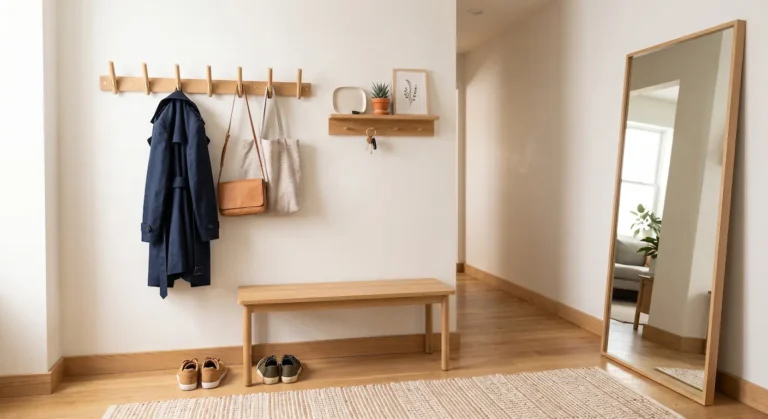
Zone 4: the back of every door. Over-door racks handle shoes, bags, hats and anything flat. Like this over-the-door rack.
Then the inside of furniture. Storage ottomans, storage benches and the base of the wardrobe. See 20 small apartment storage ideas.
Use Your Luggage as Storage
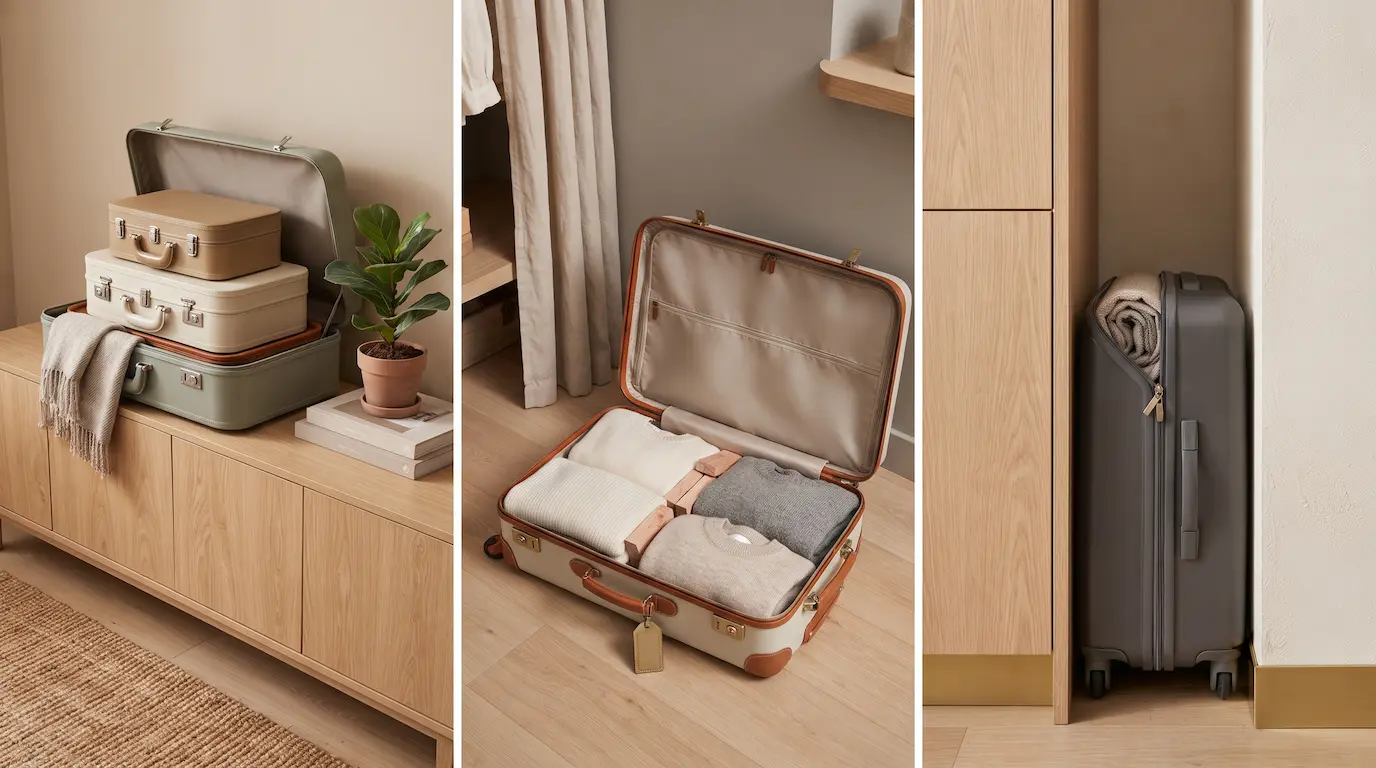
Do not store empty suitcases. They are containers. Storing a container empty is the most wasteful thing in the apartment.
Nest them. Cabin bag inside the medium case, medium inside the large. That alone frees up half a cupboard.
Fill them with off-season clothes. Winter jumpers in the big case in summer, then swap the contents in autumn when the case comes out for travel anyway.
Keep something absorbent inside and leave the zip slightly open so the case can breathe. A closed case with damp contents is how luggage starts smelling. Like a charcoal moisture bag.
Store cases upright, not flat, so you can slide them in and out of a tight gap.
Compression: What to Vacuum and What Not To
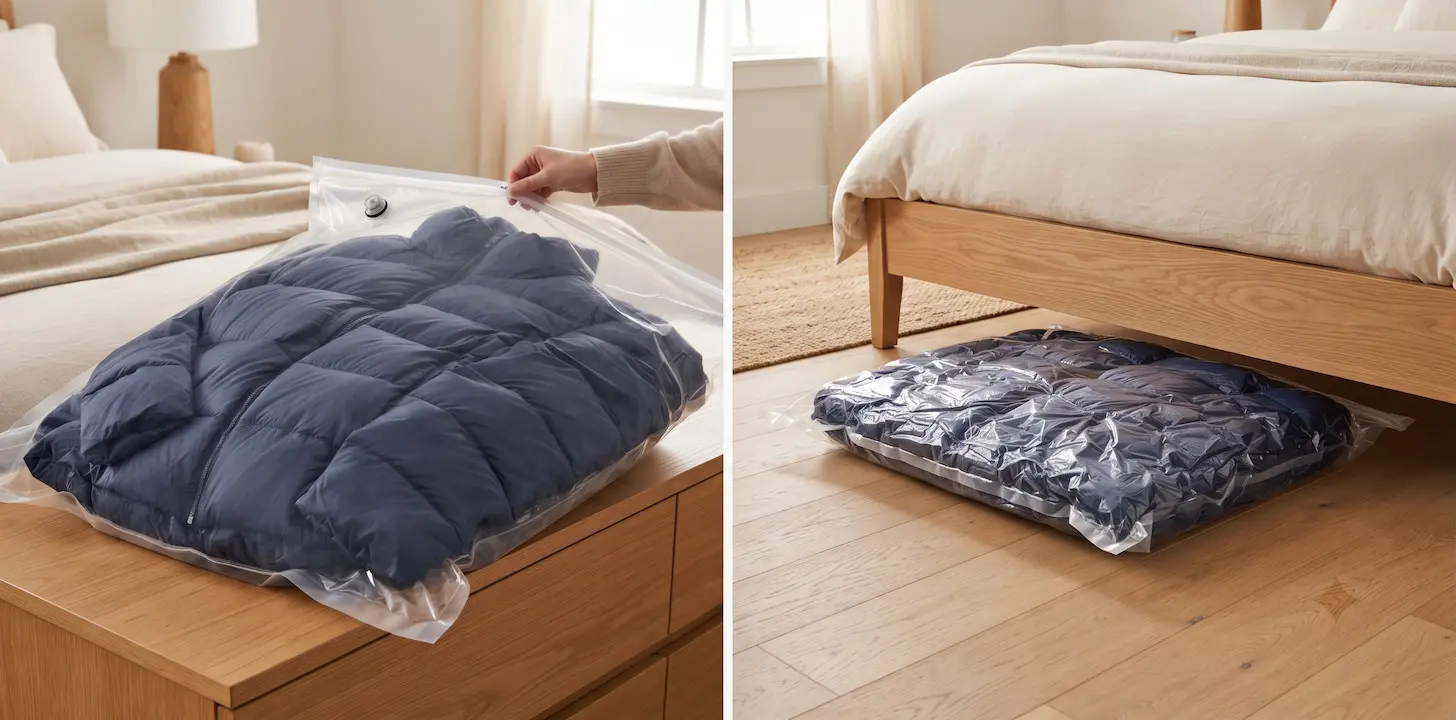
Vacuum bags are the biggest single win for bulky textiles. Duvets, winter coats, blankets and jumpers lose most of their volume. Like these vacuum storage bags.
They work best under the bed, because they become flat slabs rather than lumpy bags. Like this jumbo ten-pack.
Do not compress these long term:
- Down and feather duvets and coats. Long-term compression damages the fill’s ability to recover loft. A breathable bag with light compression is kinder.
- Leather and anything structured. It creases permanently.
- Anything damp. Sealing moisture in is how you get mildew.
- Wool in an unsealed bag near food. Moths find wool; make sure the seal is genuinely airtight.
Wash everything before storing it. Body oils and food traces attract pests, and a stored stain becomes permanent.
Christmas and Seasonal Decor
One bin per season, and hold the line. When the bin is full, the season is fully decorated.
Use the original boxes only for fragile things. Otherwise they waste enormous space — wrap ornaments in tea towels you already own instead of keeping a box the size of a microwave.
Wind lights around a piece of card so next December does not start with a knot.
Keep the bin somewhere seasonal-appropriate. Christmas things in the least accessible spot, because you need them for one short window; the all-year spare bedding somewhere reachable.
Small-space festive ideas that need less storage are in Christmas decor ideas for small apartments, and the spring swap is in spring decor ideas.
Fans, Heaters and Bulky Appliances
Clean them before storage. A fan stored dusty comes out smelling and blows that smell round the room in June.
Keep the box if it stacks well, bin it if it does not. Boxes are only worth their space when they protect something genuinely fragile or make the item stackable.
Coil the cable loosely and tie it so it does not get kinked or crushed — crushed cables are damaged cables.
Store them upright and off the floor if you can, and never wedge a heater behind soft furnishings where you might forget it and later switch it on in place.
Do not store anything on top of an appliance vent or against a radiator, even in the off season.
Sports and Outdoor Gear
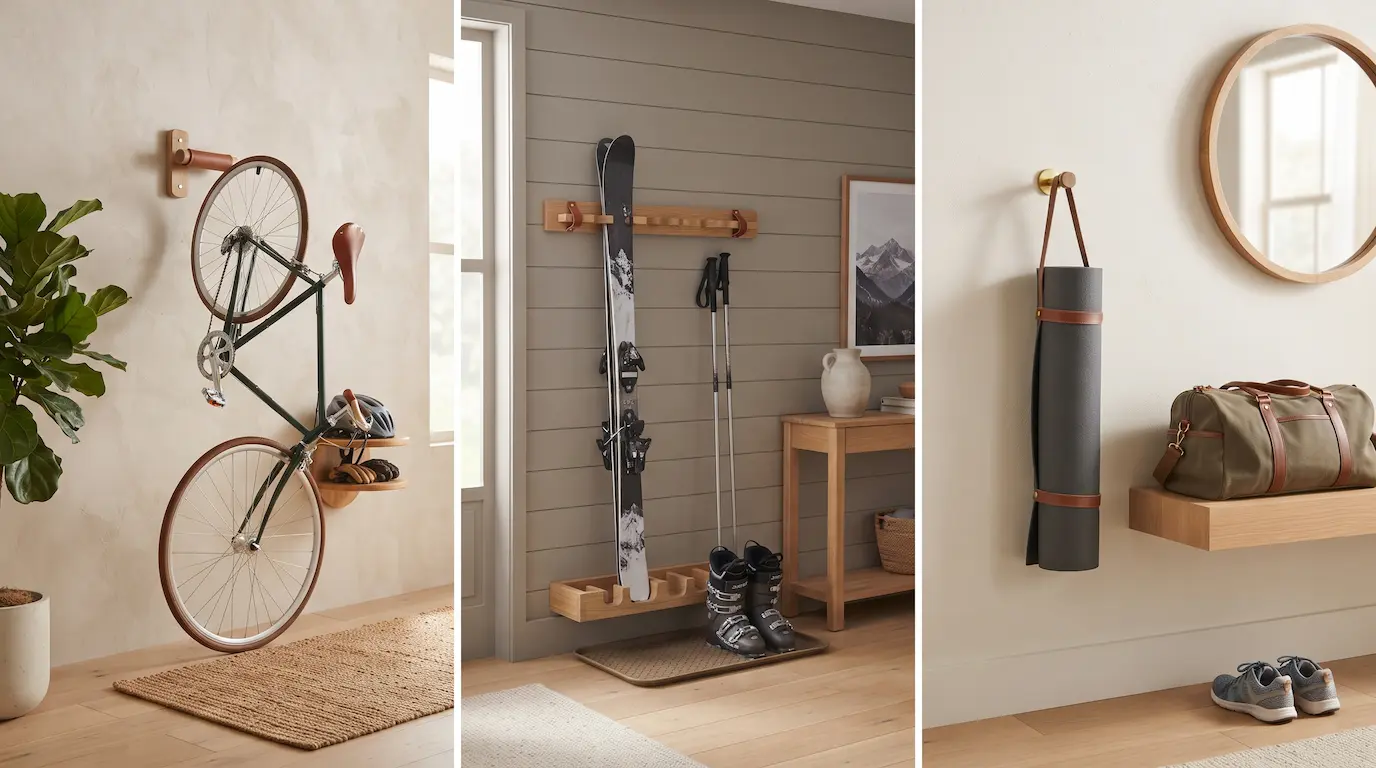
Hang what you can. Bikes, skis and yoga mats all store better vertically, and a wall hook beats a corner pile.
Check your lease and building rules about bikes in hallways or on balconies. Corridors are escape routes and most buildings are strict.
Dry everything fully first. Wet gear in a closed bag is the fastest route to mould in a small apartment.
Keep one bag packed per activity. Gym, swimming, hiking. It stores as one unit and you actually go, because the setup takes ten seconds.
Damp, Pests and Smell
Never store fabric in a damp place. That includes under-sink cupboards, against an exterior wall in a cold flat, and on a balcony.
Use lidded plastic bins rather than cardboard. Cardboard absorbs moisture, attracts pests and collapses.
Add charcoal or bamboo bags to closed storage rather than scented products, which fade and can transfer to fabric. Like these charcoal bags.
If your apartment is genuinely damp, deal with that first. A small dehumidifier in the worst room protects everything you store, and prevents a much bigger problem. Like this small dehumidifier.
Check stored items twice a year when you do the seasonal swap. Two minutes of looking prevents finding out in October that something has been mouldering since March.
Label It So You Can Actually Find Things
Label the end that faces out. Obvious, and constantly done wrong on bins that slide under beds.
Write contents, not categories. “Winter — coats, 2 duvets, boots” beats “Winter stuff”.
Photograph the inside before you close it and keep the photos in one album on your phone. This is the trick that makes seasonal storage genuinely painless.
Keep a one-page list of what is where — under bed, closet top, above door. In a small apartment with four storage zones, this takes five minutes and saves an hour a year.
The Twice-Yearly Swap, Step by Step
Do it on one afternoon in spring and one in autumn and seasonal storage stops being a background annoyance.
Empty the zone completely. Everything out from under the bed, everything down from the closet top.
Sort into three: coming out, going away, leaving. That third pile is the one that keeps the system working year after year.
Wash anything going into storage and let it dry fully — fully, not nearly.
Refill the bins, label the ends, photograph the contents. Ten minutes, and it saves the annual rummage.
Put the incoming season’s things where your hands go and the outgoing season’s where they do not. That is the entire logic of seasonal storage in a small home. Keeping the entryway working through the swap is covered in shoe storage for a small entryway.
When a Storage Unit Makes Sense
Do the maths before you rent one. A small unit over two years often costs more than replacing everything inside it.
It makes sense for short, defined periods: between leases, during a renovation, while you decide about inherited furniture.
It rarely makes sense indefinitely for seasonal clothes and decorations, which is what most people end up storing in them.
Set a review date if you do rent one, and put it in your calendar. Storage units are famous for quietly outliving their reason.
Where Not to Store Things
Not on the balcony. Weather, damp, pests, and most leases prohibit it. It also removes the outdoor space you pay for.
Not in the shared hallway, stairwell or under the stairs. Escape routes must stay clear, and items there are usually removed or stolen.
Not blocking vents, radiators, the electrical panel or the smoke alarm. All four need to stay accessible.
Not in front of a window that is your fire escape route.
And not in tall unstable stacks. A tower of bins in a small apartment is something a child will climb and an adult will knock over at night.
Your Turn
Start with the suitcases. Nest them, fill them with off-season clothes, and you will have solved two storage problems with one twenty-minute job.
Then get two or three flat wheeled bins for under the bed and move the bulkiest textiles into vacuum bags. That is the whole system for most apartments, and it costs less than one month of a storage unit.
More on that zone specifically in under-bed storage ideas, and on the closet in small closet organization ideas. What is currently taking up the most space for the least use? IMO it is the empty suitcase. 🙂