How to Fit a Home Office Into a Small Apartment
Working from home in a small apartment means one of two things: you’ve given up a chunk of your living space permanently, or your laptop lives on the kitchen table and you clear it every time you want to eat.
Neither is great. A desk you can’t escape is bad for your evenings, and a workspace you dismantle daily is bad for actually working.
The fix is picking the right kind of workspace for your apartment, not just finding a corner and buying the smallest desk you can. Here are the five places a desk actually fits, what to do if none of them work, and how to make it disappear at 6pm.
Five Places a Desk Fits in a Small Apartment
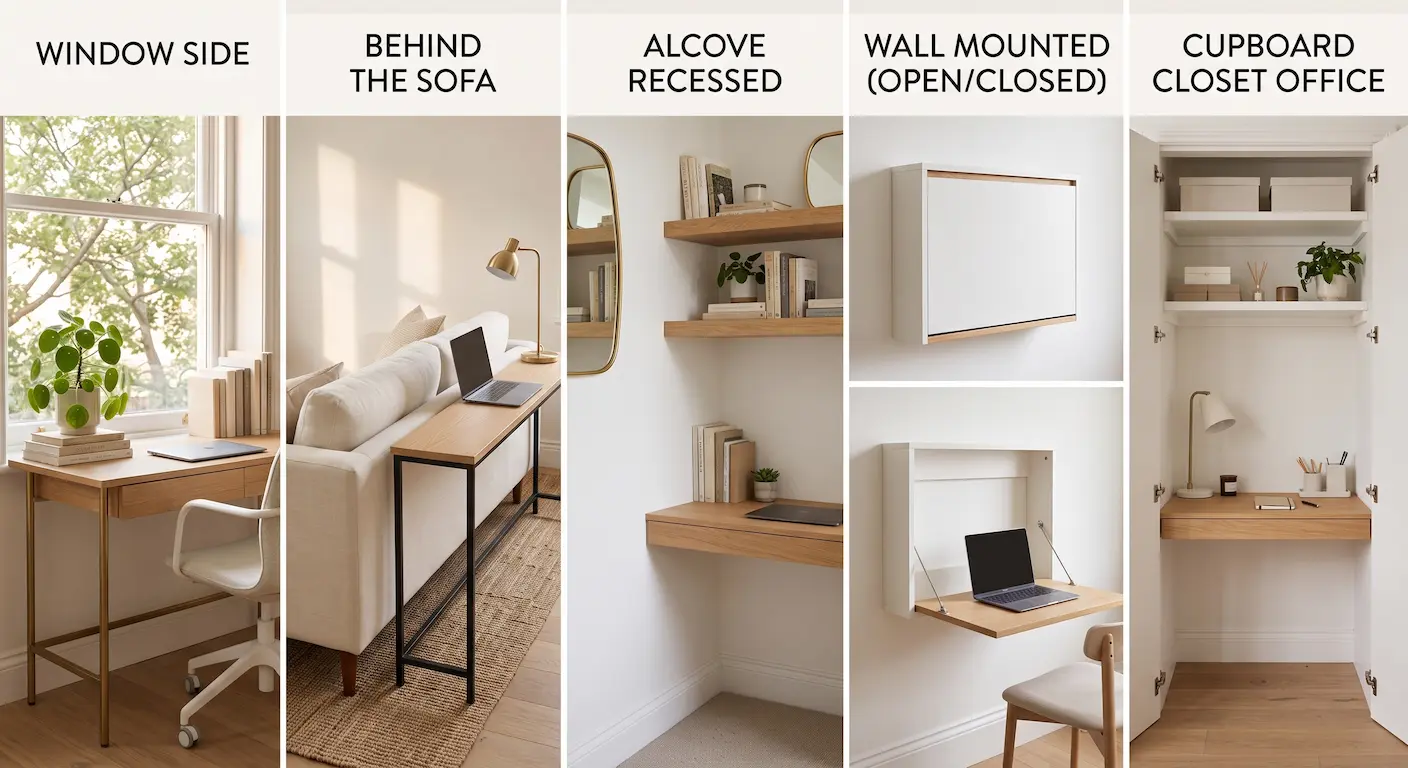
1. Against a window
The best option if it’s available. Natural light is the single biggest factor in whether a workspace feels bearable for eight hours, and a desk under a window uses wall that furniture usually can’t.
Watch for: screen glare. Sit side-on to the window rather than facing it or backing onto it, and you get the light without fighting your monitor.
2. Behind the sofa
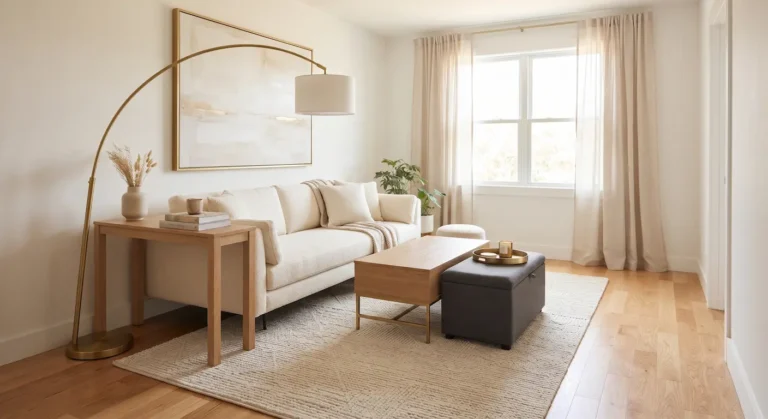
A narrow console-depth desk behind a floated sofa creates a work zone in space that was pure circulation. It also gives you a visual boundary between work and living, which matters more than people expect.
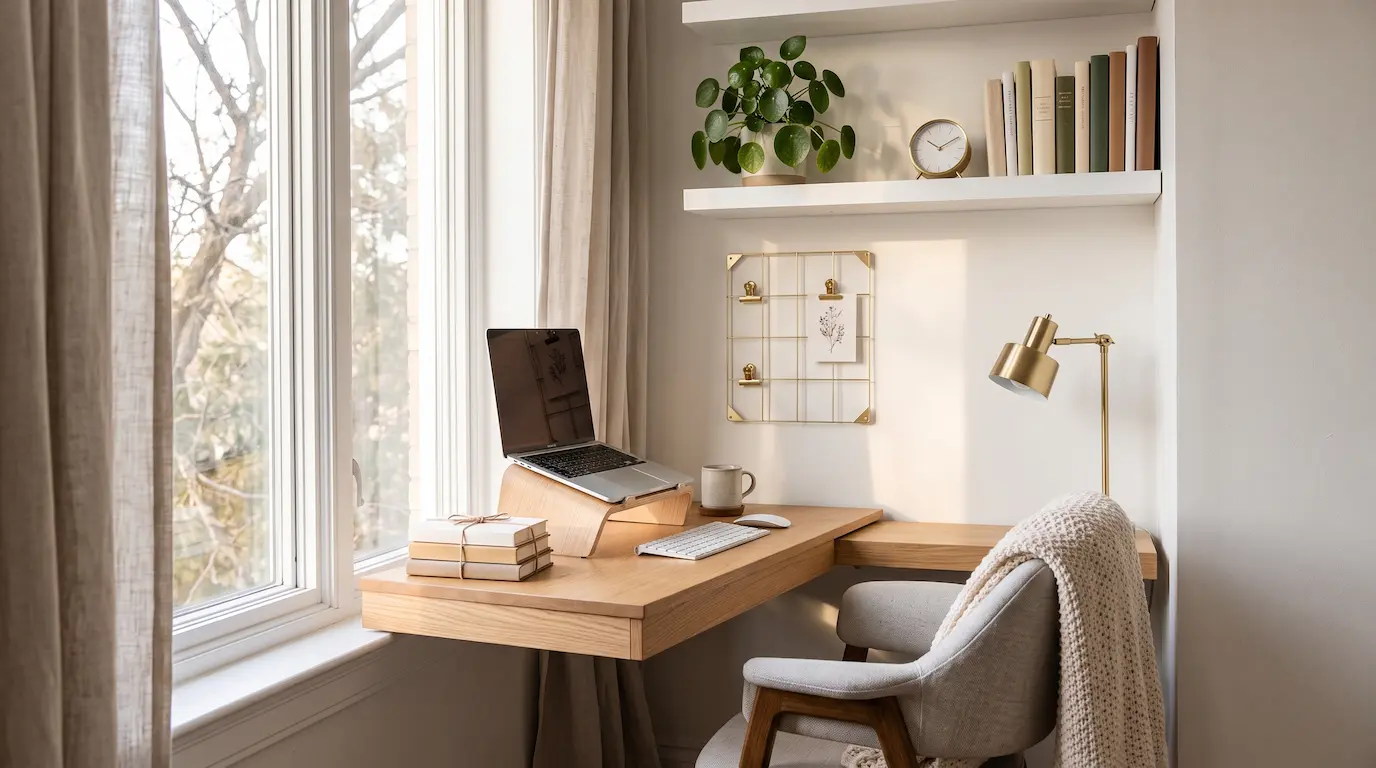
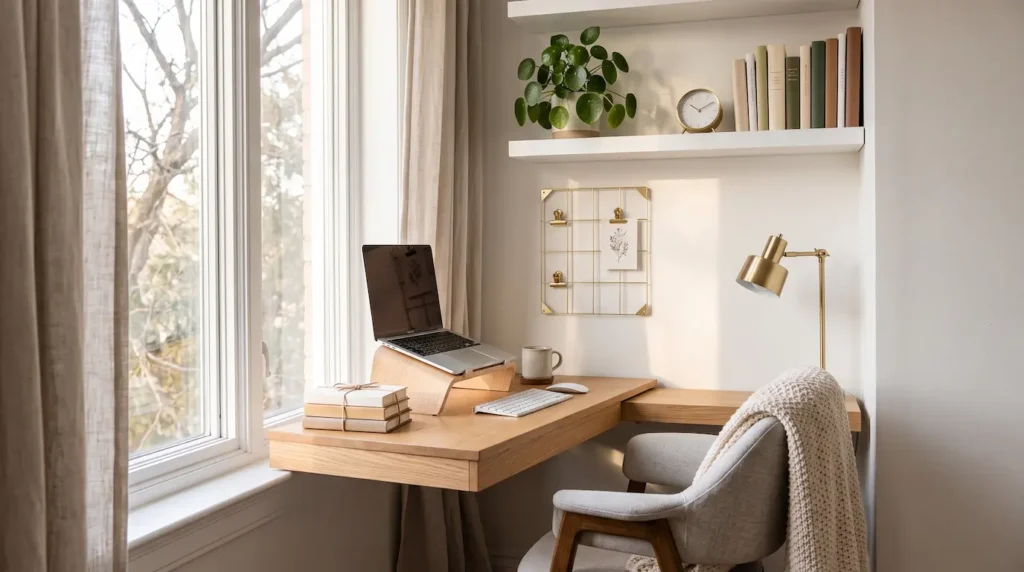
3. In an alcove or a chimney breast recess
Most apartments have one dead recess. It’s usually 24-30 inches wide, which is a perfectly adequate desk, and shelving above it turns the whole recess into an office that occupies no room at all.
4. A fold-down wall desk
Mounts flat to the wall, drops open to work, folds up after. Four inches of depth when closed. Like a fold-down desk with shelves. This is the purest small-space answer — the workspace genuinely ceases to exist outside working hours.
The catch: you have to clear it to close it, so it only works if you’re disciplined about ending the day.
5. Inside a cupboard
A shallow wardrobe or cupboard converted with a shelf at desk height becomes an office you close a door on. Best possible separation, and it hides the mess without you tidying it.
If There Is Genuinely No Room for a Desk
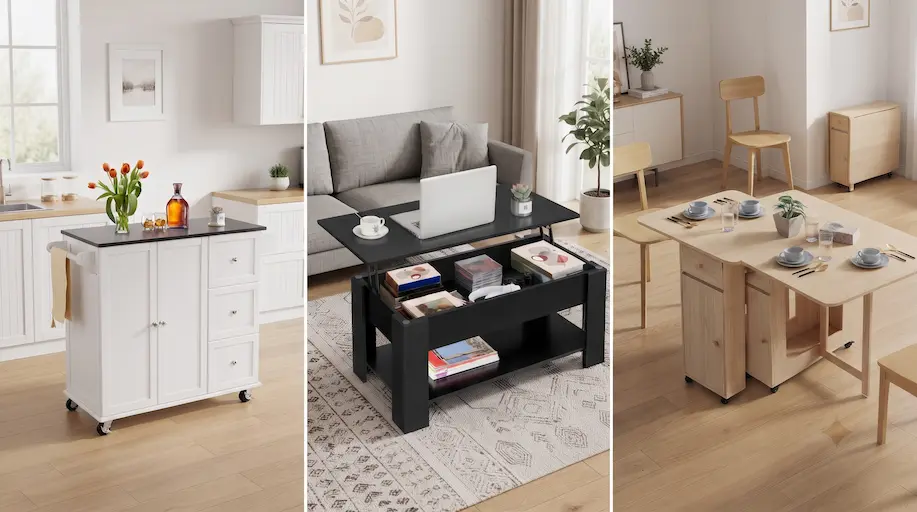
Plenty of studios have no viable desk position. You have options that aren’t just “work on the sofa.”
A lift-top coffee table. Raises to laptop height and drops back down after. It’s the most common answer for a studio with a sofa and no spare wall Like a lift-top coffee table., and it costs you no additional floor space at all.
A drop-leaf table on the wall. Console most of the time, desk when open, dining table when you need one. Three jobs from one object. Like a drop-leaf that folds to a 13-inch console.
A rolling cart as a mobile desk. Wheel it to the window in the morning, park it in a corner at night. Works better than it sounds for laptop-only work. Like a cart with locking wheels.
All three appear in 12 multifunctional furniture pieces for studios, because this is exactly the problem that furniture solves.
Ergonomics When You Have No Space
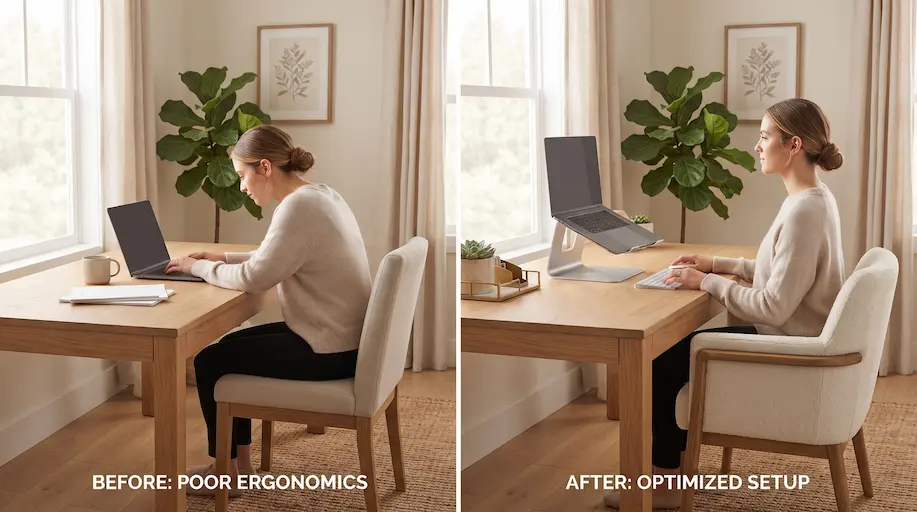
Small-space workspaces damage people, because everyone compromises on the chair and the screen height first. Two things are worth protecting even in a tiny apartment.
Screen at eye level. A laptop on a table puts your neck at a permanent downward angle. A stand plus a separate keyboard costs little and takes almost no space Like an adjustable aluminium stand., and it’s the difference between working comfortably and not.
A chair that supports you. Dining chairs are fine for an hour and punishing for six. If a proper office chair won’t fit visually, look for one that doesn’t read as office furniture rather than skipping it — this is the one place I’d spend rather than save.
IMO the most common small-apartment work setup — laptop on a dining table, dining chair, no stand — is also the most quietly harmful, and it’s the cheapest thing on this entire site to fix.
Making It Disappear at 6pm
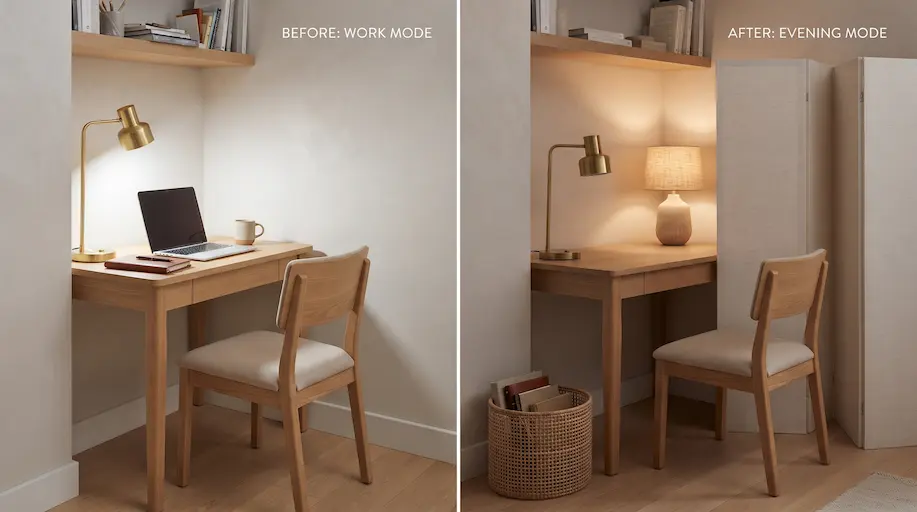
The hardest part of working from a small apartment isn’t fitting the desk. It’s that you can still see it while you’re trying to relax.
- Clear the surface completely at the end of the day. One basket or drawer that swallows the laptop, notebook and cables in ten seconds. The ritual matters as much as the tidiness.
- Change the lighting. A bright task lamp for work, warm lamps for evening. Switching light is the fastest way to tell your brain the day ended.
- Turn the chair around, or move it. Small, slightly silly, genuinely effective — the workspace stops looking active.
- Screen it if you can. A folding screen or the back of a sofa hides the desk without you having to dismantle it. Like a 4-panel folding screen.
If the apartment is a single room, zoning it properly does most of this work for you: seven ways to divide a studio.
The Video Call Background
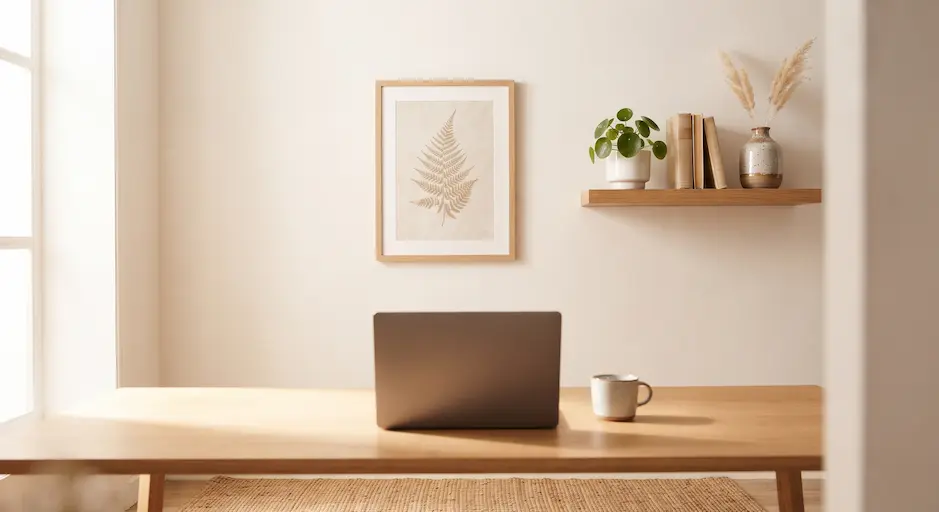
A practical concern in a small apartment, where the honest answer is that your bed is four feet behind you.
Face a wall, not the room. Position the desk so the camera sees the least interesting surface. A blank wall with one framed print reads as professional; the whole apartment behind you reads as chaos.
Light your face, not your background. A window or lamp in front of you. Backlighting turns you into a silhouette, which no background fixes.
One shelf, three objects. If a wall is too blank, a single shelf with a plant, a book stack and one object is all a background needs.
Cables, Chargers and the Stuff Nobody Plans For
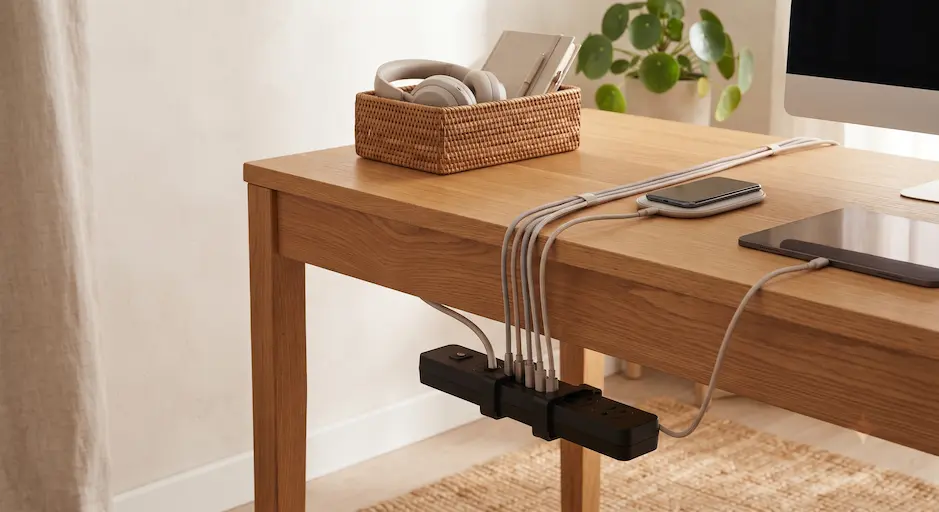
Small workspaces get ugly fast, and it’s almost always cables rather than the desk itself. A laptop, a monitor, a lamp, a phone and a set of headphones is five cables in a space with no room to hide any of them.
Put a power strip on the desk, not the floor. Mount or clip it to the underside of the desk and every cable travels a foot instead of six. One decision, most of the mess gone.
Use one cable per device, permanently. Leave chargers plugged in at the desk rather than carrying them around. The daily untangling is what creates the pile.
Give small things a box. Headphones, dongles, pens, the notebook. One container the size of a shoebox holds all of it and disappears into a shelf at the end of the day.
In a small apartment this matters more than in a house, because you are looking at your desk from the sofa. Cable management is decorating when the office is in the living room.
When Two People Work From One Apartment
The hardest version of this problem, and the one most guides ignore entirely.
Separate by sound before you separate by space. Two desks in one room is workable; two people on calls in one room is not. If only one of you takes calls, give that person the room with a door — even if it’s the bedroom.
Back-to-back beats side-by-side. Two desks facing away from each other in the same room gives each person a private field of view, which does more for concentration than physical distance does.
Stagger the calls if you can. A shared calendar for who has the good spot at what time solves more than furniture will.
One of you should be mobile. A lift-top table or rolling cart lets one person relocate for a call rather than both being permanently fixed. Flexibility beats a second full desk in a small apartment.
If the apartment is one room, zoning is doing double duty here — both as a work boundary and a living one.
Four Small-Office Mistakes
- Buying the smallest desk available. A desk under 40 inches wide can’t hold a laptop, a notebook and a cup at once. Go narrow in depth instead — 20 inches deep is fine, 30 wide is not.
- Putting it where the light isn’t. A dark corner is where a desk fits, not where you can work all day.
- Skipping storage. Without a drawer or basket, the desk becomes the storage, and then you can’t use it.
- Working where you sleep. If there’s any alternative, take it. The bedroom is the hardest room to recover once your brain associates it with work 🙂
Light First, Then Fit
Pick the position with the best light that you can physically fit a surface into — in that order, not the reverse. FYI most people do this backwards and then wonder why they hate working at home.
Then decide whether the workspace needs to disappear. If yes, fold-down desk, cupboard office or lift-top table. If no, a proper desk against a window or in an alcove will serve you far better.
And whatever you choose, raise the screen and fix the chair. Those two cost less than the desk and matter more.
Where’s your laptop right now — dining table, sofa or bed? Tell me in the comments and I’ll tell you the best alternative in your layout.
As an Amazon Associate I earn from qualifying purchases. If you buy through a link here, I may earn a small commission at no extra cost to you — it never changes what I recommend.