Thrift Store Furniture: What to Buy and What to Walk Away From
Furnishing a small apartment from new costs a fortune and gets you flat-pack that wobbles by year two. Furnishing it secondhand costs a fraction and, if you buy the right things, gets you solid wood that outlives you.
The catch is that thrift stores and marketplace listings are about 80% junk. Knowing which 20% is worth carrying home is the whole skill, and it’s mostly a few checks you can do in a minute.
Here’s what to buy, what to leave, and how to tell the difference in the shop.
Why Secondhand Wins on Furniture Specifically
It isn’t just about price. Older furniture is often built better than new furniture at three times the cost.
Solid wood versus particleboard is the main reason. A 1960s teak sideboard is solid timber with real joinery. A new sideboard at the same price is chipboard with a printed veneer, and once that veneer chips it cannot be repaired.
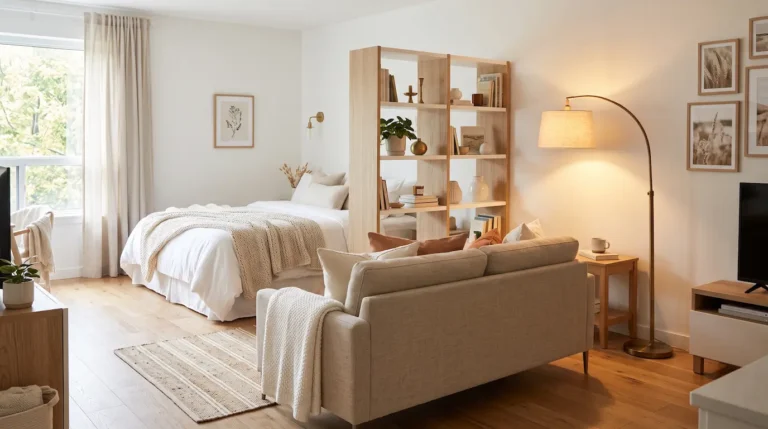
There’s also a scale advantage. Older pieces tend to be smaller — narrower sofas, shallower cabinets, lower profiles — because homes were smaller when they were made. That makes secondhand a genuinely good fit for a small apartment in a way that current retail furniture often isn’t.
What’s Worth Buying
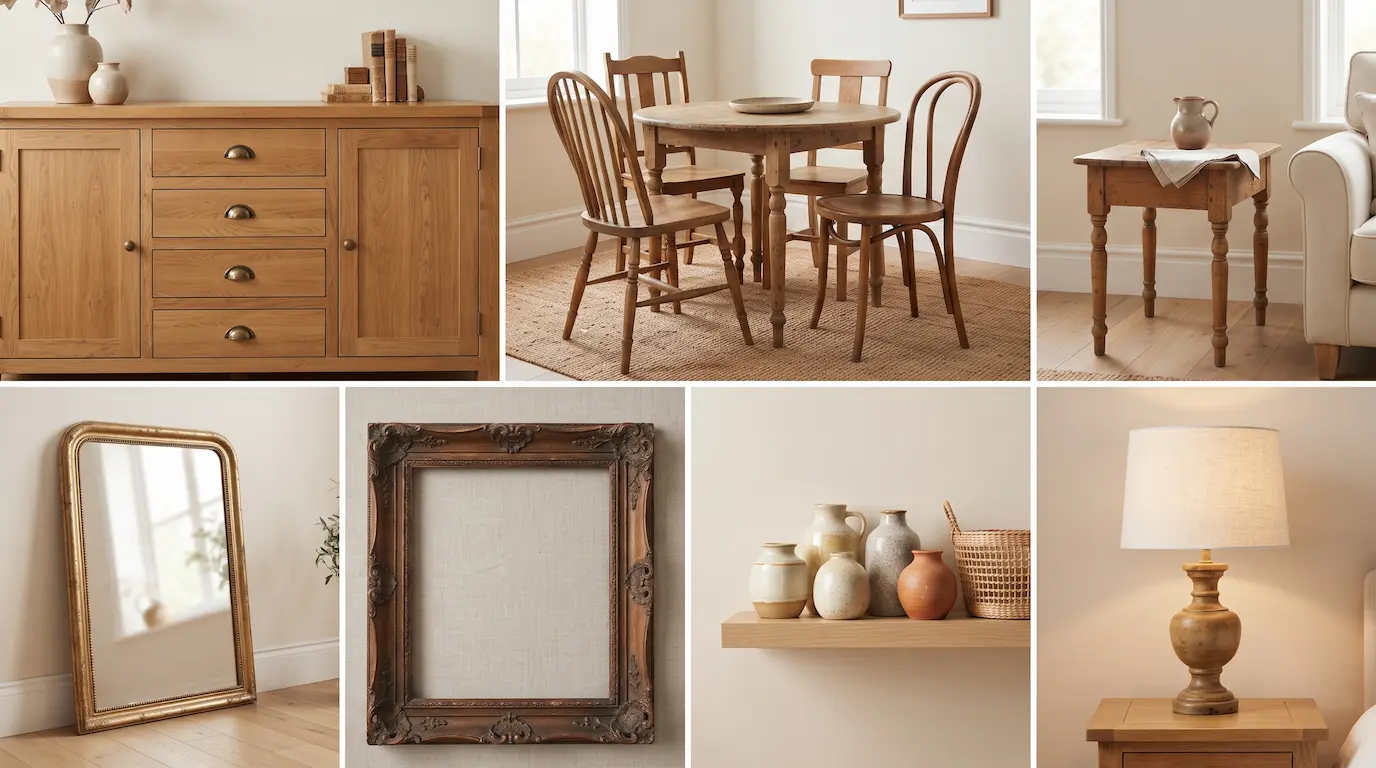
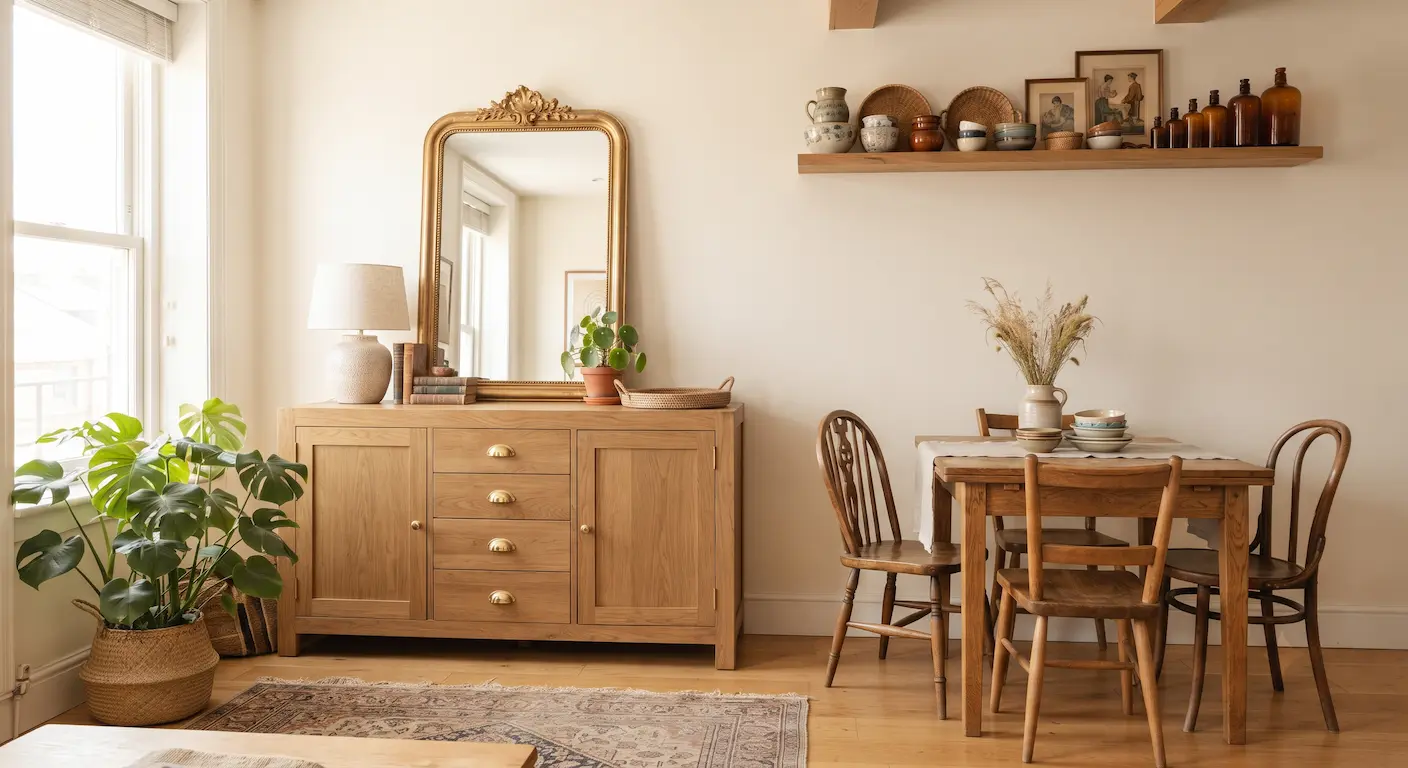
- Solid wood storage. Sideboards, dressers, chests of drawers, bookcases. The single best category. Structurally sound, endlessly refinishable, and the thing new furniture is worst at.
- Dining chairs. Wooden chairs last decades and mismatched sets look deliberate now. Buying two at a time also solves the small-apartment problem of not needing four permanently.
- Small tables. Side tables, nesting tables, plant stands. Cheap, plentiful, and hard to get wrong.
- Mirrors. Old mirrors are heavier, better framed and much cheaper secondhand than new. A large mirror is the highest-value decor object in a small apartment and thrifting one saves the most money.
- Frames and art. Buy for the frame, replace the print. A large solid frame for a few pounds beats anything new at the price.
- Ceramics, glass and baskets. Vases, bowls, planters, storage baskets. Zero risk, immediate texture, and this is where thrifting most obviously beats new on quality.
- Lamps — carefully. Bases are usually fine and shades are usually replaceable. Check the wiring, and if you have any doubt, have it rewired or don’t buy it.
What to Walk Away From
- Upholstered furniture, usually. Sofas and armchairs carry the highest risk of pests and odours, and reupholstering costs more than the sofa. Buy upholstery secondhand only from someone whose home you’ve seen.
- Mattresses. Always. Never, under any circumstances.
- Particleboard anything. If it was flat-pack when new, it’s weaker now. Chipboard doesn’t survive one move, let alone two.
- Anything with a smell. Smoke and damp do not come out of wood or fabric. Whatever you’re imagining you’ll do about it, you won’t.
- Pieces missing structural parts. A missing knob is fine. A missing leg, drawer runner or cross-brace is a project, and specific old parts are hard to source.
The 60-Second Check
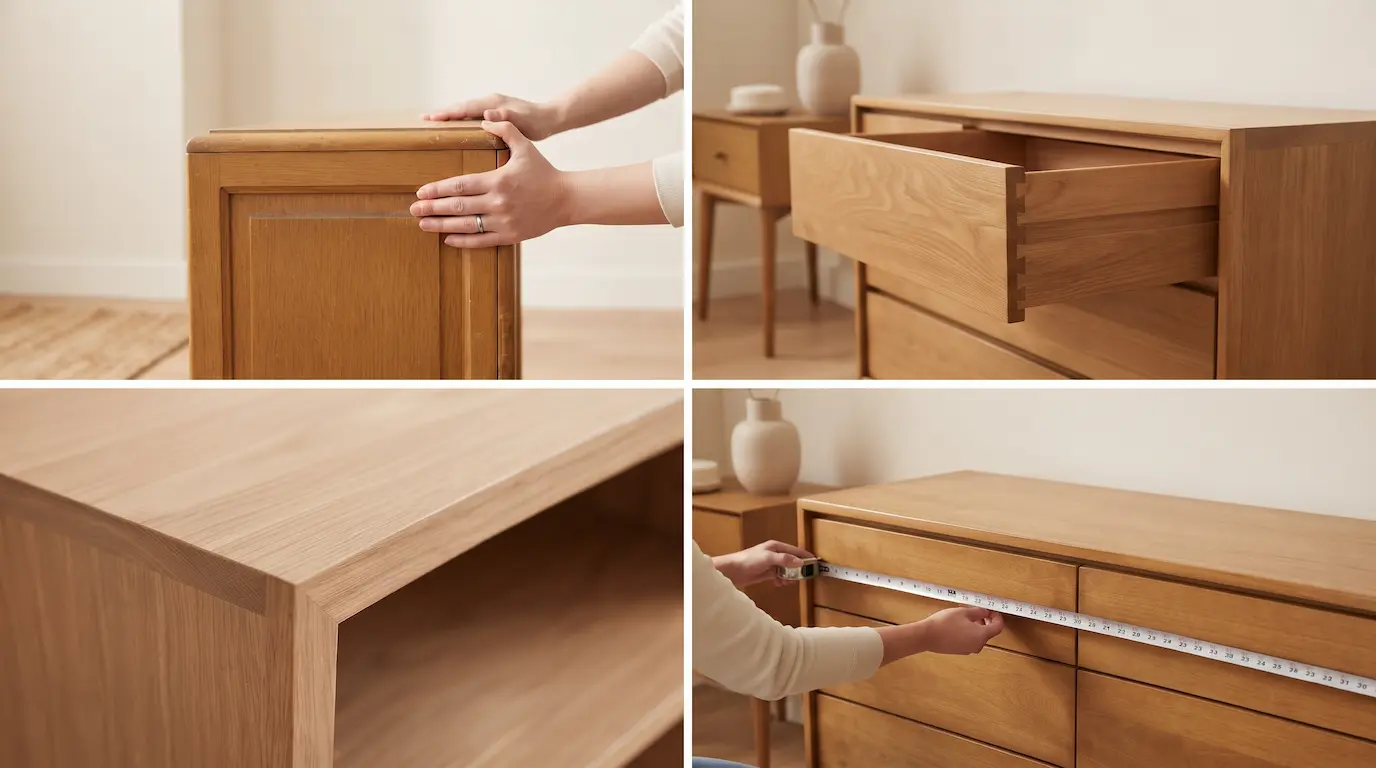
Do this on anything before you commit:
- Push the top corner. If it racks or wobbles, the joints have gone. Solid pieces barely move.
- Pull out every drawer. They should slide and stop cleanly. Look at the sides — dovetail joints mean real construction, staples mean it’s not worth restoring.
- Look at an unfinished edge. The back panel or the underside of a drawer. Grain running through means solid wood; a printed pattern that stops at the edge means veneer over chipboard.
- Smell it. Genuinely. Put your head inside the cabinet. This is the check that saves you most.
- Check the underside for pests. Seams, corners, joints. If anything looks alive or recently was, walk away regardless of the price.
- Measure it. Bring a tape measure and know your doorway width. FYI this is the most commonly skipped check and the most expensive one to get wrong.
Flips You’ll Actually Finish
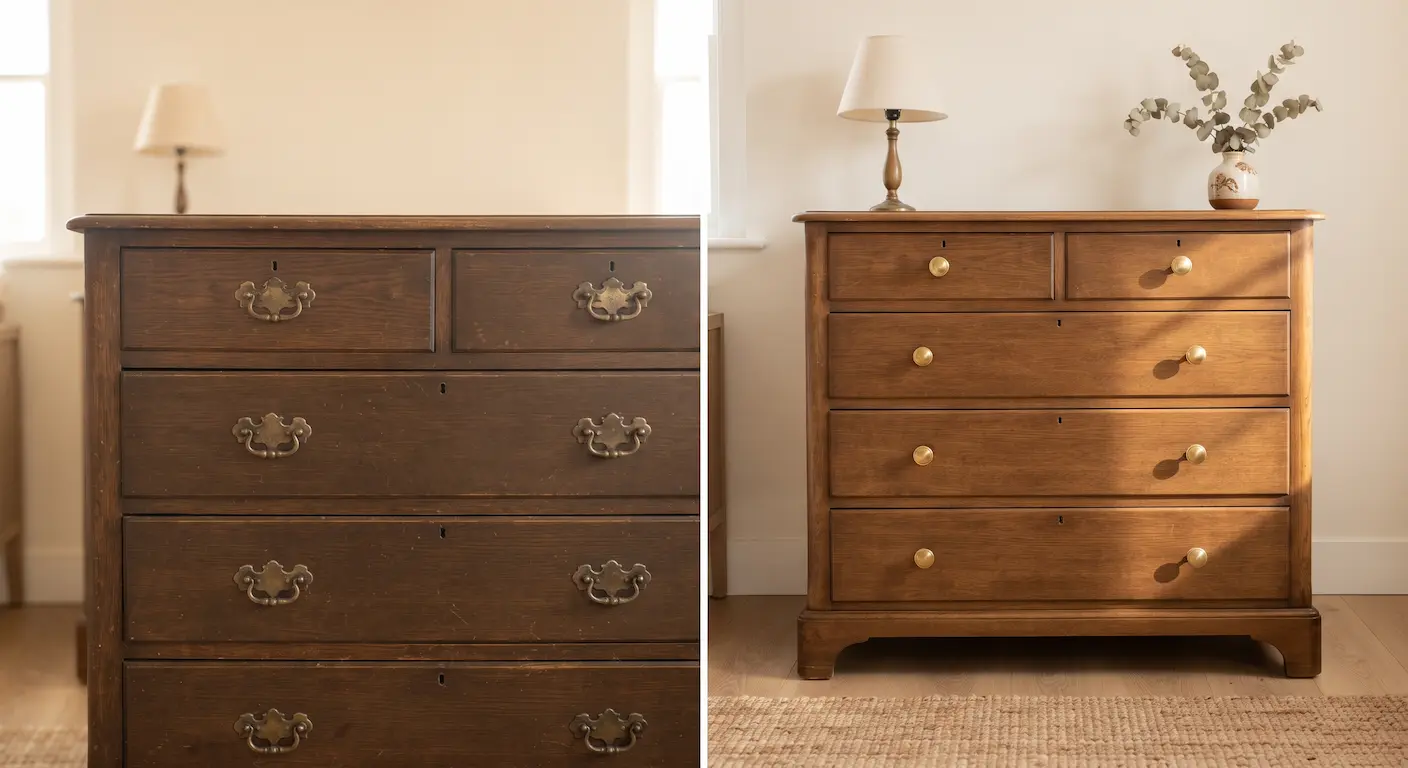
Be honest about your tolerance for projects, because unfinished furniture in a small apartment is worse than no furniture.
An afternoon: swapping the hardware, cleaning and waxing wood, replacing a lampshade, felt pads on the feet, new frame contents. IMO hardware alone transforms more thrifted furniture than anything else — a dated dresser with modern handles reads as intentional immediately. Like solid brass knobs, 10-pack.
A weekend: painting a small piece, lining drawers, sanding and re-oiling a wooden top.
Don’t start: reupholstering, stripping heavy varnish off a large piece, veneer repair, anything needing a workshop. These are the projects that sit in a corner for a year.
Where to Actually Look
Different sources have completely different odds, and knowing which is which saves a lot of wasted Saturdays.
Charity and thrift shops. Cheapest, most random, best for small things — ceramics, frames, glassware, baskets. Large furniture turns over fast and the good pieces go within hours, so it rewards frequency rather than patience.
Online marketplaces. The best source for actual furniture, because you can search specifically and see it in someone’s home rather than a warehouse. You can also judge the seller, which matters enormously for upholstery. Downside: you collect it yourself.
Estate and house clearance sales. The highest quality-to-price ratio available, and the most likely place to find solid wood pieces from an era when everything was solid wood. Go early for choice, go late for prices.
Kerbside and free listings. Genuinely worth watching, with one absolute rule: never take upholstered furniture off a street. Wood and metal only, and inspect it outdoors before it goes in your car.
End of university terms and moving season. Late spring and late summer flood every source at once. If you can time a furniture hunt, time it then.
Cleaning What You Bring Home
Do this before anything enters the apartment properly, ideally outside or in a hallway.
Inspect in daylight. Every seam, joint, drawer runner and underside. This is your last chance to change your mind, and indoor shop lighting hides a great deal.
Vacuum everything, including the inside. Drawers out, cabinet backs, every corner. Then empty the vacuum outside.
Wipe wood with a mild soap solution, not water. Then dry it immediately. Standing water is what lifts old veneer and raises grain.
Deal with smell before it settles. Airing it outdoors for a day handles a lot. Bicarbonate of soda left in drawers overnight handles most of the rest. If neither works, the smell is in the wood and it isn’t leaving.
Then wax or oil it. Old dry wood drinks it up and the transformation is startling — a dull grey piece can come back to life in one afternoon for the price of a tin.
What Things Should Actually Cost
Secondhand pricing is wildly inconsistent, and knowing roughly what’s fair stops you either overpaying in a curated vintage shop or walking past something genuinely good.
The rule of thumb: expect to pay 10-30% of what the equivalent new piece costs. Above that and you’re paying for someone else’s curation. Below it and either something is wrong with the piece or you’ve found the thing worth carrying home.
Charity shops price by shelf space, not value. Which is why a solid teak side table and a plastic one can carry the same ticket. Their mispricing works in your favour on quality items and against you on tat.
Private sellers price by urgency. Someone moving out next weekend prices to clear. The same item listed by someone with no deadline sits at three times the price for months. Sort listings by newest and watch for the words “must go.”
Dealers price by style. Mid-century and anything currently fashionable carries a large premium secondhand. If you want value rather than a specific look, buy the unfashionable decades — the construction quality is often identical.
Always factor transport. A cheap item that needs a van hired for it isn’t cheap. FYI this is what turns a bargain into a break-even purchase more often than anything else.
Four Thrifting Mistakes
- Buying because it’s cheap. A £15 piece you don’t need is £15 wasted and a room made worse. Price is not a reason.
- Not measuring the doorway. Or the stairwell, or the turn at the top.
- Underestimating a project. Assume everything takes three times as long as you think, then decide.
- Buying a set. Matching secondhand sets read as dated in a way individual pieces don’t. Mix 🙂
Buy Wood, Skip Fabric, Bring a Tape Measure
Solid wood storage and mirrors are where secondhand genuinely beats new. Upholstery and particleboard are where it genuinely doesn’t. Almost everything else falls somewhere in between and comes down to condition.
Do the sixty-second check every time, and swap the hardware on anything you bring home — it’s the cheapest change with the biggest return, exactly as it is in budget decor that looks expensive.
And if you’re furnishing a small place from scratch, prioritise pieces that do two jobs — secondhand or not.
What’s the best thing you’ve ever thrifted? Tell me in the comments.