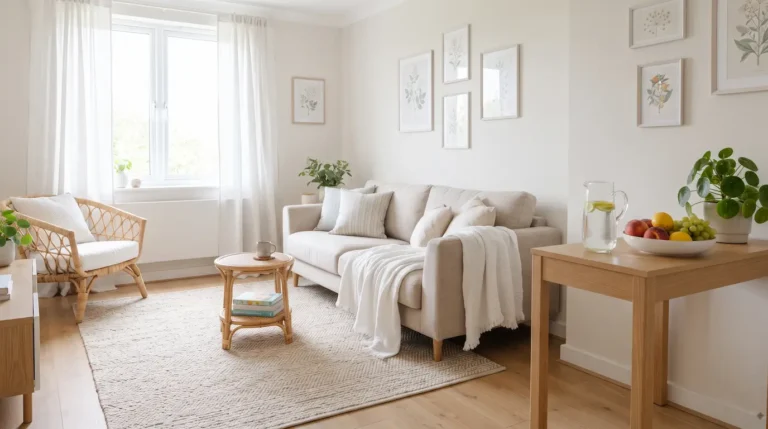
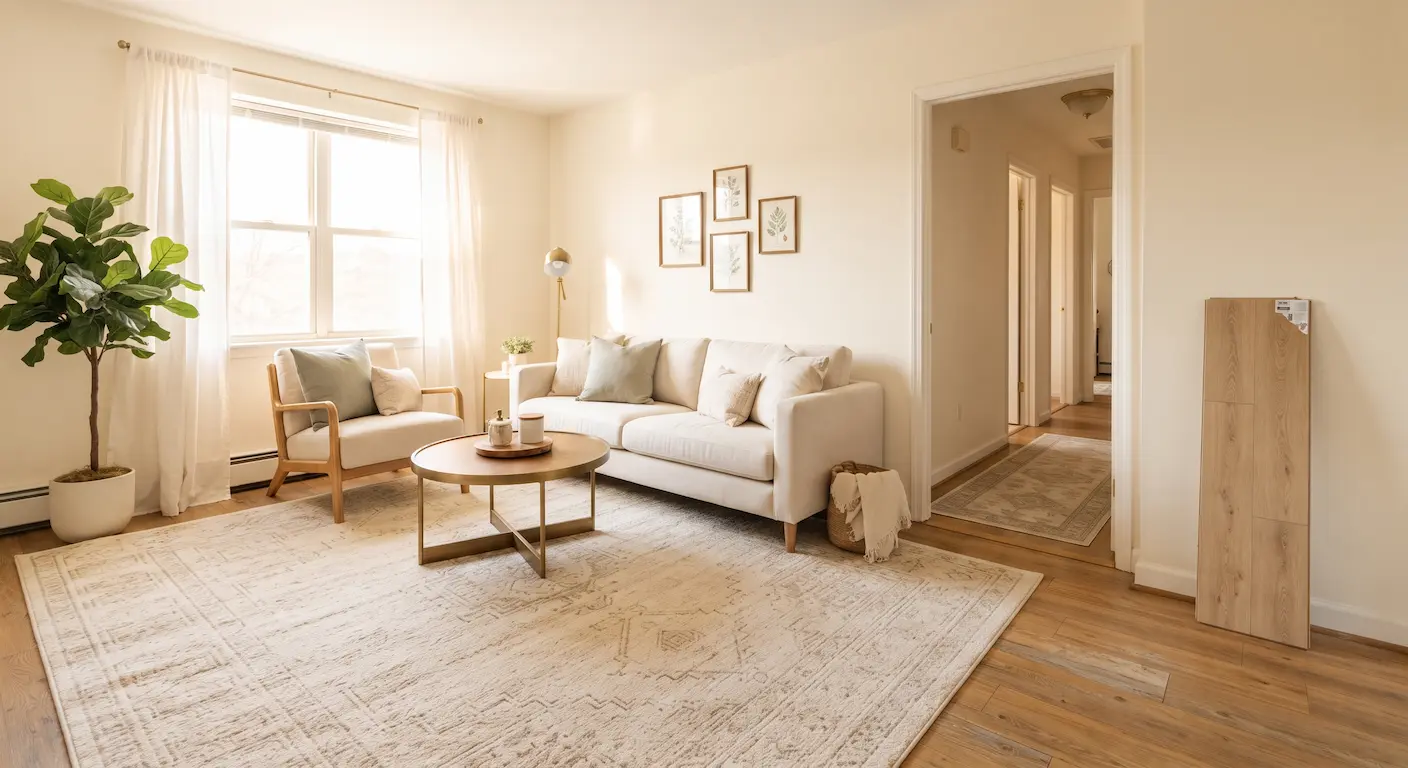
Renter-Friendly Flooring Ideas That Cover an Ugly Floor
Some rental floors are just unlucky. Beige speckled vinyl from 1994, carpet in a colour nobody chose on purpose, or bathroom tile with grout that will never look clean again no matter how long you scrub it.
You cannot replace it. But you can cover it, and some of the options come up cleanly when you leave — while others will absolutely cost you your deposit.
Here’s what actually works for renters, ranked from safest to riskiest, plus the warnings nobody puts in the product photos.
Before Anything: Lease, Photos, Test Patch
Read what your lease says about alterations. Many allow rugs and free-laid coverings but forbid adhesives of any kind. That one sentence decides your whole plan.
Photograph the existing floor before you touch it. Date-stamped photos of every room are your evidence about what was already scratched, stained or cracked when you moved in.
Ask in writing if you are unsure. An email from your landlord saying peel-and-stick is fine is worth more than a verbal yes at the viewing.
Always test one tile in a hidden corner first — inside a closet, behind the door — and pull it up after a week. If it lifts the finish, you just saved yourself an entire deposit.
Option 1: Rugs (Safest, Biggest Impact)
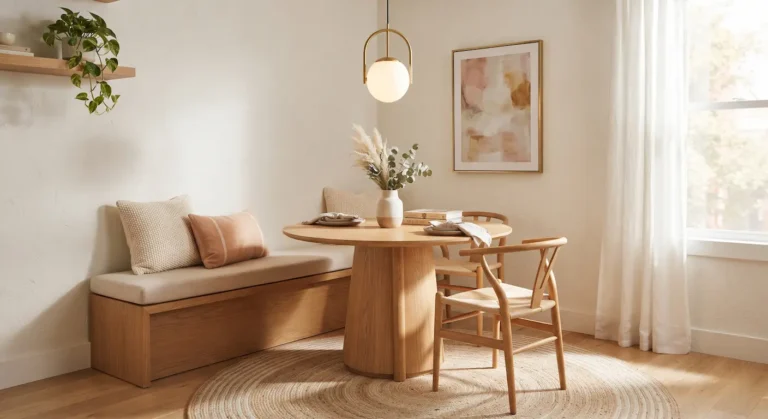
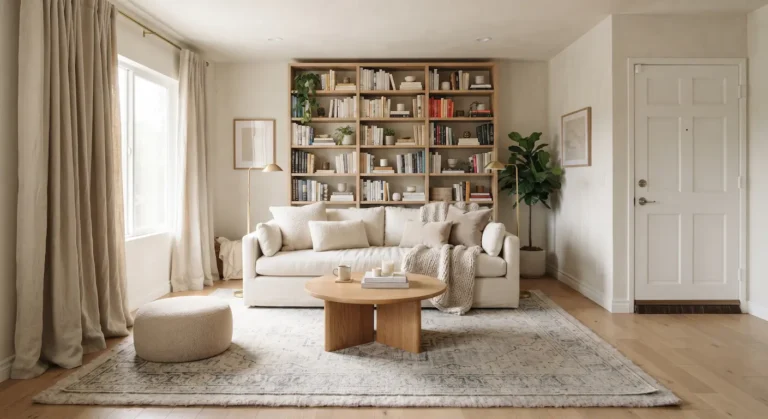
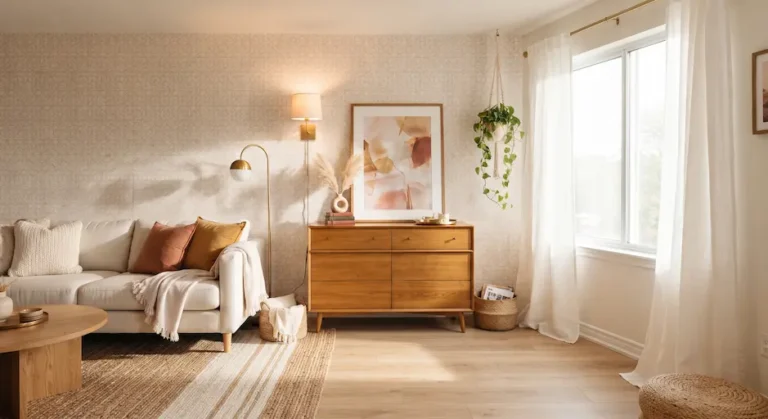
A large rug is still the best renter flooring solution there is. No adhesive, no risk, reversible in ten seconds, and it changes a room more than anything else on this list.
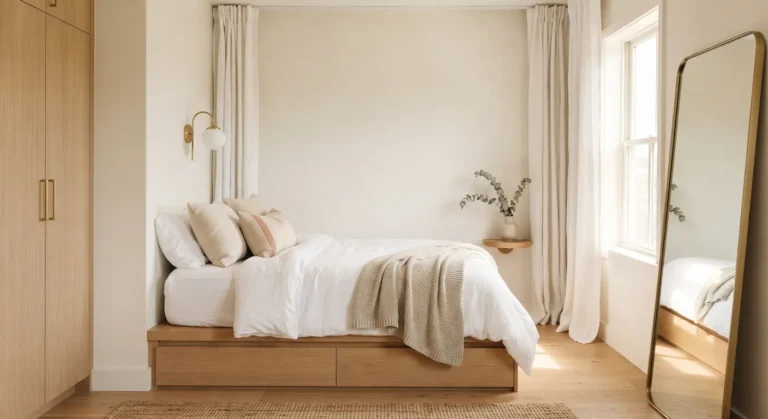
Go bigger than feels sensible. A rug that covers most of the visible floor reads as flooring; a small one reads as a mat on top of a floor you are trying to hide.
Layer over carpet. Yes, you can put a rug on carpet. A flat-weave rug over dated carpet works well, especially with a thin pad underneath to stop it creeping. Like this felt and rubber rug pad.
Choose the pad carefully. Cheap rubber-backed pads can stick to, discolour or leave marks on vinyl and finished wood floors. A felt-and-natural-rubber pad is the safer choice, and lift the rug occasionally to check underneath.
Runners fix hallways. Long, narrow, hard-wearing and they hide the strip of floor that gets the most traffic. Like this hallway runner.
Sizes are the part people get wrong — the full breakdown is in our rug size guide.
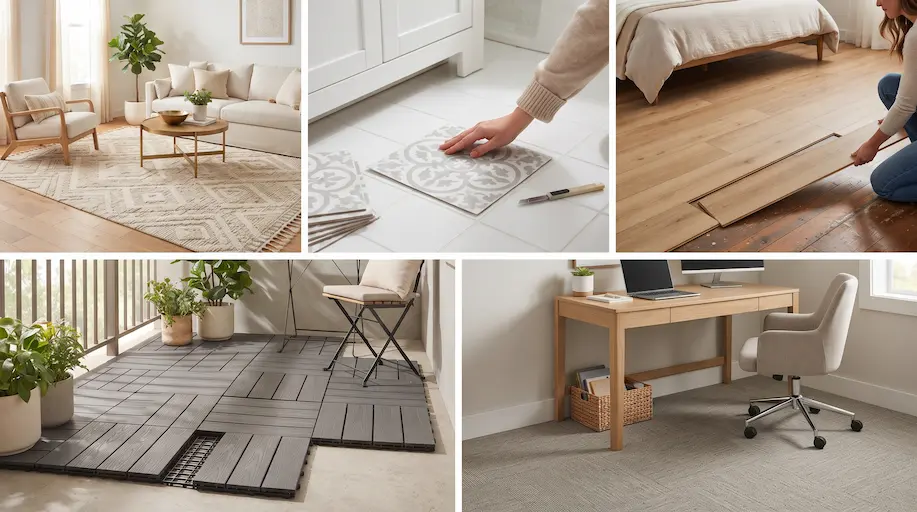
Option 2: Peel-and-Stick Vinyl Tile
This is the popular one and it needs the biggest warning. Peel-and-stick tile is genuinely transformative on the right surface and genuinely expensive on the wrong one.
It works best over old ceramic or vinyl tile that is flat, clean and sound. Bathrooms and small kitchens are the classic use case. Like these peel-and-stick floor tiles.
Wood-look planks cover a larger area convincingly if the floor is level and dry. Like these wood-look peel-and-stick planks.
Where it goes wrong:
- On finished hardwood or laminate — the adhesive can pull the finish off when removed.
- On textured or heavily grouted tile — the tiles telegraph every ridge and lift at the edges.
- In a damp bathroom without sealed edges — water gets under, adhesive fails, corners curl.
- After years in place — adhesive gets harder to remove the longer it sits. Removable at 12 months is not the same as removable at four years.
Prep matters more than the tile you choose. Clean with a degreaser, rinse, let it dry completely, and lay from the centre of the room outwards so the cut tiles land at the edges.
Option 3: Loose-Lay and Click Vinyl Planks
This is the renter-smart version of new flooring: nothing sticks to anything. Click planks lock to each other and float as one sheet over your existing floor.
Pros: it looks like real flooring, it comes up in an afternoon, and you can take it with you to the next apartment.
Cons: it costs more, it raises the floor height by 4 to 8mm, and doors may catch. Check the clearance under every door before you buy.
Best in one defined room — a bedroom or a small living room — rather than flowing through a whole apartment where thresholds get complicated.
Option 4: Interlocking Tiles for Wet and Outdoor Spaces
Snap-together tiles are the honest answer for balconies, where anything adhesive is a bad idea and drainage matters.
They also work in a rental bathroom as a dry-zone floor, and lift out completely for cleaning — which you will need to do, because moisture collects underneath.
Do not lay them over a floor drain and do not leave them down permanently in a wet room without lifting them to dry. Trapped damp is how you get mould and a dispute at move-out.
Balcony-specific ideas are in small balcony ideas.
Option 5: Carpet Tiles
Peel-and-stick carpet squares are cheap and forgiving, and you can replace one square if it stains rather than the whole floor.
Use the low-tack kind and, again, test one first. Some carpet tile adhesive is aggressive enough to lift vinyl.
Great for a small home office, a closet, or a kid’s play area. Less great for a whole living room, where the grid pattern becomes obvious.
Bathrooms and Kitchens Need Extra Care
These are the rooms most worth covering and the riskiest to get wrong, because water is always involved.
Seal the perimeter with a bead of removable caulk if you lay tile, especially around the toilet base and the shower door.
Never cover a floor that is already damp. If there is a leak or rising moisture, covering it hides a problem that will get worse and be blamed on you. Report it instead.
Lift a corner every few months to check for moisture. Two minutes, and it is the difference between a nice floor and a mould claim.
More rental-safe kitchen changes in rental kitchen makeover ideas.
The Old-Tile Warning
If your apartment is older and has original vinyl or asphalt floor tiles, do not sand, break, drill or scrape them. Some floor tiles and their adhesives made before the 1980s contain asbestos, which is only a hazard when disturbed.
Covering such a floor is generally fine — disturbing it is not. Lay a rug or a floating floor over the top and leave the original alone.
If tiles are already cracked or lifting, tell your landlord rather than pulling them up yourself. This is genuinely their job, not a weekend project.
What Not to Do
Do not paint a rental floor unless you have written permission. Floor paint is not coming off, and it is the most common flooring dispute there is.
Do not use construction adhesive, contact cement or double-sided carpet tape on any floor you do not own.
Do not lay anything over a floor you have not cleaned. Grit under vinyl grinds into the original surface and scratches it permanently.
Do not cover heating vents or an underfloor heating system. Check first — some vinyl products are not rated for use over radiant heat.
How to Make a Bad Floor Matter Less

Sometimes the cheapest fix is not covering the floor at all — it is taking attention off it. A floor only looks bad in comparison to everything else in the room.
Give the room a strong focal point at eye level. A gallery wall, a big mirror or a bold curtain pulls the eye up and away from the floor entirely. Nobody photographs a room and notices the vinyl if there is something better to look at.
Match, do not fight. If the floor is a warm orange-toned wood, warm textiles will make it look intentional. Cool grey furniture next to orange flooring makes the flooring look like a mistake.
Fill the room properly. Empty floor is visible floor. Furniture, a rug and a plant in the corner each subtract square feet of speckled vinyl from view.
Fix the lighting before you fix the floor. Overhead lighting throws hard, flat light straight down, which is the least flattering possible angle for a tired floor. Two lamps at different heights change the whole room, and cost less than a rug.
Clean the grout once, properly, then decide. A stiff brush and a grout-appropriate cleaner sometimes reveals that the floor was fine and the grout was the problem. Test any cleaner in a corner, ventilate the room, and never mix products.
Cost and Effort, Compared
- Large rug: highest impact per hour of work, zero risk, moves with you. Start here.
- Runner: cheap, fixes the worst-looking strip of floor in the place.
- Peel-and-stick tile: low cost, half a day per small room, moderate risk, best for bathrooms.
- Click planks: highest cost, one weekend, lowest risk of damage, reusable.
- Carpet tiles: cheapest hard-wearing option, patchable, best in small rooms.
- Interlocking tiles: the balcony answer, and nothing else really is.
Your Turn
Start with the room whose floor bothers you most, and start with a rug. It is reversible, it is instant, and it tells you whether the floor was the problem or the lighting was.
If you decide to go further, do the hidden test patch first and wait a week. One tile in a closet is a cheap way to find out what your floor does under adhesive.
More renter-safe changes that come off cleanly are in 18 renter-friendly decor ideas and renter-friendly wall decor. Which floor are you covering first? 🙂