Renter-Friendly Ways to Make Your Apartment Quieter
Apartment noise is the thing nobody mentions at the viewing. You move in, and by week two you know your upstairs neighbour’s schedule, the exact sound of the lift, and which stair creaks at 6am.
You cannot rebuild the walls of a rental. But you can make a genuine difference — and understanding which noises you can fix, and which you can only mask, saves a lot of money on products that do nothing.
Here’s what actually works to make a rented apartment quieter, in the order of biggest effect first.
What You Can and Cannot Fix
Blocking sound needs mass and airtight seals. That is walls, floors and heavy doors — construction, not decorating. Renters mostly cannot change any of it.
Absorbing sound reduces echo inside your own room. Rugs, curtains and panels do this well, and it makes your apartment noticeably calmer to be in.
Sealing gaps blocks airborne sound genuinely well, and this is where renters get the biggest real win, because sound travels through air gaps like water through a hole.
Masking makes noise less noticeable. Not a trick — it is how most people actually solve a noisy-neighbour sleep problem.
Be clear about which one you need. Hanging a soft panel on a shared wall will not quieten your neighbour’s TV, and no amount of product reviews changes that.
Find Where the Sound Gets In
Stand in the room at a noisy moment and move around slowly. Noise is loudest where the gap is.
Check the front door first. Look for daylight around it. If you can see light, sound is coming through, and corridor noise is most people’s main complaint.
Check windows. Old sashes, gaps in the frame, thin single glazing.
Check vents, extractor ducts and shared plumbing. Bathroom and kitchen vents connect apartments and carry a surprising amount of sound.
Check the floor. Footsteps from above are structural and the hardest to do anything about. Footsteps from you to below are worth solving for your neighbour’s sake.
Fix the Door: The Biggest Win
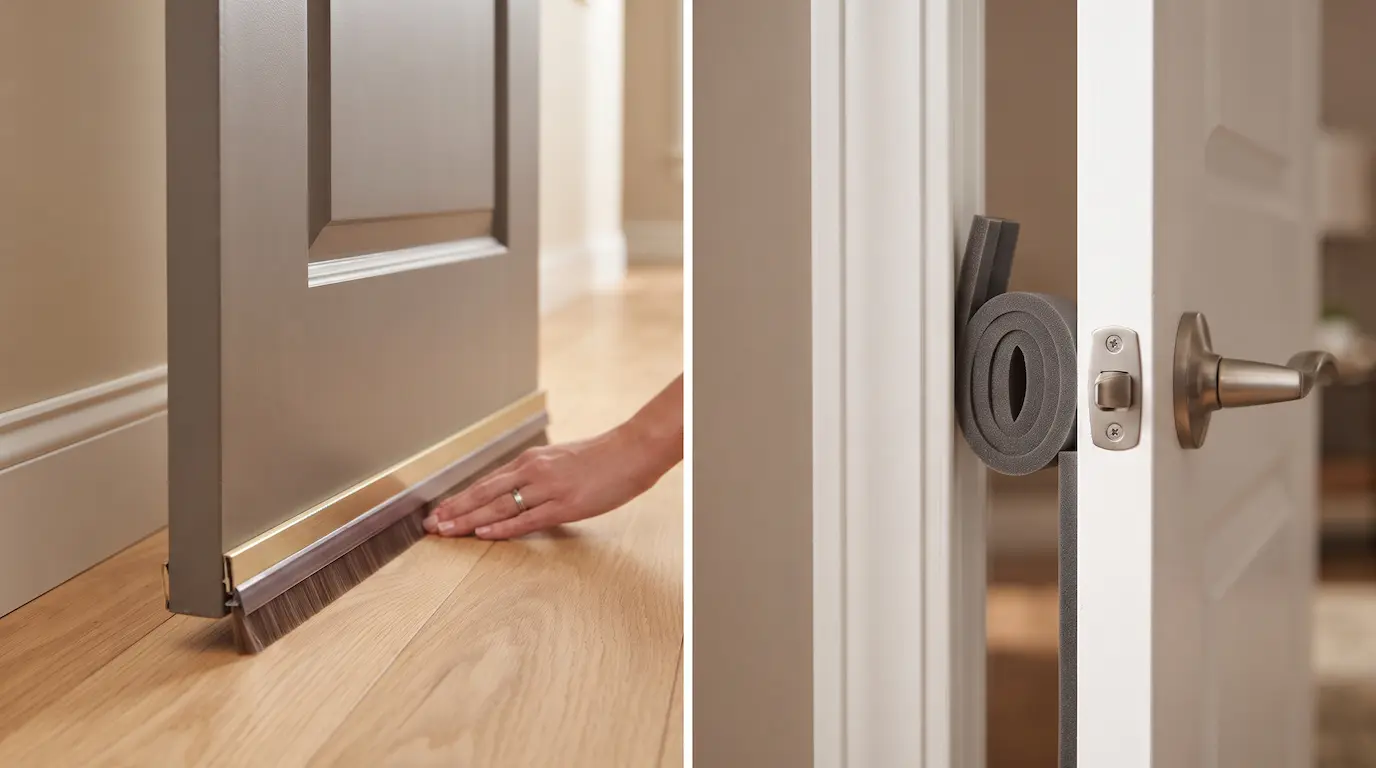
The gap under a front door is usually the largest single sound leak in an apartment. Half an inch of open air under a door undoes everything else.
Fit an adhesive door sweep. Cheap, renter-friendly, and it cuts corridor noise, draughts and hallway cooking smells at the same time. Like this adhesive door sweep.
Add foam or rubber weatherstripping around the frame so the door closes against a seal rather than against air. Like this door seal strip.
Do the same to internal doors between a bedroom and a living room if someone works or watches TV late.
Do not obstruct the door’s operation or fit anything that stops it closing and latching properly. Fire doors need to close fully.
Windows: Heavy and Long
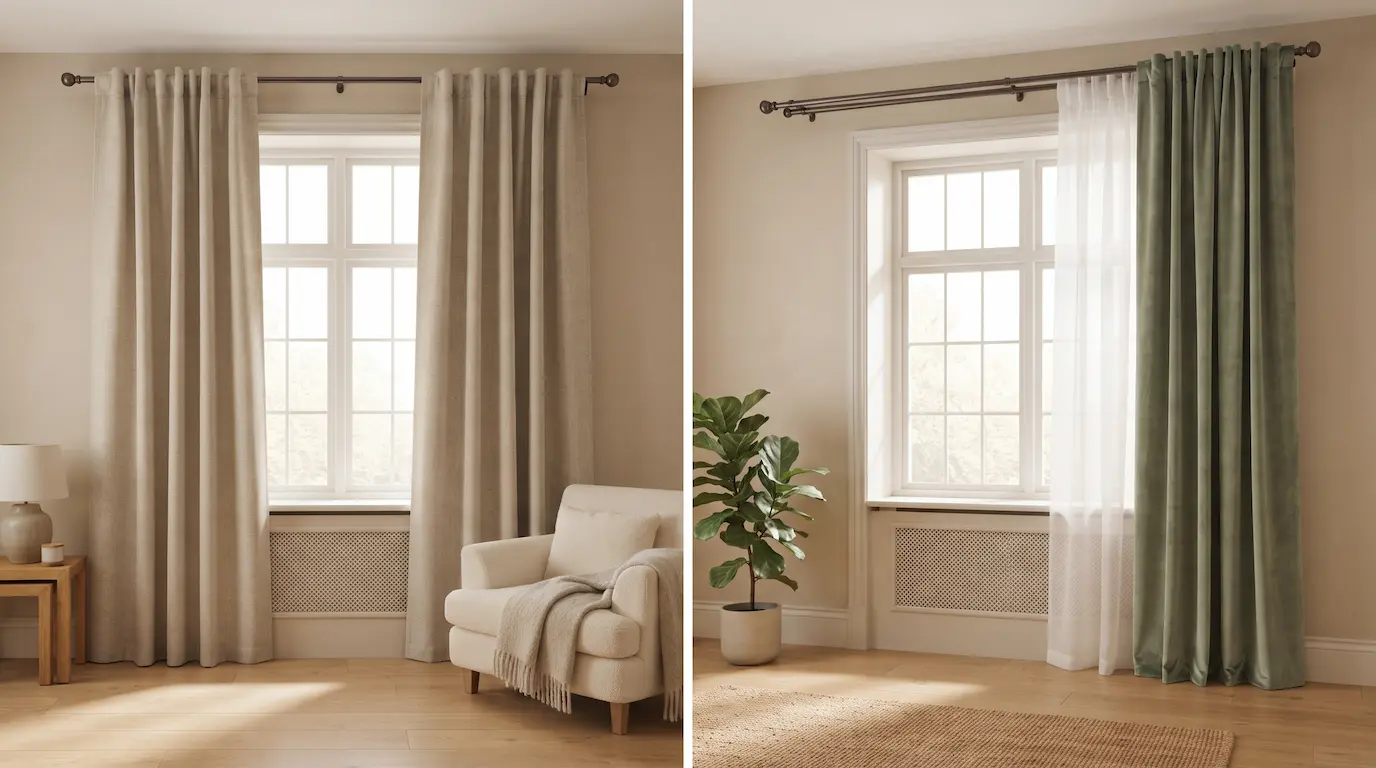
Thick, floor-length curtains make a real difference to street noise, particularly if they cover more than the window itself.
Heavier is better. Blackout or thermal-lined panels are denser than decorative ones and do more. Like these blackout thermal curtains.
Hang them wider and higher than the frame so they overlap the wall by a good margin. Method in how to choose and hang curtains.
Use a double layer if the street is loud — a sheer plus a heavy panel is better than one heavy panel alone.
Close the gaps around the frame with removable weatherstrip if the window is draughty. Draught and noise arrive by the same route.
Floors: For You and For Downstairs
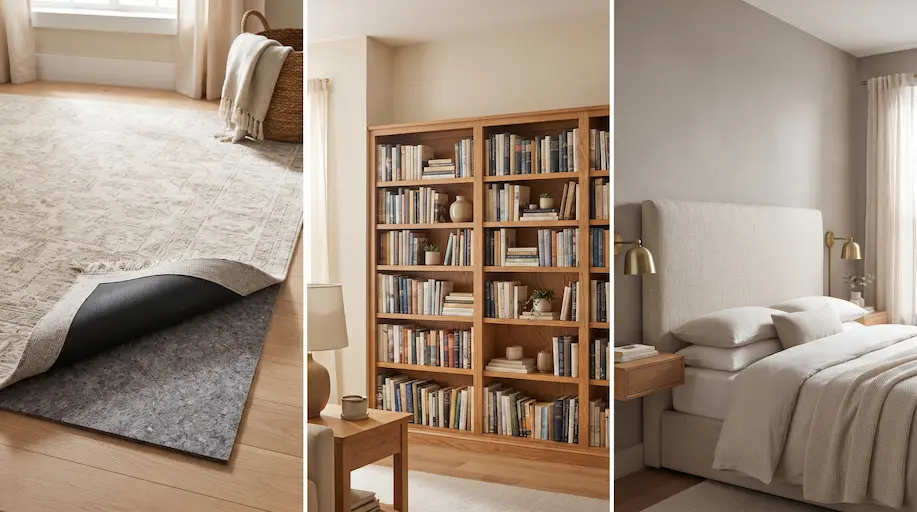
A large rug with a thick pad is the most effective floor treatment available to a renter. It absorbs impact noise on the way out and echo on the way back.
The pad matters more than the rug. A dense felt-and-rubber pad does most of the work. Like this dense felt and rubber rug pad.
Cover the routes you walk — hallway, kitchen path, the strip beside the bed. A runner in a hallway cuts the sound of every trip to the kitchen. Like this hallway runner.
Put felt pads under every chair leg. Dining chairs dragging on a hard floor is the noise your downstairs neighbour hears most.
Rug sizing is in the rug size guide.
Adding Mass to a Shared Wall
Mass is the only thing that blocks sound, and you can add a little without building anything.
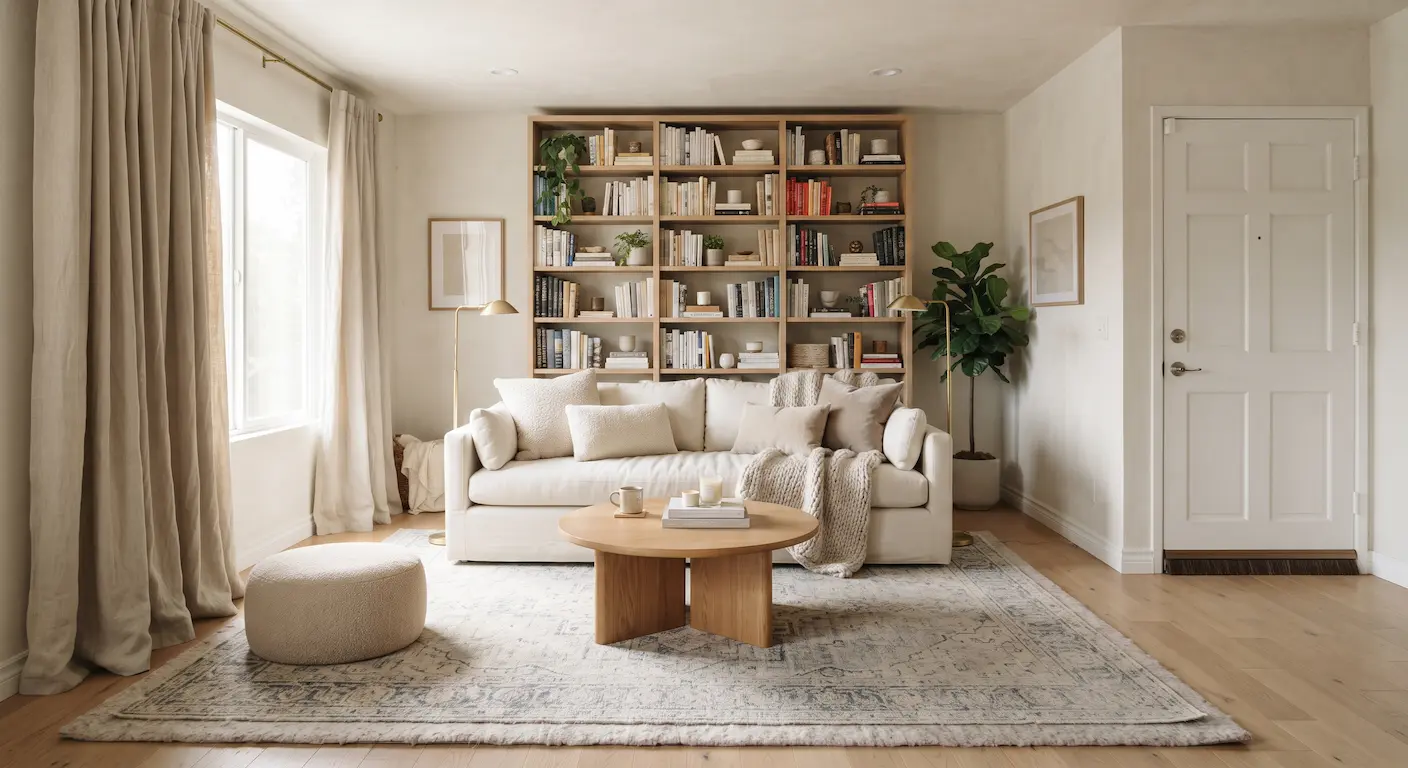
A full bookcase against a shared wall genuinely helps. Books are dense and irregular, which is the ideal combination. This is the one piece of old advice that holds up. Like this narrow bookcase.
An upholstered headboard against a shared bedroom wall helps a little and helps a lot psychologically, which counts at 1am.
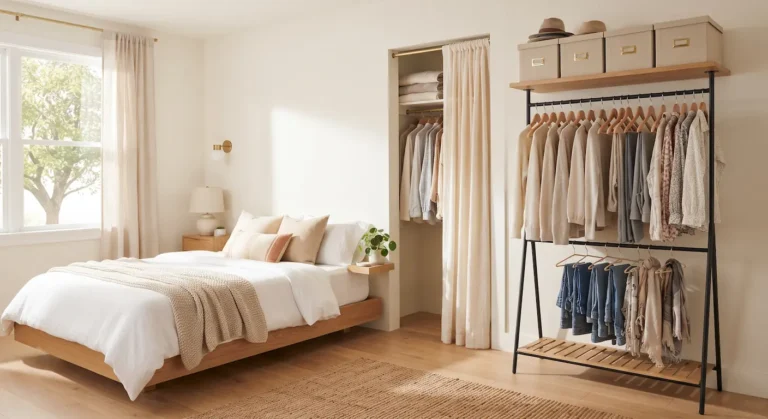
A wardrobe or a tall storage unit works similarly. Fill it; empty furniture does almost nothing.
Keep a small air gap between the furniture and the wall rather than pressing it flat, and anchor tall pieces for safety.
Reduce the Echo Inside Your Own Room
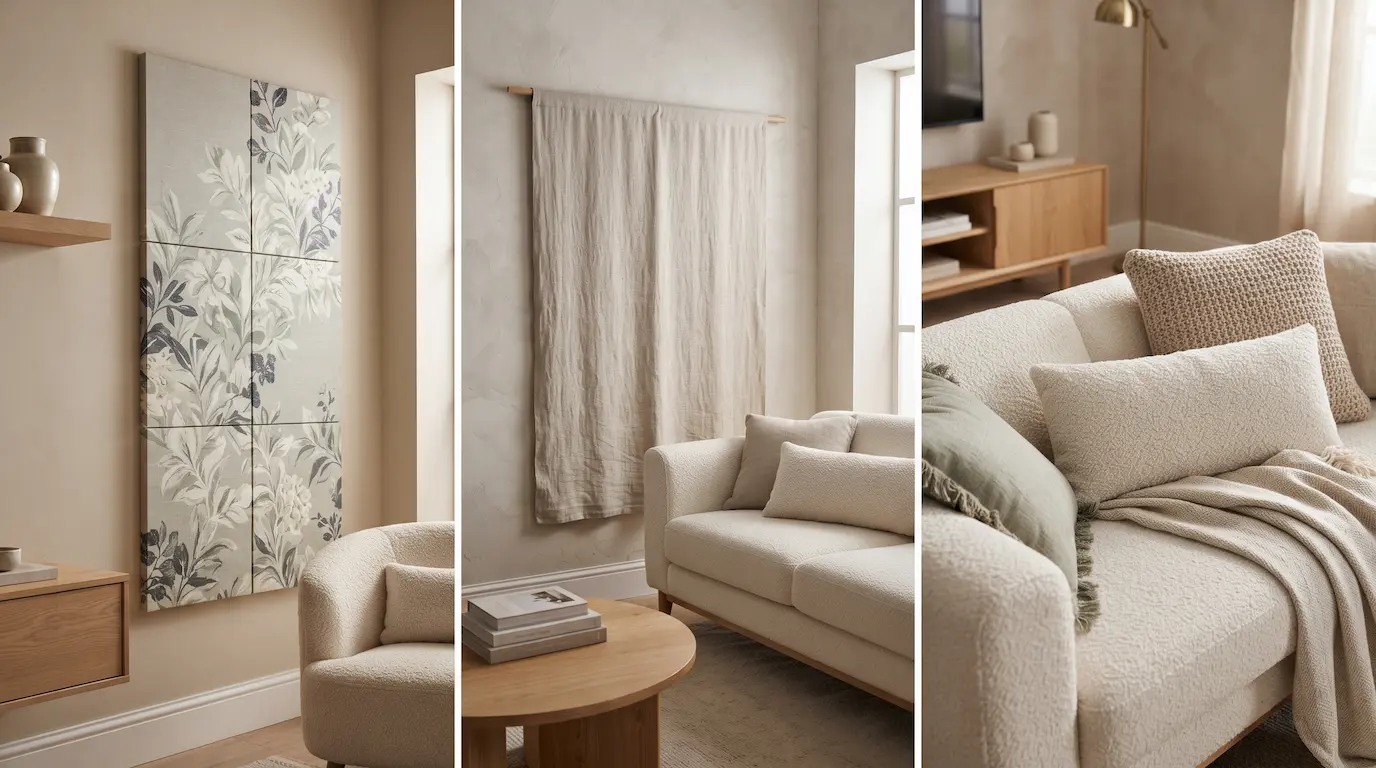
Hard, empty apartments echo, and echo makes every noise sound louder — including your own.
- Acoustic panels, ideally the printed decorative kind, on the wall or ceiling of a room that rings. Like these printed acoustic panels.
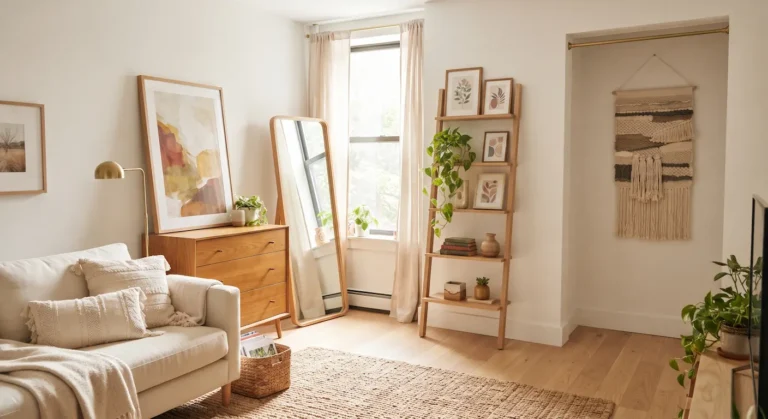
- Large fabric surfaces: curtains, a wall hanging, an upholstered sofa rather than a leather one. Like these heavy linen panels.
- Cushions and throws. Soft, textured and genuinely effective in quantity. Like these cushion covers.
- Bookshelves, plants and irregular surfaces, which scatter sound rather than bouncing it straight back.
This is what makes an apartment feel calm, and it is the same list as how to make a small apartment feel cosy. Not a coincidence — cosy is partly acoustic.
A Quiet Bedroom, Specifically
If you only treat one room, treat the bedroom. It is the room where noise costs you something measurable.
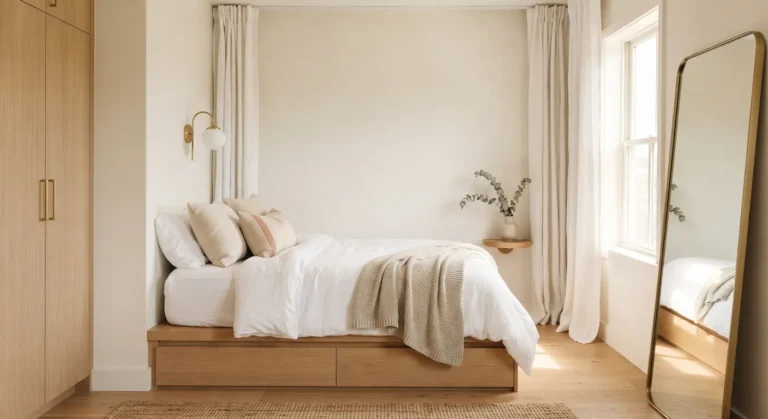
Rug on both sides of the bed, curtains floor length, and a sealed door. Those three, in that order.
Move the headboard off a shared or corridor wall if the layout allows it, even if the room looks less balanced. Sleep beats symmetry. Layout options are in 15 small bedroom ideas.
Keep the room slightly fuller than a minimalist would. A bare bedroom with hard floors is an echo chamber; textiles are what make it feel quiet as well as be quieter.
Masking: The Honest Fix for Sleep
If the noise is a neighbour you cannot control, masking is the realistic solution. Not a compromise — the thing that actually works.
A fan or a white noise machine raises the background level so footsteps and voices stop standing out.
Keep the volume low. Masking works at a level just above the intrusion, not at a level that becomes its own problem.
Earplugs are worth trying properly. Foam plugs are cheap and, fitted correctly, they change a bad sleeper’s week.
Move the bed if you can. A bed on the opposite wall from a noisy neighbour is a free improvement, and moving the headboard off a shared wall helps more than it should.
Quieting Your Own Noise
Worth doing, because it is usually reciprocal.
Felt pads under all furniture legs, door bumpers so doors do not bang, and soft-close hinges if your cabinets slam.
Run the washing machine at sensible hours and put a mat under it if it walks.
Use headphones after 10pm and keep speakers off shared walls and off the floor — speakers on the floor transmit bass straight through the structure.
Take shoes off indoors. The single kindest thing you can do for whoever lives below you.
If It Is Genuinely a Neighbour Problem
Talk to them first, once, politely. A surprising proportion of noise problems are people who have no idea.
Keep a simple log of dates, times and the type of noise if it continues. That log is what makes a complaint effective.
Then contact your landlord or building management in writing, referring to the quiet-hours clause in your lease if there is one.
Local noise rules vary a lot — many areas have specific quiet hours and a process for complaints, so check your own council or city rules rather than assuming.
Do not retaliate with noise. It escalates, and it puts you in the wrong on a lease that probably has the same clause for both of you.
What Does Not Work
Egg cartons. They do nothing. This myth is immortal and still wrong.
Thin foam tiles for blocking neighbour noise. Studio foam absorbs echo inside a room. It does not stop sound coming through a wall, whatever the listing says.
Heavy curtains hung over a shared wall — helps the echo slightly, blocks nothing.
Sealing a vent completely. Ventilation matters more than noise. Do not block extract vents or trickle vents; damp is a worse problem than sound.
Anything screwed permanently into a rental wall in the name of soundproofing. It will not work well enough to be worth the deposit.
Your Turn
Start with the front door this weekend. A sweep and a strip of weatherstripping costs very little, takes twenty minutes, and it is the change people notice most.
Then get a rug with a proper pad down on the main walking route, and add a fan or white noise if the problem is sleep. Those three moves handle most of what a renter can realistically fix.
More reversible improvements that come off cleanly when you leave are in 18 renter-friendly decor ideas. What is your worst noise — corridor, street or upstairs? FYI, if it is the corridor, you are in luck: that one is genuinely fixable. 🙂