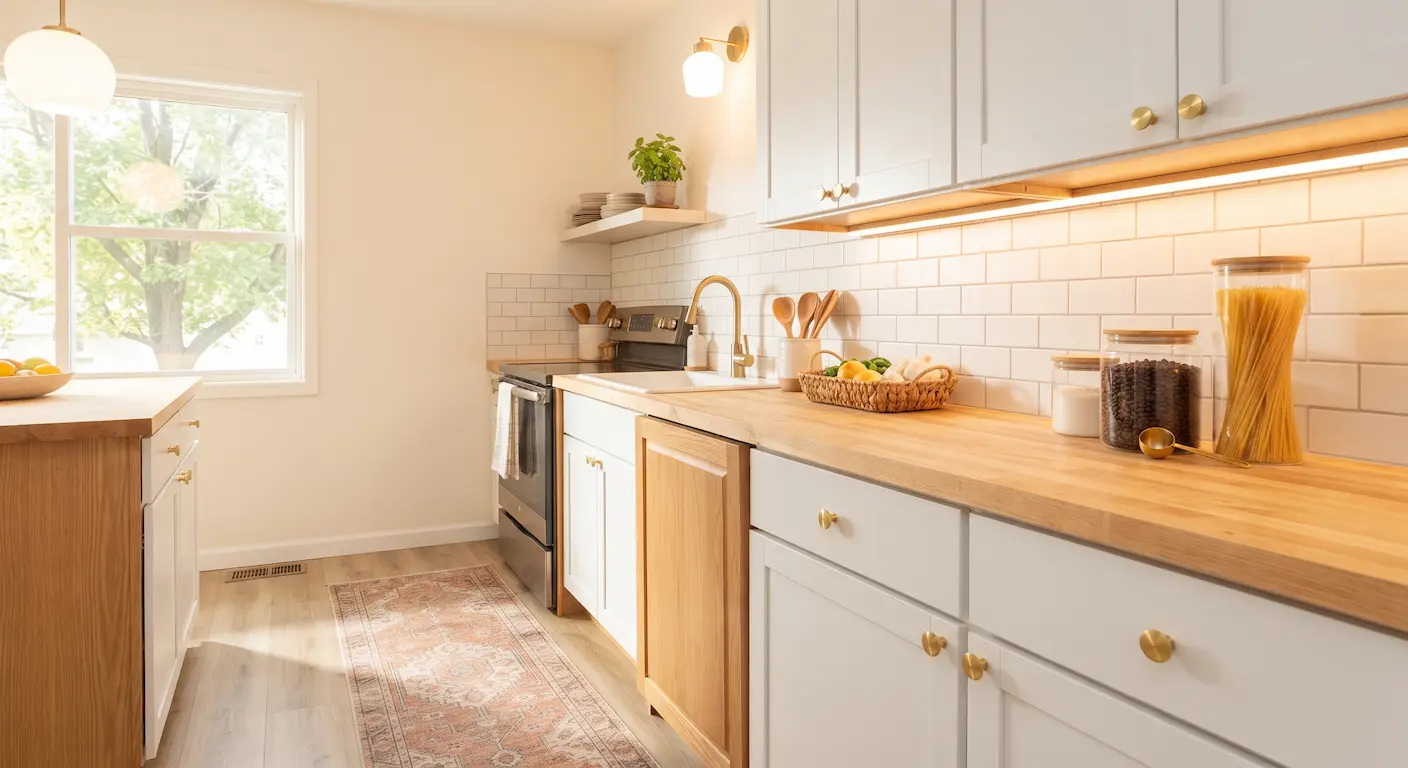
Rental Kitchen Makeover Ideas (Without Renovating Anything)
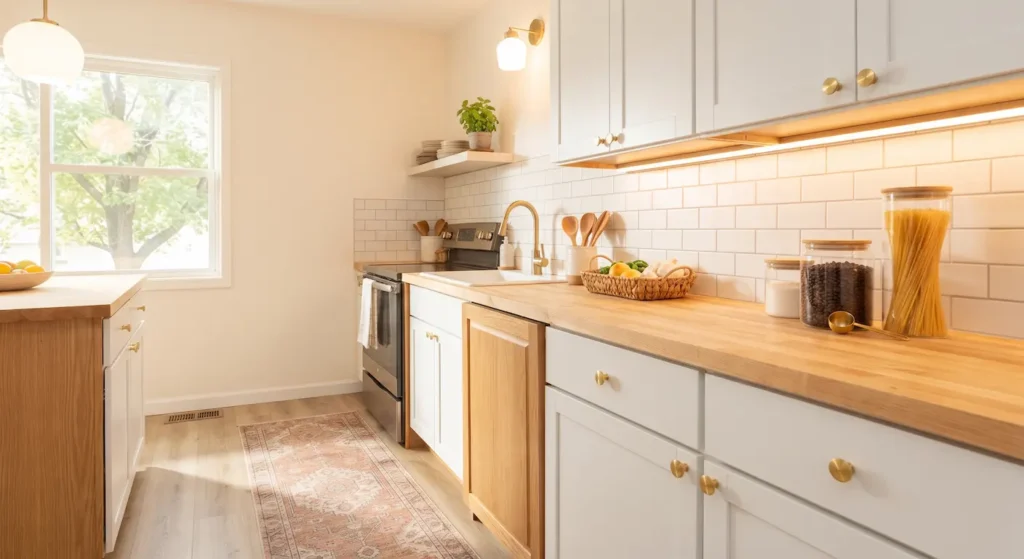
Rental kitchens are where landlords spend the least and tenants suffer the most. Orange-ish cabinet doors, a laminate counter pretending to be granite, a fluorescent tube overhead, and a floor that was a mistake in 2004.
You can’t rip any of it out. You can, however, cover almost all of it — and unlike most decorating, a rental kitchen makeover is genuinely dramatic, because the starting point is so low.
Here’s what to change, in order of impact per pound spent, and what to leave alone.
Start With the Two Cheapest Changes
Before anything visual, do these. Together they cost very little and they change how the entire room reads.
Change every bulb to 2700K. Rental kitchens are almost universally lit at 4000K or higher, which makes laminate look like plastic, wood look grey and food look unappetising. Warm light is the single highest-impact change available and it takes ten minutes. Like a dimmable 2700K 6-pack.
Swap the cabinet hardware. Builder-grade knobs are the most recognisable tell in any rental. New handles cost less than a takeaway Like solid brass knobs, 10-pack., take twenty minutes with a screwdriver, and are the detail your hand meets forty times a day. Bag the originals and tape them inside a cabinet so you can put them back.
IMO if you do nothing else in a rental kitchen, do these two. Everything below is a bigger project for a smaller return.
Cabinets
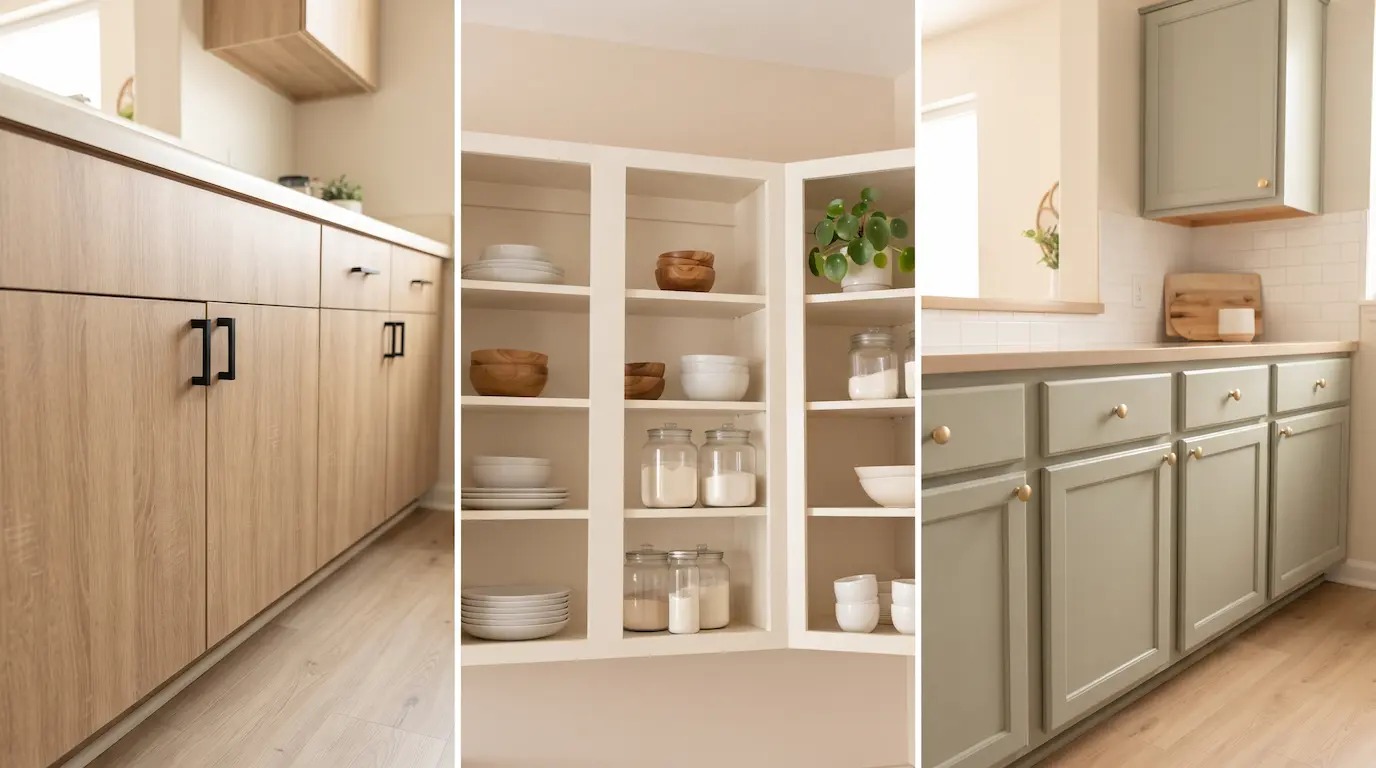
- Contact paper on the doors. The modern films are genuinely convincing at arm’s length, especially matte wood and solid colours. Clean the doors thoroughly first — kitchen grease is why most applications fail — and test one door before committing to twelve.
- Remove the upper doors entirely. Free, reversible, and it turns dated uppers into open shelving. Store the doors flat in a wardrobe with the hinges bagged. Only do this if what’s inside is worth looking at.
- Paint, only with permission. Painting cabinets transforms a kitchen more than anything else here, but it’s genuinely irreversible and it’s the classic deposit dispute. Ask in writing. Some landlords say yes for a neutral colour.
Counters and Backsplash
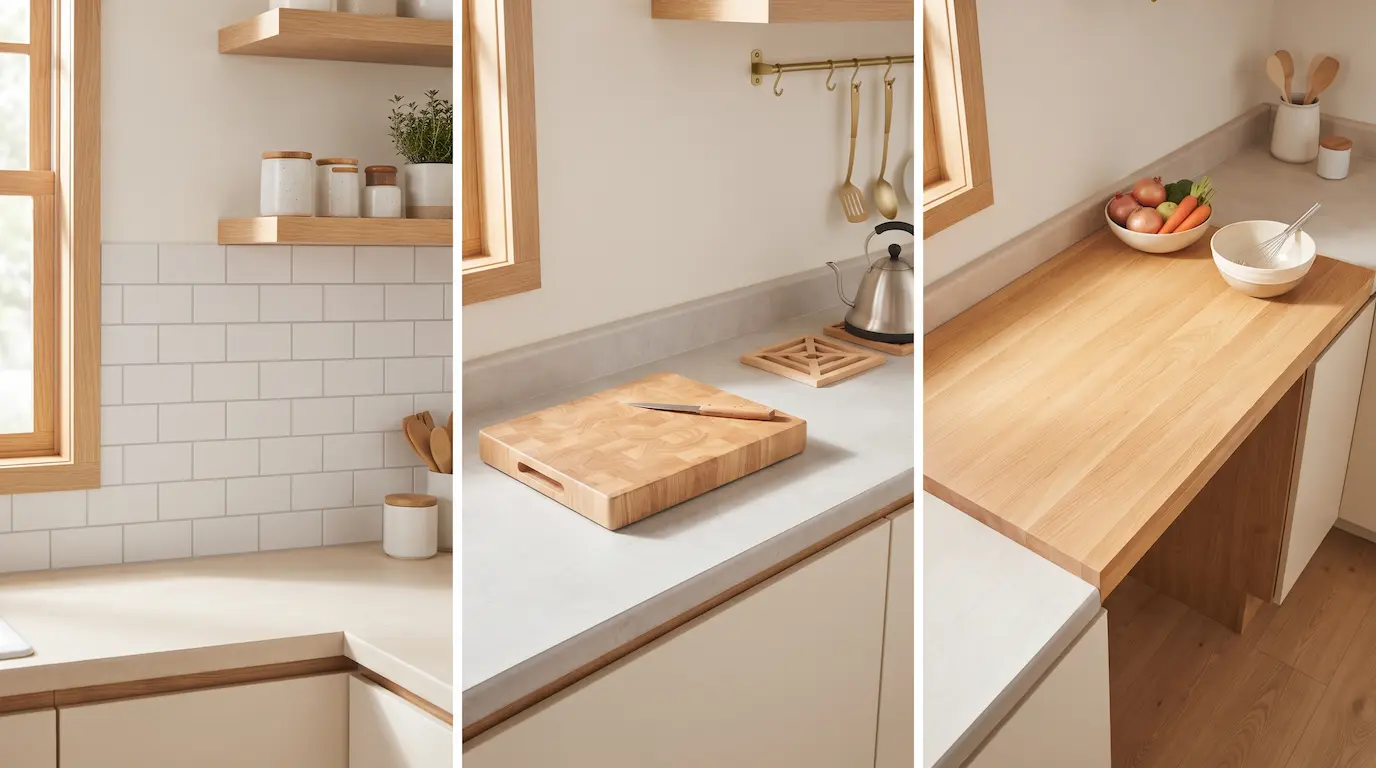
- Peel-and-stick tile for the backsplash. The best value change in a rental kitchen after bulbs and hardware. It covers the worst area, it’s the most visible vertical surface, and it lifts off later. Like waterproof peel-and-stick tile. Keep it away from directly behind the hob if there’s any real heat.
- Counter film. Riskier than backsplash tile because counters take heat, water and knives. It works, but treat it as a one-year solution and always use boards and trivets on top.
- Or just cover the worst section. A large wooden board over a damaged patch of counter gives you prep space and hides the problem, with no adhesive involved at all. Genuinely underrated.
Floor and Lighting
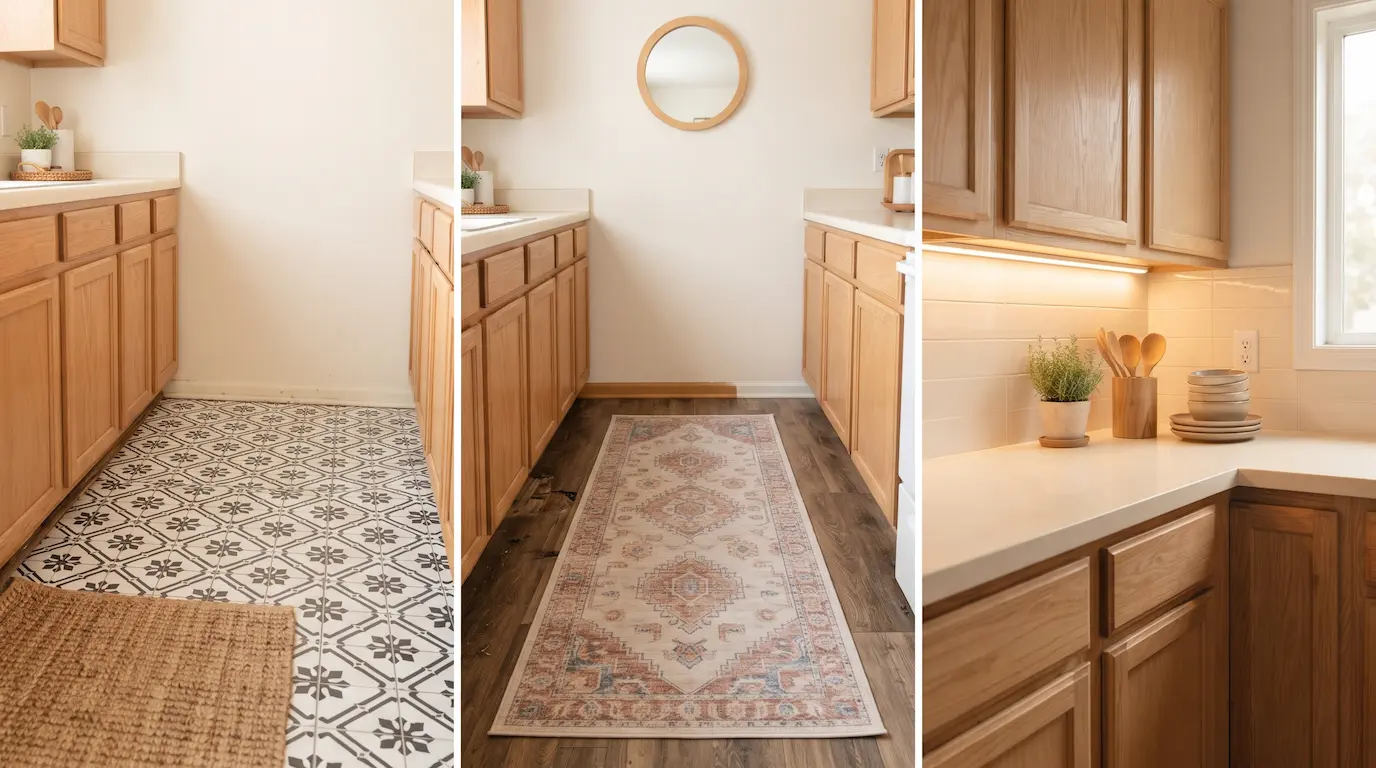
- Peel-and-stick floor tile. Works over existing vinyl or tile, comes back up with heat and a scraper. Don’t use it on unsealed wood. In a small kitchen this is a couple of hours and it removes the ugliest surface in the room.
- A runner over the floor instead. Zero risk, and a washable runner covers the worst of a bad floor while making the room warmer underfoot.
- Under-cabinet lighting. Stick-on LED strips or puck lights under the uppers throw light onto the counter where you actually work, and let you stop using the overhead entirely. This is what makes rental kitchens look like designed ones in photographs. Like rechargeable stick-on strips.
The Soft Layer Nobody Adds
Kitchens are all hard surfaces, which is why they feel cold even when they’re clean. A small amount of textile changes that disproportionately.
A runner or small rug. Warmth underfoot, sound absorption, and colour in a room that usually has none.
Decent tea towels and an actual apron on a hook. Sounds trivial. It reads as a kitchen that someone cooks in rather than a fitted unit.
A short curtain instead of a blind. If there’s a window, fabric beats plastic slats every time.
Decant what’s on display. Coffee, sugar, oil, pasta into matching containers. FYI this removes a dozen competing brand labels from view and does more for how a kitchen looks than any surface change.
A Weekend Plan, By Budget
If you want this as an order of operations rather than a menu, here’s how I’d spend it.
Under $50
Warm bulbs for the whole kitchen, new cabinet hardware, and matching containers for whatever sits on the counter. That’s it — and it’s genuinely the biggest visible change per pound on this page. Two hours of work, most of it unscrewing knobs.
Under $150
Everything above, plus peel-and-stick backsplash tile and under-cabinet lighting. This is where a rental kitchen stops looking rented. The backsplash covers the most visible vertical surface and the lighting lets you abandon the overhead fixture entirely.
Under $300
Everything above, plus the floor — peel-and-stick tile or a good runner — and contact paper on the cabinet doors. At this point almost every original surface is covered, and the room reads as a different kitchen.
Notice the order: light, then details, then surfaces. Most people start with surfaces, spend the most, and get the least, because they’re covering things that are still lit badly.
If the Kitchen Is Also Very Small
A small rental kitchen has a different priority order, because storage and counter space matter more than appearance and the two goals sometimes conflict.
Don’t remove cabinet doors. Open shelving in a tiny kitchen means every item you own is on display, and a small room can’t absorb that visual noise. Keep the doors and improve them instead.
Skip the counter film, add counter instead. A rolling cart gives you working surface Like a cart with locking wheels., which a small kitchen needs far more than it needs a nicer laminate.
Do the backsplash anyway. It’s a vertical surface, so it costs no space and it’s proportionally more visible in a small room.
Go lighter, not darker. Dark contact paper on cabinets looks excellent in a large kitchen and closes a small one right down. Light matte finishes reflect what little light you have.
Storage-specific fixes are in 17 small kitchen ideas that add storage.
What to Skip
Anything requiring plumbing or electrics. Taps, light fixtures, extractor fans. Cost, risk and permission all go up sharply.
Full counter replacement, even a cheap one. It’s not reversible, and you’re improving someone else’s asset with your money.
Peel-and-stick anything on textured or heavily damaged surfaces. It won’t adhere, and pulling it off takes the surface with it.
Open shelving on the walls. Anchors in a kitchen wall are the fixings landlords look at hardest. Freestanding or over-hinge alternatives are covered in 17 small kitchen ideas.
Three Checks Before You Start
Five minutes of checking prevents most of the ways this goes wrong.
Read the actual lease clause. Most say “no alterations” rather than “no changes,” and covering a surface reversibly is not usually an alteration. Knowing what it says changes how much you’ll risk, and it’s worth a two-minute read before you assume the answer is no.
Test every adhesive on a hidden patch. Inside a cabinet door, behind the fridge, under the counter overhang. Leave it a week, then pull it off and look at what comes with it. Kitchen surfaces are greasier and glossier than the rest of the home, and both affect how film behaves.
Photograph everything first. Every cabinet face, the counter, the floor, the backsplash, dated. If a surface was already chipped, scratched or stained, you want proof that predates your contact paper.
One more practical point: buy 20% more film than you measure. Cabinet doors have edges you’ll wrap, you’ll ruin at least one piece learning, and matching a pattern later from a different batch rarely works.
Putting It All Back
Plan the reversal before you start, because that’s where deposits go.
Keep every original part — hardware, cabinet doors, shelf pins — labelled in one box in a wardrobe.
Warm adhesive before removal. A hairdryer and a shallow peel angle, working slowly. Pulling film straight off a cabinet door takes the finish with it.
Photograph everything on day one. Before and after shots settle every argument about what was already damaged.
Full removal guidance in 18 renter-friendly decor ideas.
Worth saying plainly: everything here improves a property you do not own. That is fine if you are staying two or three years and the kitchen currently makes you unhappy every day. It is a bad trade for a six-month tenancy. Match the spend to how long you will actually live with it.
Bulbs, Handles, Backsplash
In that order. The first two cost almost nothing and take half an hour between them. The third is an afternoon and covers the worst surface in the room.
If the kitchen still bothers you after those three, then look at the cabinet doors and the floor. Most people never need to 🙂
What’s the worst part of your kitchen — the cabinets, the counter or the floor? Tell me in the comments and I’ll tell you whether it’s worth covering.