Sofa Alternatives for Small Living Rooms (Nine That Work)
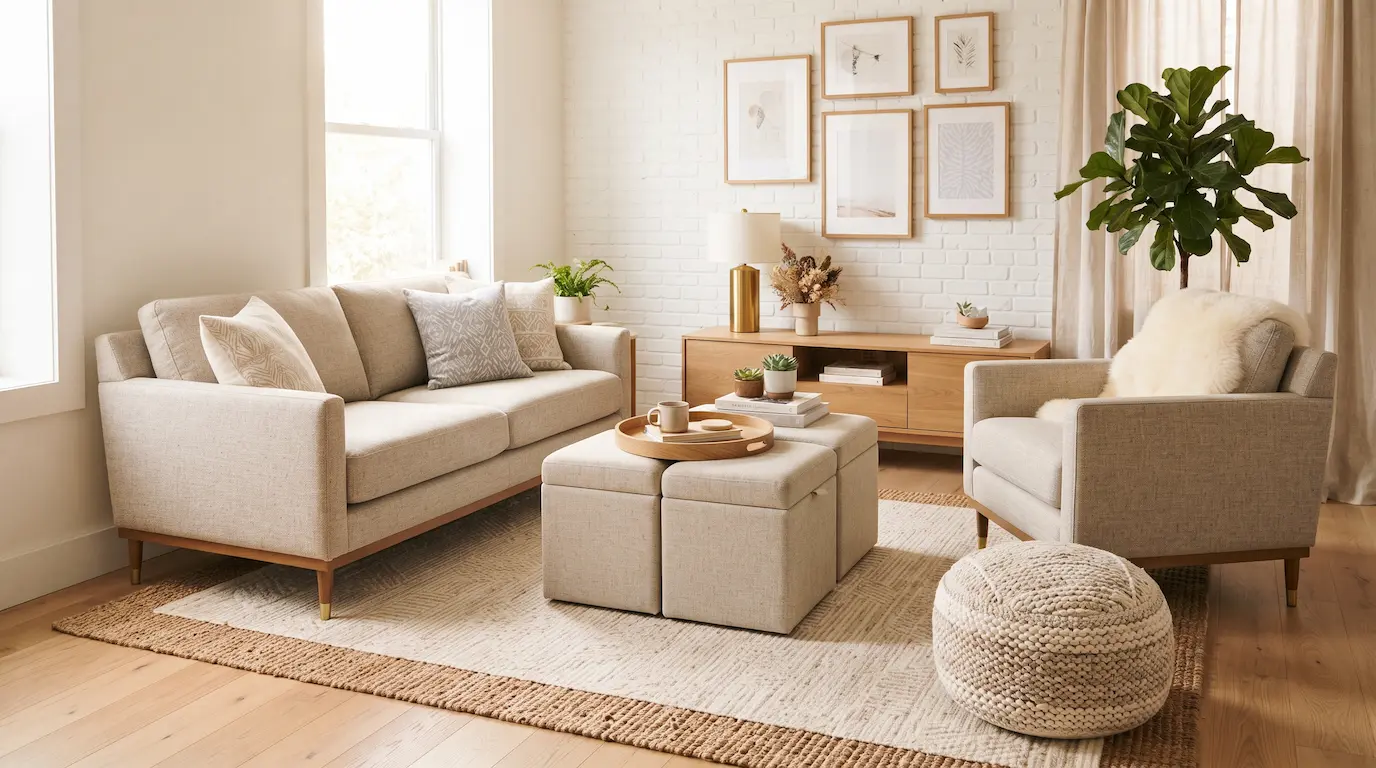
There is a point in a small living room where a sofa stops helping. It eats the whole wall, it blocks the walkway, it will not go round the stairwell, and once it is in there the room is basically a sofa with some space around it.
The default assumption is that every living room needs one. It does not. What a living room needs is comfortable seating for the number of people who actually sit in it, which in most apartments is one or two.
Here are nine sofa alternatives that work in small living rooms, and how to pick the one that fits your room and your life.
First, Check Whether a Sofa Is Even the Problem
Measure the room, then measure the route in. Doorways, hallway turns, stairwell landings and lift depth. Plenty of apartments physically cannot take a three-seater, and nobody finds out until delivery day.
Leave 30 to 36 inches for main walkways and at least 24 inches for a squeeze-past route. Subtract that from your floor plan before you shop.
Count how many people sit here on a normal Tuesday. Not Christmas. Tuesday. That number is what you are furnishing for.
The full sizing method, if a sofa is still on the table, is in how to choose a sofa for a small living room.
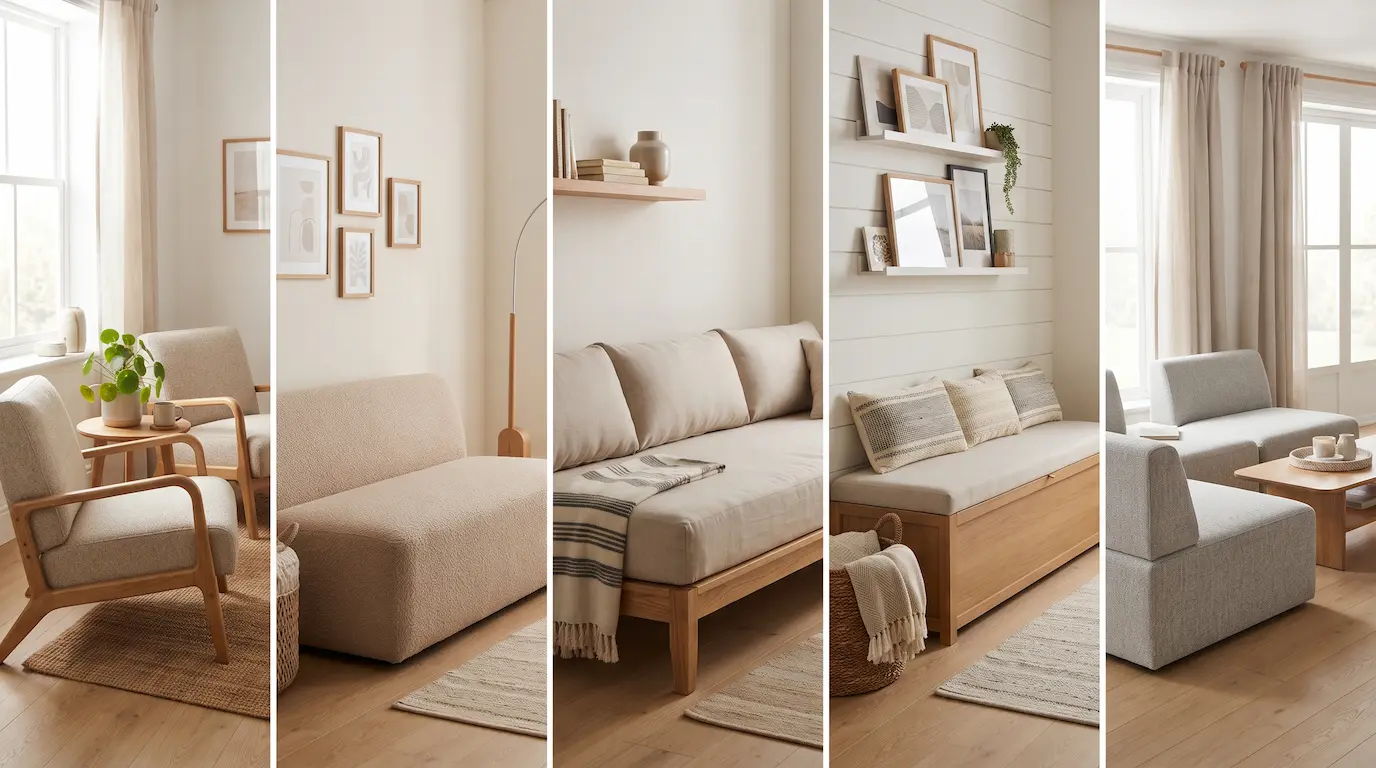
1. Two Armchairs Instead of One Sofa
The most underrated swap in small-space decorating. Two chairs take less visual weight than a sofa, can be angled, and can be moved individually when you need the floor.
They also break the wall rule. A sofa wants a wall; chairs can float, face each other, or sit either side of a window. Like this compact accent chair.
The catch: nobody can lie down. If your evening involves sprawling with a laptop, this is not your option.
Sizing and shape advice in how to choose an accent chair for a small space.
2. A Loveseat
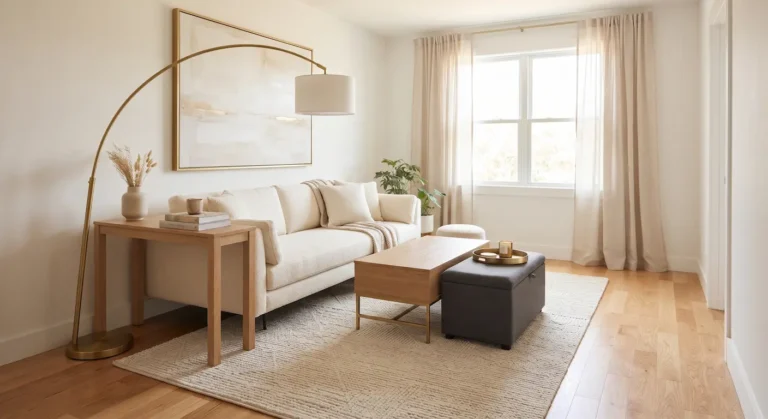
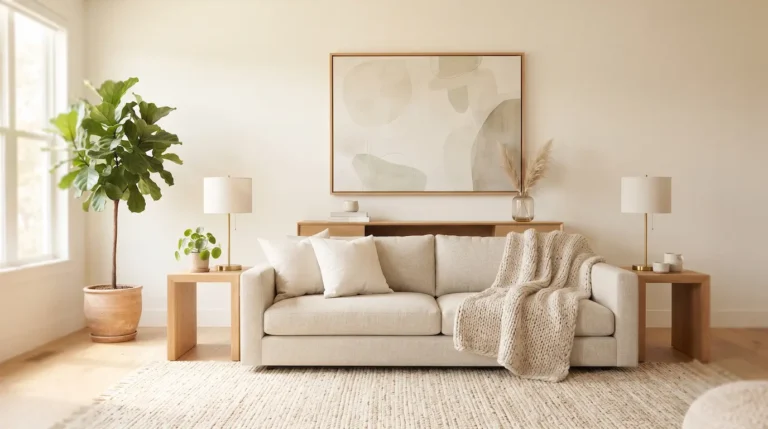
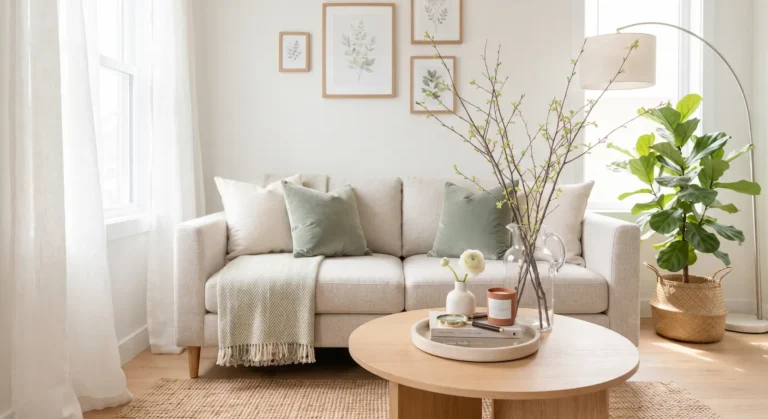
A 50-inch loveseat does roughly 80 percent of what a sofa does in about 60 percent of the space. For one or two people it is usually the right answer. Like this 50-inch loveseat.
Armless versions save another eight inches and read much lighter in a narrow room. Like this armless loveseat.
Check the seat depth, not just the width. Anything over about 24 inches deep starts to dominate a small room regardless of how narrow it is.
3. A Daybed
This is the best dual-purpose option there is. Sofa by day, proper bed by night, and with a trundle underneath it sleeps two guests without a sofa bed mechanism. Like this daybed with a trundle.
Style it with a long bolster or three large cushions along the back so it reads as seating rather than as a bed in the living room.
Best in studios and one-bedroom apartments that host, which covers most people reading this. More options in where guests sleep when you have no guest room.
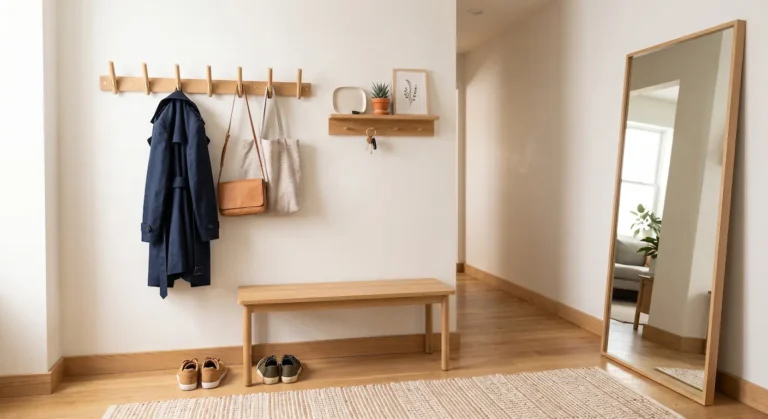
4. A Bench or Banquette Against the Wall
Built-in style seating uses the shallowest possible footprint. A bench is 16 to 18 inches deep; a sofa is 32 to 38.
Add a long cushion and cushions against the wall and a bench becomes genuinely comfortable for an hour or two. Like this upholstered bench.
Storage underneath is the bonus. A storage bench holds what a small apartment has nowhere else to put.
Great in a dining-living combination room, where the same bench serves the table and the room. See small dining area ideas.
5. Modular and Armless Pieces
Modular seating solves the delivery problem and the layout problem at once. It arrives in boxes that fit up any stairwell, and it can be reconfigured when you rearrange or move.
Armless modules seat more people per foot. Arms eat roughly 8 to 10 inches of seating width each, which in a small room is a whole person.
Buy two units, not four. The temptation is to build a big shape. Resist it; you will end up back where you started.
6. Floor Seating
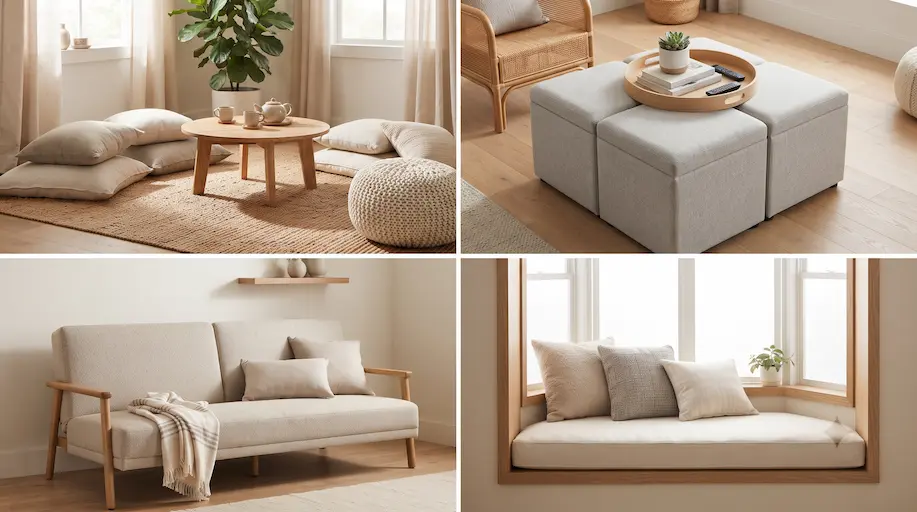
The cheapest option and the most divisive. A big rug, two or three floor cushions, a low table, and the room gains an enormous amount of visual space.
A pouf is the entry point. It works as a footrest, a seat, and a side table with a tray on top. Like this knitted pouf.
Be honest about who is sitting. Floor seating is not comfortable for everyone, particularly anyone with knee, hip or back problems, and older guests will quietly hate it.
Use it as supplementary seating rather than the only seating, and the idea works much better.
7. A Pair of Storage Ottomans
Two large storage ottomans are the most flexible furniture in a small apartment. Push them together as a coffee table, split them as extra seats, open them for blankets. Like these storage ottomans.
Put a tray on top and one becomes a table. Add a cushion and it becomes a seat.
Choose firm lids. Soft-topped ottomans wobble under a mug, which defeats half the purpose.
8. A Sofa Bed or Futon
Still worth considering if guests are frequent, because it is the only option that gives you a full-size sleeping surface in the footprint of seating. Like this convertible sofa bed.
Check the mechanism before the fabric. A sofa bed you dread unfolding becomes a sofa with a secret.
Measure the open footprint too. Many will not open at all in a room under about 10 feet deep, which is a discovery best made in advance.
9. A Window Seat
If you have a deep sill or a bay, you already have seating. A cushion and two pillows convert it for the price of a takeaway.
Do not block a radiator underneath it permanently, and keep anything soft away from a heater. In winter you will want that heat in the room.
It works best as a second seat, the reading spot, rather than the main perch. See reading nook ideas.
How to Choose in Two Minutes
Do you need a guest bed? Daybed or sofa bed. Nothing else does that job.
Do you sprawl? Loveseat or daybed. Chairs will frustrate you within a week.
Do you rearrange often, or move often? Two chairs or modular pieces.
Do you need storage more than comfort? Storage bench plus one good chair.
Is the room genuinely tiny, under about 10 by 10? One chair, one pouf, one bench. Two big seating pieces will never work in there, whatever the floor plan app says.
Comfort Rules That Apply to All of Them
Seat height around 17 to 19 inches is what most people find easy to get out of.
You need back support above your shoulder blades for anything you sit in for more than an hour. This is why benches need wall cushions.
Leave 14 to 18 inches between seating and a coffee table. Closer and you cannot get in; further and you cannot reach your drink.
Every seat needs a surface within arm’s reach. A side table, a stool, a tray on a pouf — anything. Seating with nowhere to put a cup does not get used.
And every seat needs its own light, or at least a lamp reaching it. See apartment lighting ideas.
Making It Look Deliberate, Not Improvised
Anchor everything on one rug. A rug under a mixed arrangement of chairs, poufs and benches is what turns a collection of objects into a seating area.
Repeat one textile across the pieces. The same cushion fabric on the chair and the bench ties them together instantly. Like these cushion covers.
Keep the heights close. Wildly different seat heights read as leftover furniture. Within a few inches of each other reads as a scheme.
Add one large piece of art or a mirror above the seating, since without a sofa the wall can look strangely bare.
What About the TV?
This is the question that kills most sofa alternatives, and it is worth answering before you buy anything.
Two chairs work fine for TV if they both face it. The mistake is angling them towards each other for conversation and then twisting sideways every evening to watch something.
Sit at roughly 1.5 to 2.5 times the screen’s diagonal away. For a 55-inch TV that is about seven to eleven feet, which is more than many small living rooms have — another argument for a smaller screen rather than bigger seating.
Keep the screen at seated eye level. Mounting a TV high above a fireplace or a console means looking up all evening, which your neck will comment on.
A daybed is genuinely the best TV seat on this list. You can sit up, lean back, or lie down, which is what a sofa is really for.
Layout options for the screen itself are in TV wall ideas for small living rooms.
The Budget Version of Each Option
- Two chairs: buy secondhand. Solid-framed armchairs are the best value item in any resale market, and a cover fixes tired fabric.
- Loveseat: flat-pack, and check the seat depth in the listing rather than trusting the photo.
- Daybed: a plain metal frame plus a firm twin mattress costs less than most sofa beds and is far more comfortable to sleep on.
- Bench: a storage bench from a flat-pack retailer with a cushion cut to size on top.
- Floor seating: one large rug and two poufs. Cheapest route to a usable room in an empty apartment.
Whatever you buy, check the returns policy on size. Furniture that does not fit through the door is the most expensive mistake in small-space living, and one measurement prevents it. See how to measure before buying furniture.
Your Turn
Measure your room and your doorway this week, then count the Tuesday-night seats you actually need. Most people discover they have been shopping for a sofa that suits a house they do not live in.
If you want one recommendation: a loveseat plus one armchair is the most reliable small-living-room setup there is, and a daybed is the best choice if anyone ever stays over.
What is your room’s biggest constraint — the doorway, the width, or the walkway? FYI, it is the doorway more often than people expect. 🙂