Shoe Storage Ideas for a Small Entryway
Shoes are the first thing that breaks a small entryway. You come in, you kick them off, and within a week there are eleven pairs by the door and a narrow channel of floor to walk through.
Shoe storage in an apartment is a measurement problem more than a discipline problem. Shoes are deeper than most furniture allows for, and the spot by the door is usually the narrowest part of the whole place.
Here’s how to store shoes in a small entryway properly — the numbers that decide what fits, six options that work, and the damp and safety details nobody mentions.
Count Your Shoes Before You Buy Anything
Put every pair in the apartment by the door. All of them, including the ones in the bedroom and the pair in a bag under the bed.
Split them into three groups. Worn weekly, worn seasonally, and not worn in a year.
Only the weekly pairs need to live at the door. For most people that is four to eight pairs, which is a very different storage problem from twenty.
Be honest about the last group. Shoes that hurt, shoes waiting for repair you will not make, and shoes from a previous life. They are taking the space the daily pairs need.
The Depth Problem
An adult shoe is roughly 11 to 13 inches long. That is deeper than most hallway furniture, which is why so many shoe units stick out into the walkway.
Slim flip-drawer cabinets are about 9 to 10 inches deep because they hold shoes tilted rather than flat. That tilt is the whole trick.
Leave at least 30 inches of walkway past whatever you install, and remember the door swing. Measure the arc of your front door before anything goes against that wall.
Boots need 14 inches of height standing up, or they need to lie down. Plan for them separately, because they are what overflows every system.
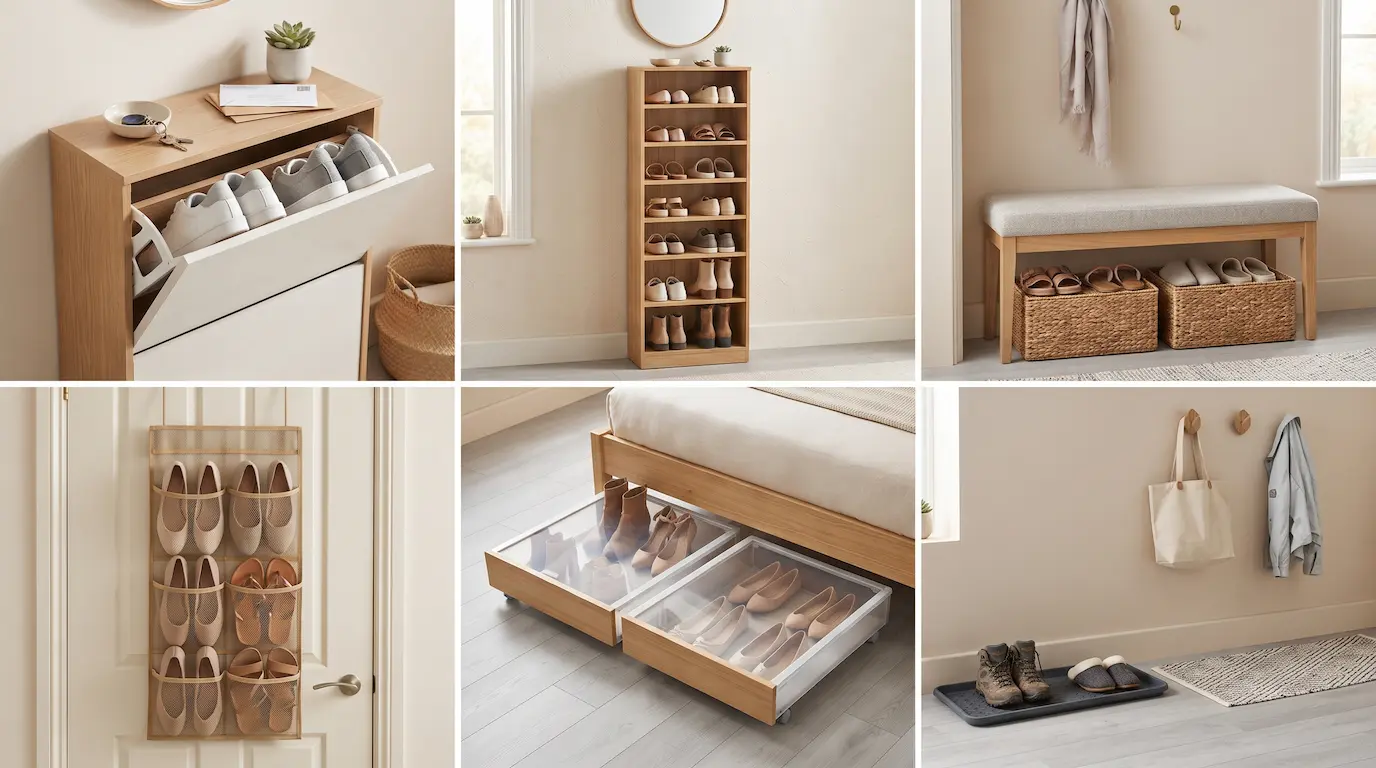
Option 1: A Slim Flip-Drawer Cabinet
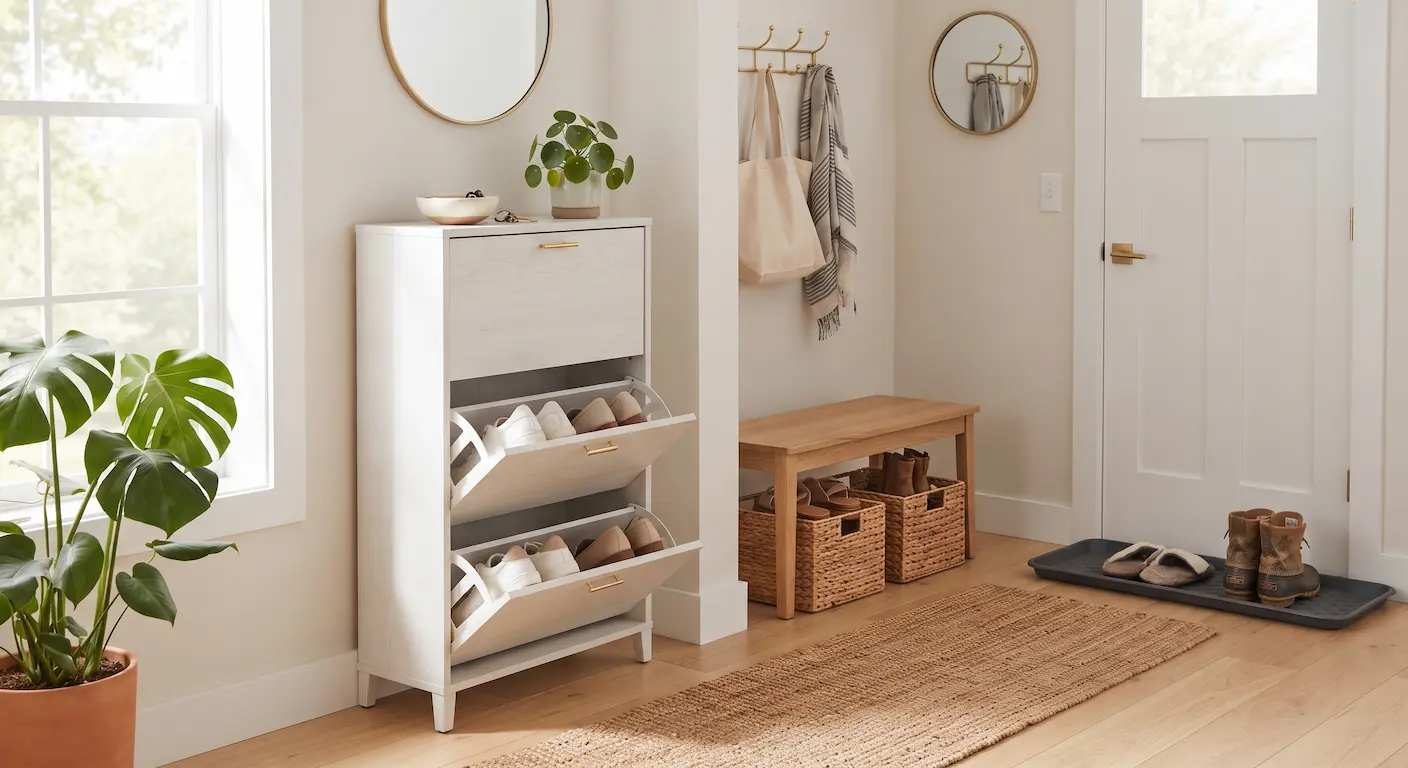
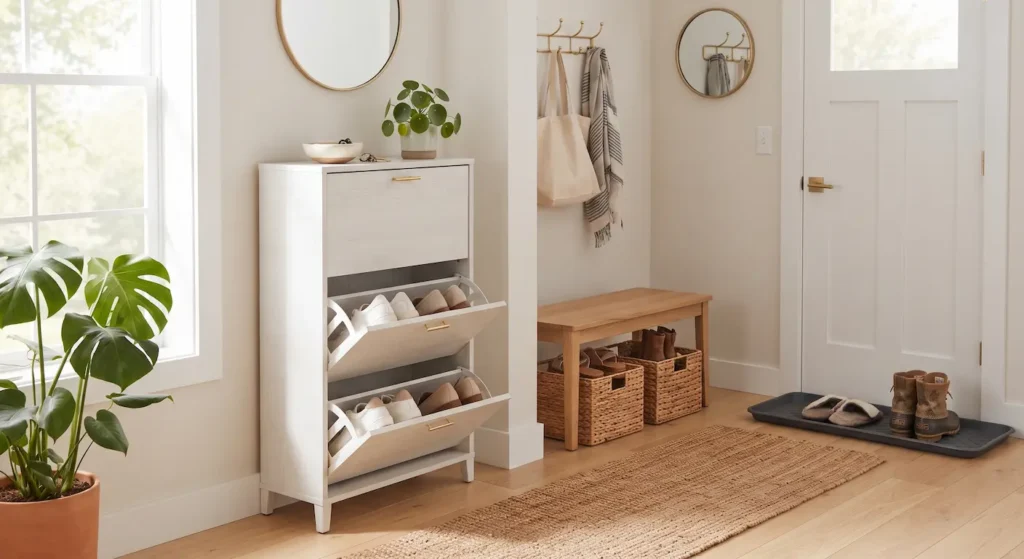
The best answer for most small entryways. Shoes go in tilted, the front flips closed, and the whole thing is barely deeper than a radiator. Like this slim two-drawer shoe cabinet.
Two or three drawers holds six to twelve pairs depending on size, and the closed front is what keeps a tiny hallway looking calm.
The top becomes your landing surface for keys, post and a small lamp, which the entryway probably also needed. Like this three-drawer version.
The limitation: trainers and chunky boots often do not fit the tilt. Check the internal depth before buying if you live in trainers.
Option 2: A Vertical Tower
If you have 12 inches of width and some height, go up. A narrow tower holds a lot of shoes in almost no floor space. Like this narrow shoe tower.
Put the daily pairs at knee height and the occasional ones at the top and bottom.
Anchor anything tall and narrow to the wall, particularly if children live there. Tall, light furniture tips easily.
Option 3: A Bench With Baskets Underneath
The most useful piece of furniture an entryway can have, because sitting down to put shoes on is genuinely better than hopping. Like this upholstered storage bench.
Two baskets underneath take the daily pairs, and the shoes going in a basket rather than a rack means nobody has to line them up neatly.
Keep the bench under 18 inches deep so it does not eat the hallway. A perching bench is fine; you are not sitting there for long.
Full entryway setup in entryway ideas for small apartments.
Option 4: The Back of a Door
The cheapest storage in the apartment. An over-door rack on the coat closet or even the front door itself holds flat shoes, sandals and slippers. Like this over-the-door rack.
Best for lightweight shoes only. Heavy boots on a door rack swing, bang and eventually bend the hooks.
Do not hang anything on the front door’s outer face. That is the shared hallway, and most buildings prohibit it.
Option 5: Overflow Somewhere Else Entirely
Seasonal shoes should not live at the door. Boots in July and sandals in January are stored items, not daily items.
Under-bed bins are ideal for this. Flat, wheeled, out of sight, and they keep shoes dust-free. Like these under-bed bins.
Top shelf of a closet works too, in a labelled box. See under-bed storage ideas and small closet organization ideas.
Keep boxes to one per person. The rule that stops overflow becoming a second wardrobe.
Option 6: The Minimal Setup
Sometimes the right answer is a mat and a limit. A washable mat or boot tray by the door, room for four pairs, and everything else goes to the bedroom. Like this washable doormat.
This is the best option in a genuinely tiny entryway where no furniture fits at all. A physical boundary works better than a rack you cannot walk past.
Add hooks above it for coats and bags so the whole arrival routine happens in one place. Like this wall-mounted coat rack.
Where Shoes Should Not Go
Not in the shared hallway. Corridors are escape routes, and shoe racks outside apartment doors are banned in most buildings and by most fire regulations. It is also how shoes disappear.
Not blocking the door’s swing or the walkway. Anything you have to step around at night will eventually be the thing you trip over.
Not on or against a radiator. Heat dries out and cracks leather, and drying wet shoes directly on a heat source ruins the glue.
Not in a sealed box while damp. That is how shoes get mould and how a closet starts to smell.
Smell and Damp: The Part Everyone Skips
Shoes need air more than they need containers. A closed cabinet full of damp trainers is exactly why shoe cabinets get a reputation.
Let shoes dry fully before they go away. 24 hours out of the cabinet after rain or a long day.
Rotate rather than wearing the same pair daily, which is the single most effective anti-odour measure there is.
Use cedar blocks, charcoal bags or baking soda in the cabinet rather than spraying over the problem. Like these charcoal odour bags.
Choose a cabinet with ventilation holes if you can, or leave the drawers slightly open overnight.
The Wet Weather Setup
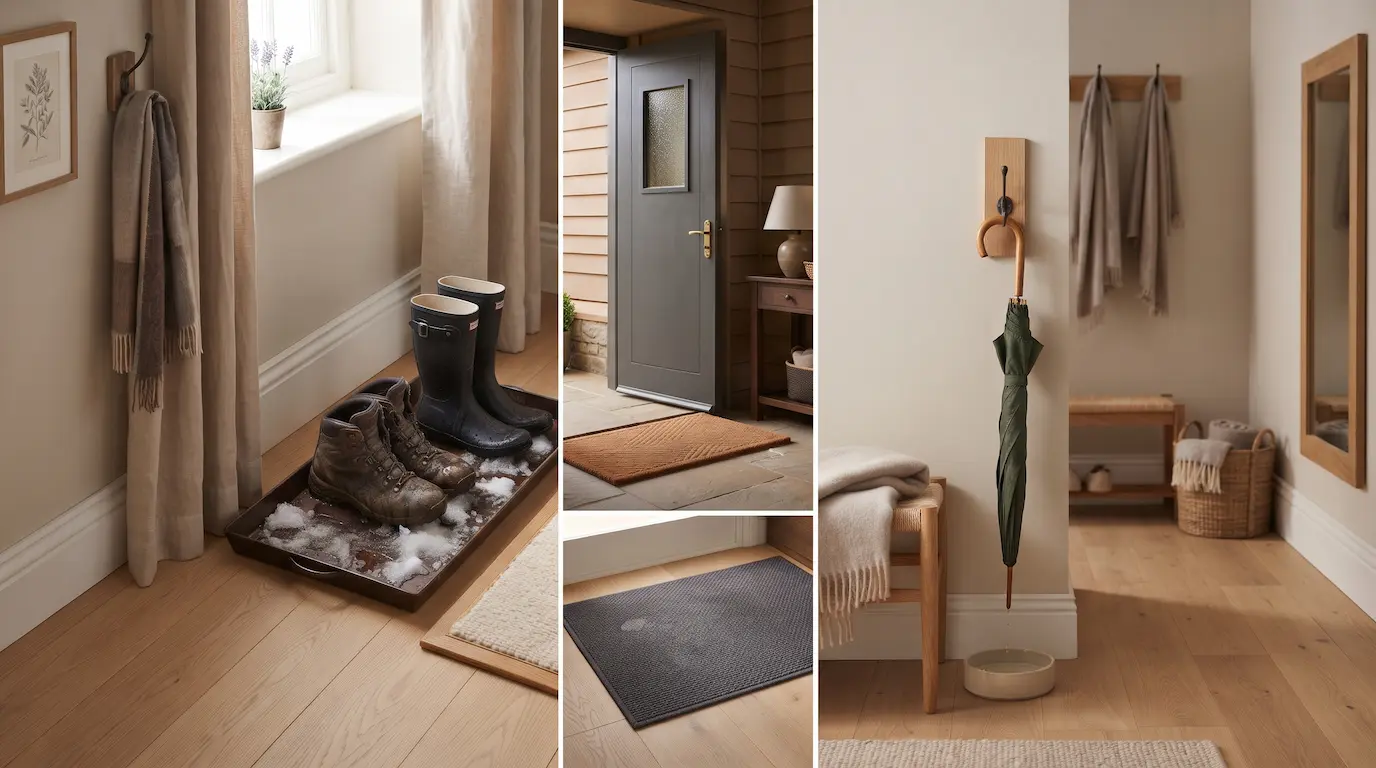
You need a tray, a mat and a hook. That is the whole winter entryway.
A waterproof tray catches the melt so it does not sit on the floor or soak into a rug.
A coir or rubber mat outside and a washable mat inside stops most of the grit at the door, which matters more in a small apartment where every floor is visible.
Hang the umbrella, do not stand it. A hook or a bucket, and it dries instead of making a puddle.
Door-side details, including what your building will allow, are in apartment front door decor.
If You Have No Entryway At All
Plenty of apartments open straight into the living room, which means the shoe problem is happening in the middle of your main room.
Claim the first corner you see. Whichever side of the door has 24 inches of wall is your entryway, and giving it a cabinet, a mat and two hooks is what stops shoes spreading along the sofa wall.
Use a piece that reads as living-room furniture. A slim console with baskets underneath, or a bench with a cushion. Nobody should be able to tell it is shoe storage from across the room.
Put a rug down to mark the zone. A small rug or runner at the door creates a visual boundary that people — including you — instinctively respect.
If the door opens against a wall with nothing spare, go vertical behind the door instead, or accept a mat-and-limit setup. Corner options are in ways to use an awkward corner.
Shoes When More Than One Person Lives There
Give each person their own container. One basket, one drawer or one shelf each. Shared shoe storage becomes a negotiation; separated storage becomes obvious.
Label them if you have to. It sounds excessive until you have had the third conversation about whose trainers are in the way.
Agree the limit out loud. Two pairs each at the door, the rest in the bedroom. A rule nobody said is a rule nobody follows.
Keep guest shoes in mind. If you ask visitors to take shoes off, leave a clear patch of mat for them — four pairs of guest shoes in a tiny hallway blocks the door fast, and a folded mat by the wall is a five-second fix before people arrive.
Keeping the Daily Pairs Under Control
Set a number and make it physical. Four pairs by the door, or however many fit in the basket. When it is full, something goes back to the bedroom.
Do a thirty-second reset when you get home. Shoes in the basket as you take them off, not later. Later never happens.
Swap seasonally, twice a year. Boots out in October, sandals out in May, and the other set goes in the under-bed box.
Actually get rid of the worn-out pairs. Many shoe brands and retailers run take-back and recycling schemes, and charities take wearable shoes gladly.
Your Turn
Bring every pair of shoes to the front door tonight and sort them into weekly, seasonal and finished. It takes ten minutes and it usually reveals that you need storage for six pairs, not sixteen.
Then measure the width and depth you have at the door before you shop, and check your front door’s swing. That one measurement is the difference between a slim cabinet that disappears and a unit you shuffle past for a year.
How many pairs made it into the weekly pile? IMO anything under eight and a single slim cabinet will solve this entirely. 🙂