Where to Put the Bed in a Small Bedroom
In a small bedroom there are usually only two or three places the bed can physically go, and the one you choose decides everything else — where the wardrobe fits, whether you can open the door fully, and whether the room feels calm or cramped.
Most people push the bed wherever it went on moving day and then live with it for three years. Which is a shame, because moving a bed takes twenty minutes and changes a small bedroom more than any purchase.
Here’s how to decide where the bed goes, with the clearances that make a room work and the handful of things that override the aesthetics entirely.
The Clearances That Decide Everything
24 inches to walk down a side. Less than that and you are shuffling sideways past your own bed every night.
30 inches if you want to make the bed from that side comfortably, or if two people need to get in and out independently.
36 inches in front of a wardrobe — the door width plus standing room. This is the clearance most small bedrooms fail.
The full door swing. Mark the arc of the bedroom door on the floor and keep the bed out of it. A door that only opens two thirds of the way is a daily irritation.
Write your room’s numbers down first. The method is in how to measure before buying furniture, and it applies just as much to moving what you own.
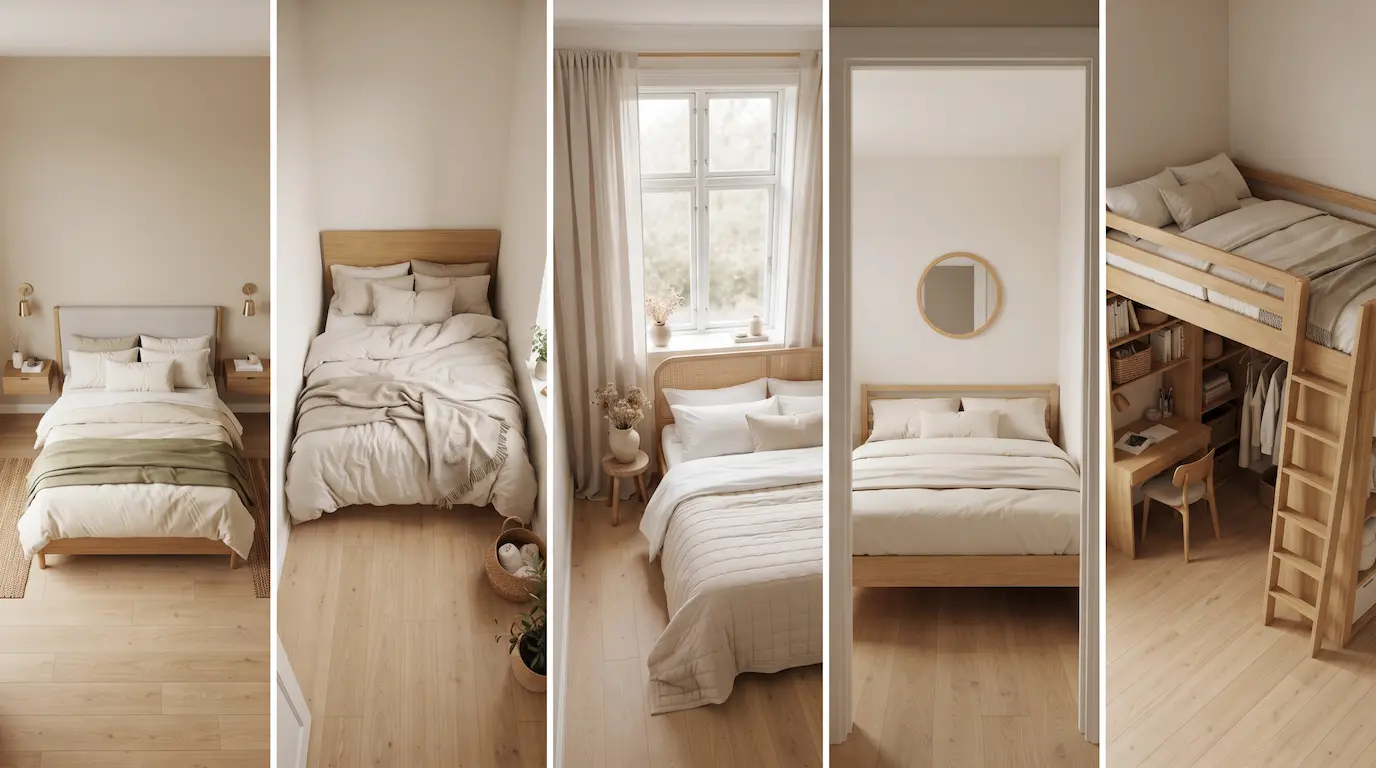
Option 1: Centred on the Longest Wall
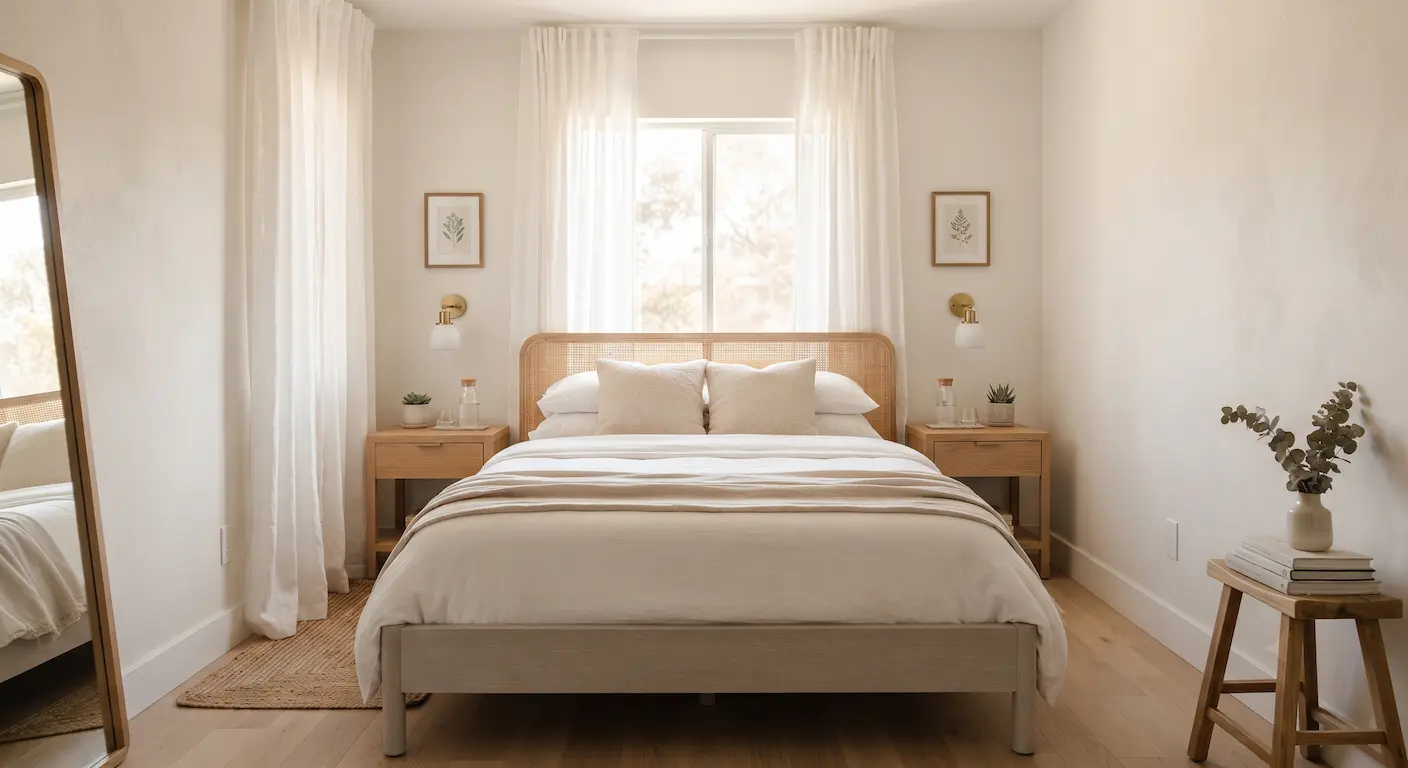
The default, and usually the right answer. Access from both sides, room for a nightstand each, and the bed reads as the centre of the room rather than as an obstacle.
You need the room to be at least the bed width plus 48 inches to do this properly. For a double that is roughly 10 feet.
The bonus is symmetry. Two nightstands, two lamps, and a small bedroom immediately looks more considered. Sconces do the same job without eating surface space. Like these plug-in sconces.
Do not centre it on a wall with a radiator unless you can leave a gap. Blocking a radiator with a mattress wastes heat and dries the room unevenly.
Option 2: In the Corner
The honest choice in a genuinely tiny room. Push the bed into a corner, access from one side, and you free up a whole usable strip of floor.
It buys you 24 to 30 inches of room — enough for a desk, a chair or a chest of drawers you otherwise could not fit.
The trade-off is making the bed, which becomes a climbing exercise, and it does not work well for two people unless one of you enjoys being trapped.
Leave an inch or two off the wall if the wall is an exterior one. A mattress pressed against a cold external wall can trap moisture behind it, and that is how you get damp patches and mould.
A narrow shelf works as the single nightstand on the open side. Like this narrow shelf unit. More options in nightstand ideas for small bedrooms.
Option 3: Under the Window
Often the only wall long enough, and it looks lovely in photographs — light behind the bed, curtains framing the headboard.
The practical downsides are real. Draughts in winter, condensation on the glass above your pillow, and heat in summer if the window faces the sun.
It works if the window is well sealed and double glazed. It works badly in an old building with a single-glazed sash.
Do not block a radiator underneath it with a solid bed base, and do not obstruct a window that is an escape route — in some buildings a bedroom window is the designated fire exit and must stay clear and openable.
Use a low or no headboard so the window is not visually cut in half, and hang curtains high and wide. Measurements in how to choose and hang curtains.
Option 4: On the Wall Opposite the Door
This is the most satisfying layout to walk into. You see the bed properly framed, and the room reads as a bedroom rather than as a corridor with a mattress in it.
It also puts the wardrobe and the door on the same side, which keeps the traffic in one part of the room.
Check the door swing carefully. If the door opens onto the bed’s foot, you lose the layout immediately.
Keep the wall behind the bed as the feature. A headboard or a soft panel is the cheapest way to finish it — ideas in renter-friendly headboard ideas.
Option 5: Up in the Air
If the room is under about 8 by 9 feet, going vertical may be the only real answer. A raised or lofted bed turns the footprint into a desk or storage zone.
Ceiling height is the deciding number. You want around 30 inches of sitting-up room above the mattress and adequate clearance below.
Check the weight rating and the maximum mattress thickness for any loft bed, because a thick mattress raises you above the guardrail, which is the point of the guardrail.
The cheaper version is bed risers. Four or five inches of extra height turns the space under a normal bed into real storage without changing anything else. Like these adjustable bed risers.
Full guide in loft bed ideas for adults.
The Things That Override Your Preference
Radiators and vents. Do not block them, and do not put a bed base right up against one.
Escape routes. Keep the door and any egress window clear and accessible.
Damp walls. If one wall is cold or shows any sign of moisture, the bed does not go against it. Report the damp; it is not your job to hide it.
Shared walls and corridors. Moving your headboard off a wall you share with a neighbour or a lift shaft improves your sleep more than any product. See renter-friendly ways to make an apartment quieter.
Overhead shelves. Nothing heavy on the wall directly above where heads rest. Ever.
Sloped ceilings. Put the bed where the ceiling is lowest — you are lying down, so you do not need the height, and it frees the standing space.
Does the Bed Size Need to Change Too?
Sometimes the layout problem is the mattress, not the wall. Worth asking honestly before you rearrange for the third time.
A full or double is 54 inches wide; a queen is 60. Those six inches are the difference between two 24-inch walkways and one, in a room around 9 feet wide.
A twin XL is 38 by 80 inches and is a genuinely good option for one person in a very small room, because the extra length means it does not feel like a child’s bed.
Check the frame, not just the mattress. Frames add 2 to 4 inches all round, and a chunky upholstered one can add more.
A platform frame with no footboard reads smaller than the same mattress on a tall divan with a footboard, even though the footprint is identical.
Storage beds change the maths. If a bigger base with drawers means you can lose a chest of drawers entirely, the bigger bed is the space-saving choice. Like this storage bed frame.
Test It Before You Move Anything
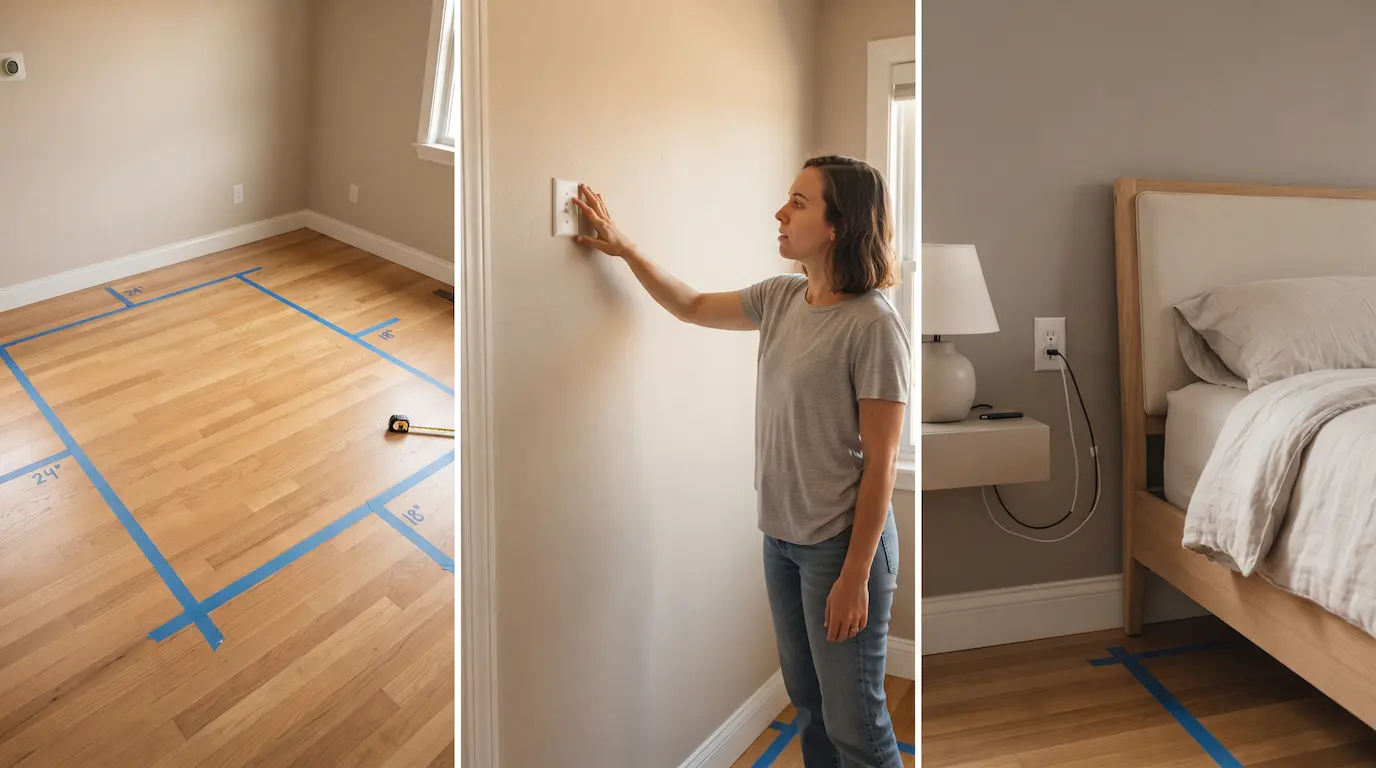
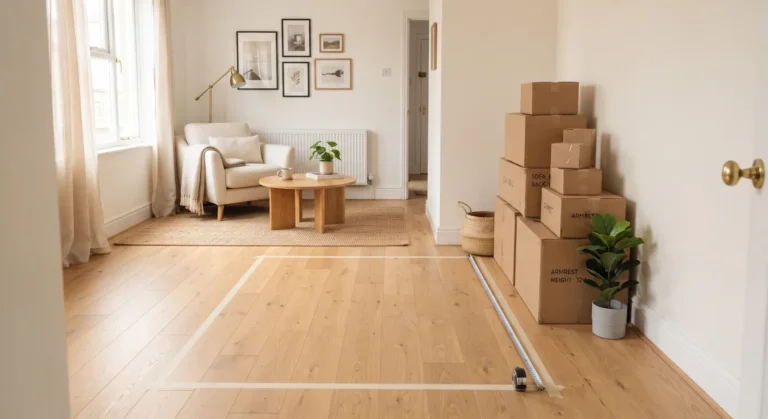
Tape the footprint on the floor. Bed width plus frame, then mark the 24-inch walkways and the door arc. You will see instantly whether a layout works.
Do the night test. Stand where the bed would be and check: can you reach a light switch, is there anywhere for a glass of water, would you walk into the corner of something in the dark?
Check the outlets. A bed in front of the only socket means charging cables running across the floor, which is both ugly and a trip hazard.
Then actually try it for a week. Layouts feel different after four nights than they do at the moment you finish moving furniture.
When Two People Share a Small Bedroom
Two access sides is close to non-negotiable. A corner bed means one person climbs over the other every single night, and that gets old fast.
Give each side something. A nightstand, a shelf, a hook — even a tiny surface each prevents the bed becoming one person’s territory.
Two smaller lamps beat one big one, because one of you will always want to read later than the other.
Keep one side’s walkway wider if the room cannot give you two equal ones, and let the person who gets up earlier have it.
Making Your Layout Look Deliberate
Anchor the bed with something above or behind it. A headboard, a panel, art hung at the right height. A bed against a bare wall looks temporary.
Put a rug or a runner on the side you get out of. It softens the floor, warms the room and marks the layout as intentional. Like this bedside runner.
Use the space under the bed properly once you have chosen the position — flat wheeled bins on the accessible side. Like these flat wheeled bins. More in under-bed storage ideas.
Keep the visual weight low. In a small bedroom, a low bed and low furniture make the ceiling feel higher.
And dress the bed well. The bed is 60 percent of what you see in the room — how to make a bed look expensive covers the layers that matter.
Your Turn
Tape out one alternative layout tonight, including the walkways and the door arc. If the tape says it fits, try the new position for a week before you decide.
The bed is the biggest object you own and the cheapest thing to change. In a small bedroom, moving it is usually worth more than anything you could buy.
More space-making ideas for the room itself are in 15 small bedroom ideas and bedroom storage when you have no closet. Which wall is your bed on right now — and is it there for a reason, or because of moving day? 🙂